


Podcasts
-
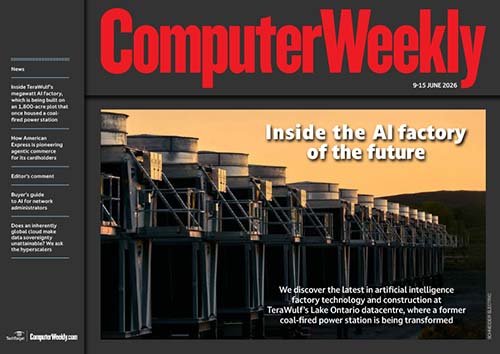 In The Current Issue:
- Datacentre dive: ‘We’re at Chinese levels’ at TeraWulf 750MW AI factory
- Interview: Luke Gebb, head of global innovation, American Express
- Is cloud data sovereignty all just a case of ‘Trust me, bro’?
-

Why AI won’t cut jobs: A Computer Weekly Downtime upload podcast
We speak to Gartner analyst Helen Poitevin about why business leaders should not use AI to reduce headcount
-
IT project success: A Computer Weekly Downtime Upload podcast
A discussion on why, in spite of industry best practices, IT projects are still failing
-
Agentic orchestration: A Computer Weekly Downtime Upload podcast
We speak to Jakob Freud, CEO of Camunda about who business processes are being reinvented in the age of agentic AI
-
Integrity with AI: A Computer Weekly Downtime Upload podcast
We speak to Jill Luber, CTO of academic publisher, Elsevier, about creating AI tools to support researchers and protecting against fake science
-
Software billing gap: A Computer Weekly Downtime Upload podcast
We speak to Griff Parry, CEO and co-founder of m3ter about why billing based on consumption sometimes fails
-
AI skills for IT pros: A Computer Weekly Downtime Upload podcast
Artificial intelligence is changing the way IT professionals work. We speak to Matt Stava, CEO of Spinnaker Support', about reskilling
-
Understanding quantum: A Computer Weekly Downtime Upload podcast
We speak to Lucy Robson, a quantum algorithm scientist at Universal Quantum, about her work in helping to develop simulations for drug discovery
-
Nuclear Fusion HPC: A Computer Weekly Downtime Upload podcast
We speak to UKAEA director for computing programmes, Rob Akers, about the new Sunrise AI supercomputer for nuclear fusion research and development
-
AI at Rimini Street: A Computer Weekly Downtime Upload podcast
In this podcast interview, we speak to Seth Ravin, CEO of Rimini Street about how AI improves support call handling
-
Stack Overflow on AI: A Computer Weekly Downtime Upload podcast
We speak to the CEO of Stack Overflow about agentic AI workflows and AI in software engineering
-
SQL Slammer lesson: A Computer Weekly Downtime Upload podcast
We speak to the head of the Microsoft Security Response Center about how the company works with the industry to get systems patched quickly
-
Low-code challenges: A Computer Weekly Downtime Upload podcast
We speak to Conor Riordan, chair of the UK & Ireland SAP user group about how IT needs a new way to work with the business
-
Clean up your data: A Computer Weekly Downtime Upload podcast
How Imperial Brands put in place the right data management and governance to enable a smooth migration to SAP S/4Hana
-
AI job chaos: A Computer Weekly Downtime Upload podcast
AI job disruption was among the hot topics at the Gartner Symposium in Barcelona. We speak to Gartner’s Helen Poitevin about AI job chaos
-

HDD metrics and why mean time to failure is not terribly useful
In this podcast, we talk to Rainer Kaese of Toshiba about hard drive metrics, why MTTF is less useful than annualised failure rate, and why big systems need to use enterprise drives
-

Podcast: SSD for high performance, but HDD suits ‘warm’ workloads
We talk to Axel Stoermann of drive maker Kioxia about the efficiencies and performance that flash storage can bring, but why hard disk drives are still a key choice in some use cases
-
Value-based contracts: A Computer Weekly Downtime Upload podcast
We speak to Accenture partner, Prem Ananthakrishnan about the evolution of software licensing in the age of AI and agentic AI
-

Podcast: Data sovereignty and what you need to do about it
Patrick Smith, EMEA CTO of Pure Storage, talks about data sovereignty, what’s driving heightened interest in it, and how customers, the tech industry and states are preparing for it
-
GenAI in banking: A Computer Weekly Downtime Upload podcast
We speak to Ranil Boteju, chief data and analytics officer at Lloyds Banking Group about FinLLM and the bank’s ‘AI as a judge’
-

Agentic AI: Storage and ‘the biggest tech refresh in IT history’
We talk to Jeff Denworth of Vast Data about a future where employees are outnumbered by artificial intelligence agents and even smaller enterprises may need supercomputing levels of resources
-
AI in pet health: A Computer Weekly Downtime Upload podcast
We speak to Mars Pet Nutrition’s head of digital innovation, Kate Balingit, about using computer vision with smartphone photos to assess pet health
-

Podcast: Key hurdles in AI from proof of concept to production
We talk to DDN CTO Sven Oehme about key technical and organisational hurdles when taking AI projects from test to production, in storage and building the technical team
-
App refactoring recipe: A Computer Weekly Downtime Upload podcast
We speak to Moderne CEO and OpenRewrite inventor, Jonathan Schneider, about application modernisation
-

Podcast: How (agentic) AI can help with unstructured data
In this podcast, MongoDB CTO Boris Bialek discusses how artificial intelligence can bring together multiple levels of corporate data to better automate processes and how agentic AI can be a key part of that
-

Podcast: HDDs performance metrics and the workloads they excel at
We talk to Toshiba’s Rainer Kaese about spinning disk performance, why HDDs are good at what they do and how hard disk drives still come out top in workloads that suit them
-

Podcast: Container storage challenges and how to overcome them
We talk to Pure Storage about the challenges of increased complexity, ‘technical debt’, skills needs of container deployments and why strategic thinking trumps tactical solutions
-
Gartner’s view on AI security: A Computer Weekly Downtime Upload podcast
We speaker to Gartner's Nader Heinen about why access control should be built into enterprise AI
-

Podcast: AIOps in storage management, security and sustainability
Dell’s Stewart Hunwick explains why AIOps – artificial intelligence for IT operations – is key to gaining efficiencies in storage management and sustainability, and discusses reactive and proactive data security
-

Pure CTO drills down on key-value, no DFMs on FA//ST, and fast object
In this podcast, we talk to Pure Storage CTO Rob Lee about use of key-value stores in its storage OS, plus why its much-vaunted DirectFlash isn’t in the new FlashArray//ST product
-
AI and technical debt: A Computer Weekly Downtime Upload podcast
We find out how bet365 is using generative AI to understand legacy code to boost its modernisation programme
-

Podcast: Data management and storage strategy in the AI era
We talk to Pure Storage EMEA field chief technology officer Patrick Smith about the challenges of data management in an era of AI and data proliferation, and how storage functionality can help
-

AI compliance: Dealing with data change and proliferation
Podcast: We talk with Vigitrust CEO Mathieu Gorge about staying on top of compliance and artificial intelligence, where the danger is data that changes during AI processing and can also proliferate
-

Podcast: RSA 2025 – AI’s risk surface and the role of the CISO
We review RSA 2025 with Vigitrust CEO Mathieu Gorge who looks at the impacts on compliance of AI’s expanding risk surface, the role of the CISO, and a changed supplier approach
-

Podcast: RSA 2025 to grapple with AI compliance, US and EU regulation
We preview RSA 2025 with Vigitrust CEO Mathieu Gorge who looks forward to learning lots around compliance and regulation as CIOs wrestle with artificial intelligence and geopolitical upheavals
-

Podcast: Quantum lacks profitability but it will come, says CEO
Computer Weekly talks to Quantum CEO Jamie Lerner about the company’s expertise in massive volumes of data and a roadmap that includes Myriad, a new file system for forever flash in the AI era
-

Podcast: HDD safe from flash for a decade or more
We talk to Toshiba’s Rainer Kaese, who argues flash cannot replace spinning disk because it’s too costly to consider for anything but limited, performance-hungry applications
-

Podcast: AI data needs scalable flash, but also needs to be FAIR
We talk to Tim Sherbak of Quantum about the demands artificial intelligence puts on storage and the need for data management that can cope with large volumes of data that must be kept for long periods
-
Gartner on agentic AI: A Computer Weekly Downtime Upload podcast
We speak to Gartner’s Anushree Verma about the route from robotic process automation to agentic AI in corporate IT
-

Podcast: How customers use multi-cloud and mitigate key challenges
We talk to Vawlt CEO Ricardo Mendes about the key challenges of multi-cloud operations, and how customers can mitigate the security, billing and complexity challenges they face
-
IT in opera and ballet: A Computer Weekly Downtime Upload podcast
We speak to Keith Nolan, head of technology delivery, Royal Ballet and Opera about using IT to save money
-

Podcast: S4Capital’s Martin Sorrell on AI and the enterprise
We talk to Sir Martin Sorrell of S4Capital about the use of artificial intelligence in advertising and marketing and how enterprises can take advantage of the productivity it offers
-

Podcast: How to ensure data quality for AI
We talk to Cody David of Syniti about how to ensure data quality in datasets for AI, why a ‘data-first’ attitude is key, and the quick wins an organisation can gain in data quality
-
Samsung’s on-device AI: A Computer Weekly Downtime Upload podcast
We speak to the co-founder of Oxford Semantic Technologies, which has developed the AI for the new Samsung Galaxy S25
-

Podcast: AI to boost drive innovation in 2025
We talk to Jason Feist of Seagate about artificial intelligence and how it is driving drive innovation, the growth of data and how sustainability and energy efficiency is vital to meeting capacity needs
-

Podcast: Storage and AI training, inference, and agentic AI
We talk to Hitachi Vantara CTO for AI Jason Hardy about training, inference and agentic AI, and how competing workloads bring context switching that storage for AI has to handle
-
Justifying ECC upgrade: A Computer Weekly Downtime Upload podcast
We speak to the chair of the UK and Ireland SAP User Group about SAP ECC and the need to upgrade at your own pace
-

Podcast: Areal density, AI design and the 50TB hard drive
We talk to Seagate about hard disk drives, the use of artificial intelligence to design them with higher areal density, more terabytes per platter, and capacities up to 50TB, especially with HAMR recording
-
The future of cloud: A Computer Weekly Downtime Upload podcast
Gartner’s Philip Dawson discusses the cloud and on-premise complexity facing IT departments
-
Beyond IBM Watson: A Computer Weekly Downtime Upload podcast
We speak to IBM software's product management lead about making AI work in the enterprise
-
F1 real time data: A Computer Weekly Downtime Upload podcast
We speak to AWS and the lead cloud architect at F1 about the immense data processing and analysis that takes place
-

Podcast: Ransomware and what data storage can do about it
We talk to NetApp’s Chris McKean about ransomware attacks and the role of data storage in protecting against them
-

Podcast: Storage functionality in Kubernetes 1.31
We talk to Sergey Pronin of Percona about new storage functionality in Kubernetes 1.31, including volume attribute class and changes to persistent volumes, as well as other long-term fixes
-
Securing data in GCP: A Computer Weekly Downtime Upload podcast
We speak to Google’s director of product management for confidential computing about ensuring the protection of data in use
-

Podcast: Sustainable data storage and how to achieve it
We talk to NetApp’s Grant Caley about data storage energy needs and how they can be reduced by use of QLC flash, efficient datacentre hardware and putting data on the right media
-
Accessibility: A Computer Weekly Downtime Upload podcast
CIO, Suleyman Gokyigit discusses his experiences of using screen readers to support blind and visually impaired users navigate websites and apps
-

Podcast: Storage for AI needs scale, hybrid cloud and multiple integrations
We talk to NetApp’s Grant Caley about AI and data storage, the need for scale, performance and hybrid cloud, and to move, copy and clone data for wrangling for inference runs
-
No cyber barriers: A Computer Weekly Downtime Upload podcast
We speak to Sharp Europe’s data protection and information security officer about how to balance cybersecurity with the needs of the business
-

Podcast: AI and its impact on data storage
We talk to Shawn Rosemarin, vice-president for R&D at Pure Storage, about the requirements of AI workloads, and what data storage needs to cope with AI
-
Making tech changes: A Computer Weekly Downtime Upload podcast
We speak to the CIO of law firm, Kingsley Napley about effective change management to support successful digital transformation
-
Podcast: 32TB HDDs by 2029, but how much bigger can they get?
We talk to Rainer Kaese of Toshiba about the roadmap for conventional magnetic recording on hard disk drives, the roadmap to 32TB, and what it would take to get to 100TB or 200TB
-
AWS & GenAI: A Computer Weekly Downtime Upload podcast
We speak to Francessca Vasquez, vice president, professional services and GenAI Innovation Center for Amazon Web Services
-

Podcast: How to prepare your data for digital transformation
We talk to Chris Gorton, EMEA managing director at Syniti, about how to prepare data for digital transformation
-
Weak Gen AI use cases: A Computer Weekly Downtime Upload podcast
We speak to Gartner’s Leinar Ramos about his latest research, “When Not to Use GenAI”
-
Surviving IT failures: A Computer Weekly Downtime Upload podcast
We speak to Junade Ali, author of How to Protect yourself from Killer Computers
-

Podcast: What is distributed cloud storage and what are its benefits?
We talk to Enrico Signoretti of Cubbit about how distributed cloud allows customers to control their data in hybrid and multicloud storage and the workloads the company targets
-
Cloud Native Computing: A Computer Weekly Downtime Upload podcast
We speak to Priyanka Sharma, the executive director of the Cloud Native Computing Forum about having blind faith in tech innovation
-

Podcast: Immutable storage essential against ransomware, but...
...not all immutable storage is created equal. That’s the message from Paul Speciale of Scality, who looks at immutable storage, its variants and what’s needed to secure data
-

Podcast: What is the impact of AI on storage and compliance?
Start now looking at artificial intelligence compliance. That’s the advice of Mathieu Gorge of Vigitrust, who says AI governance is still immature but firms should recognise the limits and still act
-

Podcast: What are snapshots? Can they replace backup?
We talk to Shawn Meyers, field CTO at Tintri, who defines snapshots, why they are no substitute for backups, and the effect on recovery of snapshot granularity
-

Podcast: Storage and compliance outlook for 2024
Interesting times ahead in 2024 as we talk to Mathieu Gorge, CEO of Vigitrust, about updates to EU regs, PCI, NIST, post-Brexit divergence and 60 national elections across the globe
-
Walmart’s enterprise software: A Computer Weekly Downtime Upload podcast
We speak to Walmart’s David Glick about the build/buy debate and how the retailer works with large language models
-
Gartner’s CIO agenda: A Computer Weekly Downtime Upload podcast
We speak to Gartner’s Tina Nunno at the analyst firm’s annual conference in Barcelona about IT management challenges
-
Learning from Google: A Computer Weekly Downtime Upload podcast
We speak to the CEO of Glean about learning on the job and artificial intelligence democratisation
-
Podcast: ‘Data first’ a key principle of digital transformation
Chris Gorton of Syniti says organisations should put data first during digital transformation projects, and that means getting data quality, access rights and governance right
-
Digital service: A Computer Weekly Downtime Upload podcast
We speak to Harmeen Mehta, chief digital innovation officer at BT, about service management in digital transformation
-

Podcast: AI threats mean backup and security must work as one
Malicious use of artificial intellience against scattered data stores means data protection and security must go hand-in-hand. That’s the view of Gaidar Magdanurov, chief success officer at Acronis
-
Unconventional career: A Computer Weekly Downtime Upload podcast
Cyber security expert Junade Ali, talks about his non-academic route to a PhD. He was recently elected as a fellow of the IET
-

Podcast: File synchronisation benefits and use cases
If you’ve got the bandwidth and you need to share files or even synchronise virtual desktops, file synchronisation is worth a look. That’s the view of Peer Software CEO Jimmy Tan
-

Podcast: HDDs have a long life ahead in certain workloads
Spinning disk hard drives are far from dead, and with data volumes set to explode, there are use cases that suit them well. That’s the view of Rainer Kaese of Toshiba in this podcast
-

Podcast: Sizing data storage for AI/ML workloads
Artificial intelligence and machine learning workloads come with I/O profiles of different shapes and sizes. We talk to Curtis Anderson of Panasas about how best to procure and size storage for them
-
AI cyber monitoring: A Computer Weekly Downtime Upload podcast
In this podcast, Darktrace’s Max Heinemeyer discusses the good – and the bad – to come out of artificial intelligence in IT security
-

Podcast: Cloud security, compliance and data classification
The rise of cloud has led to a proliferation of enterprise data and a rise in risk. We talk to Vigitrust CEO Mathieu Gorge about how to ensure compliance in a multicloud world
-

Podcast: Containers, Kubernetes, data protection and compliance
Containers offer benefits to application deployment, but they proliferate, so tracking them for compliance purposes can be a challenge. We talk to Mathieu Gorge, CEO of Vigitrust
-

Podcast: Storage, backup, AI and data classification at RSA 2023
Much discussion at RSA 2023 about artificial intelligence, the risks to data protection, storage and compliance, plus risk and data classification, especially its impacts on access and data management
-
Code experiments: A Computer Weekly Downtime Upload podcast
We speak to GoDaddy CTO Charles Beadnall about how to prove an IT project works as intended
-
The first 100 days: A Computer Weekly Downtime Upload podcast
We speak to the global IT director of Travelex about retraining and how new CIOs should avoid the temptation to copy and paste their IT strategy
-

Podcast: No more hard disks in five years, says Pure
We talk to Shawn Rosemarin of Pure Storage, who argues there will be no more hard drive sales in five years because energy costs and capacity needs can only be fulfilled by flash
-

Podcast: Ransomware, data protection and compliance
Ransomware is a huge and ever-present threat, but there are ways to avoid it and to mitigate its effects. We get key practical steps from Mathieu Gorge, CEO of Vigitrust
-
Beyond Web 2.0: A Computer Weekly Downtime Upload podcast
Like others who have developed technology that powers the internet, David Holtzman, chief strategist at decentralised cyber security network Naoris Protocol, has an unusual background
-
Next-gen AI: A Computer Weekly Downtime Upload podcast
Mark Raskino, co-author of When Machines Become Customers, discusses machine-to-machine commerce
-

Podcast: Cloud storage, data protection and compliance
The lure of cloud storage hides its drawback, namely that you can lose control of it from a compliance perspective. We talk to Mathieu Gorge, CEO of Vigitrust, about how to tame it
-
Everywoman in Tech, datacentre heat reuse – Computer Weekly Downtime Upload podcast
The team talks about disclosure regarding diversity and inclusion programmes, datacentre heat reuse in swimming pools, and NetSuite supporting business transformation at Guinness World Records
-
IT sustainability: A Computer Weekly Downtime Upload podcast
We speak to Gartner’s Annette Zimmerman about the circular economy and IT sustainability
-
Observability: A Computer Weekly Downtime Upload podcast
William Hill’s Stephen Wild discusses how the betting website reduces the revenue impact of IT glitches
-

Podcast: Why DBaaS and what problems does it solve?
We talk to Tobias Ternström of Nutanix about how the enterprise landscape has seen thousands of databases from multiple vendors mushroom and how database as a service can help manage that complexity
-
Procurement AI: A Computer Weekly Downtime Upload podcast
We speak to BT’s procurement chief about the role of artificial intelligence and how conversational AI will improve workflows
-

Podcast: 2023 compliance and storage outlook
Geopolitical instability casts its shadow as organisations must think about cyber attacks, data location and what to do if things change quickly. We talk to Mathieu Gorge, CEO of Vigitrust
-
Video messaging: A Computer Weekly Downtime upload podcast
We speak to Vimeo’s chief product officer about asynchronous video comms
-
Enterprise open source: A Computer Weekly Downtime Upload podcast
We speak to Spotify’s open source tech lead, Per Ploug, on supplier relationship management in open source
-
Tech sector lay-offs in the round – Computer Weekly Downtime Upload podcast
The team talks about tech sector job losses in the round, with possible bright spots for corporate IT and contractors, and data and hybrid working strategies at the Very Group
Photo Stories

-
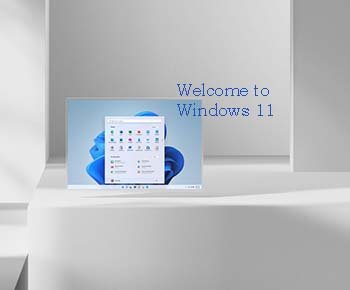
Windows 11: A first look
-

Important LGBTQ+ figures who shaped tech’s history
-

UKtech50 2021 – The most influential people in UK IT
Videos
-
Diversity in tech 2023: Bev White, Nash Squared
-
Suki Fuller, most influential woman in UK tech 2023, winner’s speech

-
Diversity in tech 2022: Explaining employee resource groups
-
Diversity in tech 2022: Mehdi Mobayen-Rahni, Tyl by NatWest
-
Diversity in tech 2022: Kerensa Jennings, BT
-
Diversity in tech 2022: Joel Gujral, Myndup