Source:
Robert Dowell, TNMOC
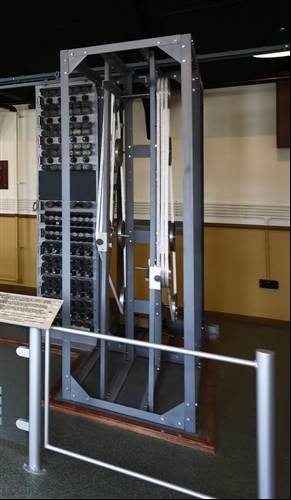
The Heath Robinson machine
The Heath Robinson was the first of several electronic machines used to speed up message decryption by determining the settings of the Lorenz machine when the message was transmitted.
The Tunny Gallery, opened at The National Museum of Computing at Bletchley Park on 26 May 2011, tells the incredible story of the interception and decryption of German High Command radio teleprinter messages during World War Two. The gallery shows the entire wartime code-breaking process from intercept to decrypt and recognises the remarkable achievements of the men and women who contributed to the process in the 1940s. The centrepiece of the gallery is a fully functioning rebuild of a Tunny machine that produced the final decrypts of enciphered communications of the German High Command. The original Tunny, a British re-engineering of the then-unseen German Lorenz S42 cipher machine, was completed in 1942.
View All Photo Stories