Trade-ins returned $6.4bn to US mobile consumers in 2025
Quarterly study of US mobile trade-in arena finds that strong interest in new features – paired with clear, competitive promotions – drove record trade-in value in full‑year 2025 data

Last year saw US smartphone trade-in programmes consistently surging, with buyers rapidly embracing devices with more personalised artificial intelligence (AI) capabilities and 5G leading to a year of record-breaking quarters for revenues, according to the latest mobile trade-in and upgrade study by Assurant.
Specifically, the standouts of the Mobile trade‑in and upgrade industry trends report for Q4 2025 and the full year found sustained momentum through the end of the year, with trade-in device ages shifting around launch windows, and premium 5G devices dominating the secondary market as supply continues to skew newer.
The study showed that in all, US consumers received more than $6.4bn in value through mobile trade‑in programmes in 2025, a 42% year-on-year increase, and the largest annual total since Assurant began tracking the data in 2015.
Looking at market drivers, the global protection company noted that this yearly growth reflected a combination of newer and higher-quality devices entering into trade-in programmes through consumer trade-ins. While consumers held onto devices longer overall, the 2025 data showed they were also being more deliberate about when they upgraded, often aligning to major device launches, capability advancements such as AI-enabled features, and what were seen as competitive trade-in offers.
“What stood out in 2025 was how clearly value showed up at the moment consumers were ready to act,” said Biju Nair, executive vice-president and president of global connected living at Assurant. “New features continue to spark interest, but trade‑in programmes play a critical role in turning that interest into action by making value easier to understand and access. At the same time, repair and protection programmes are helping devices retain value longer, bringing newer, higher-quality phones back into the ecosystem. Together, these dynamics drove the largest annual increase in value returned to consumers we’ve ever recorded.”
In the fourth quarter of 2025, trade‑in activity remained strong during the promotion‑heavy fourth quarter, with consumers receiving $2.2bn in value during that time period alone – the highest fourth-quarter total on record. This total, said Assurant, reinforced trade‑in as a consistent component of the upgrade experience rather than a purely seasonal event.
In the quarter, the average age of iPhones turned in through trade-in and upgrade programmes declined slightly to 3.76 years, coinciding with new flagship launches and associated promotions. Over the same period, Android devices surpassed four years on average at trade‑in.
Read more about smartphones
- Viasat unveils smartphone connectivity via satellite first in Mexico: Satellite operator demonstrates the potential of D2D networks to bridge the connectivity gap in areas where traditional wireless comms services are unreliable or non-existent.\
- Qualcomm plots out 6G, Wi-Fi 8 future with AI as the new user interface: Leading comms tech platform provider unveils agentic radio access network management service and AI enhancements for commercial RAN platforms to accelerate value for telcos on the path to 6G.
- Samsung, Keysight validate satellite-to-satellite, direct-to-cell 5G mobility: Technology design, emulation and test services firm collaborates with CE and comms tech giant to validate 3GPP Release 19 non-terrestrial networks band as industry moves towards direct-to-cell satellite services.
- Doha debut marks a new chapter for MENA mobile innovation: GSMA’s Jawad Jalal Abbassi outlines how Qatar’s first Mobile World Congress will accelerate digital transformation, 5G adoption and AI integration across the region.
The study also showed that devices entering the secondary market increasingly trend newer, supporting stronger resale potential and expanding access to newer-generation, high‑performance 5G smartphones. The data is said to reflect a market where phones are designed, protected and maintained to remain viable well beyond their first ownership cycle.
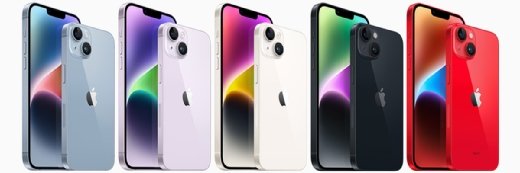
For the first time on an annual basis, the most commonly turned‑in devices were all premium 5G models, including iPhone 13 and iPhone 14 variants. On the Android side, the Galaxy S22 Ultra 5G remained the most frequently turned-in model. This shift, said the study, underscored how recent‑generation devices are increasingly entering the secondary market.
Beyond financial benefits, the report also found that trade‑in and upgrade programmes were playing an increasingly important role in supporting a more circular and sustainable device ecosystem. It added that devices turned in through these programmes retain latent value, strengthening the secondary market, helping reduce e‑waste and broadening access to newer technology.
Assurant observed that through its supported trade‑in and upgrade programmes, more than 39,600 metric tonnes of electronic waste have been diverted from landfills and 10.3 million metric tonnes of CO₂ emissions have been avoided since 2009.