Ferrari Competizioni speeds data decision engines with Natzka

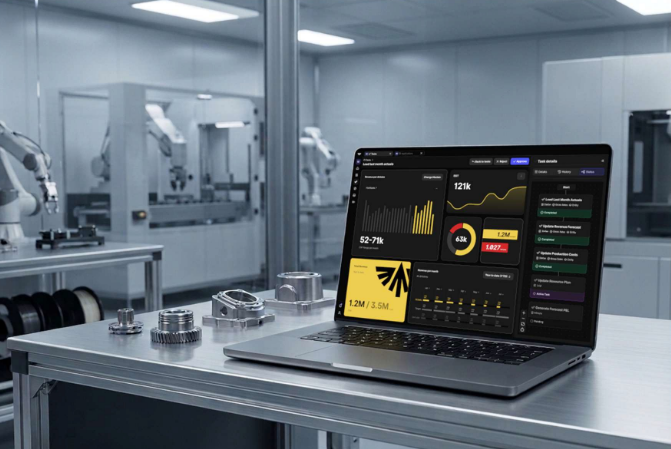
Natzka is a Swiss agentic decision intelligence company that operates with a self-stated mission to combine data, human and artificial intelligence within a dynamic digital twin of the enterprise.
Dangerously close to sounding like a branding term rather than a technical construct, for developers and data science practitioners, we can more technically define decision intelligence as a discipline that structures data management, machine learning and human judgment to model scenarios.
In the world of post-neo business intelligence (remember BI?), decision intelligence has (arguably) evolved to become part of the way big data (remember that too?) is executed today.
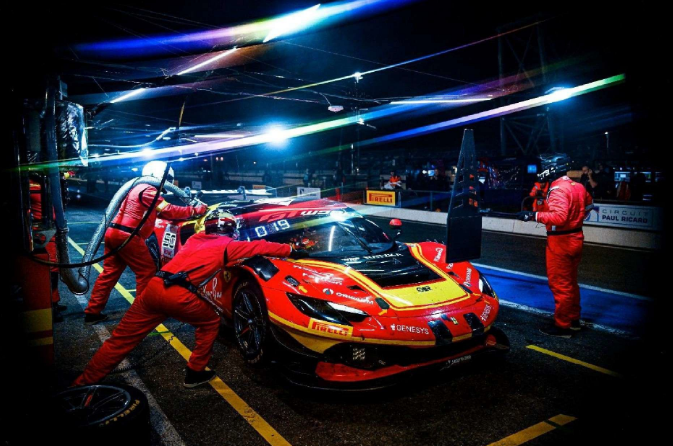
Natzka says its work in this field is real – the company recently announced that it has become an official partner of Ferrari Competizioni GT.
Corporate deal handshakes notwithstanding, there is substance here in terms of developer tooling aligned towards decision support, decision augmentation and decision automation – all aspects of workflow automation that software application development professionals will want to grasp if they are building autonomous control projects.
Track to boardroom
The companies stress that in GT racing, just as in business, data, timing, reliability and human judgment must converge long before performance becomes visible.
“For Natzka, working alongside Ferrari Competizioni GT means operating in one of the most demanding environments in the world. This is exactly Natzka’s core business: helping organisations place decision-making at the centre of their operations by combining human expertise, automation and advanced predictive technologies,” said Matteo Emiliani, CEO of Natzka.
Already at this early stage, Emiliani muses that this work may reflect a broader truth about the enterprise world: lasting performance is not improvised in the moment of action. It is engineered in advance through better context, better preparation and decisions that can be trusted under pressure.
Three levels of decision intelligence
Decision support – this is where AI and analytics help humans make better decisions, but the decision remains fully human. The system gathers context, surfaces relevant information, highlights risks, detects anomalies, compares scenarios and recommends possible next steps.
The human evaluates the options and decides. This level is most relevant for strategic, sensitive or high-impact decisions where accountability cannot be delegated: capital allocation, market entry, major operational trade-offs, restructuring, pricing strategy and decisions involving reputational, financial or regulatory risk.
Decision augmentation – AI does more than inform. It actively supports the decision workflow by prioritising options, preparing recommendations, triggering approval flows, assigning tasks, suggesting corrective actions and helping coordinate execution across teams or systems. The human remains in control, but AI reduces the manual work around the decision. This level fits most enterprise needs: significant enough to require human judgment, yet frequent enough for AI-supported execution.
Decision automation – AI or rule-based logic can automatically execute certain decisions. Automation must never operate without control. In Natzka’s model, automation applies to routine, repeatable, lower-risk decisions that are clearly governed.
The business defines the rules, thresholds, approval logic, exception paths and escalation points. The system acts only within those boundaries.