Graphicroyalty - stock.adobe.com
Consumers trade up smartphones for AI
Quarterly study of US mobile trade-in arena finds 46% growth year-on-year driven by accelerated adoption of AI-enabled devices and expansion of the secondary market, with the third consecutive record-breaking quarter for revenues

Smartphone trade-in programmes for US consumers are consistently surging as buyers are increasingly and rapidly embracing devices with more personalised artificial intelligence (AI) capabilities, leading to three consecutive record-breaking quarters for revenues, says Assurant’s Mobile trade-in and upgrade industry trends report for the third quarter of 2025.
In all, the study calculates that US consumers received a record $1.59bn in value through mobile device trade-ins, representing a 46% year-on-year increase. This comes after a first quarter of 2025 that saw tech consumers receive $1.24bn from mobile trade-in and upgrade programmes, a 40% increase from the same quarter a year earlier, and $1.34bn in Q2 2025, the strongest second quarter on record for smartphone trade-ins.
Year-to-date, trade-in programmes have returned a total of $4.17bn in value to consumers, representing a 54% increase compared with the same period in 2024, and are on track to surpass last year’s record total of $4.5bn.
Assessing the trends revealed in the study, the global protection company observed that the record growth in value and the decline in average device age supports its earlier forecasts that consumers would accelerate adoption of newly released smartphones with personalised, functional AI capabilities. It added that with major carriers reporting increased global shipments of flagship devices in the third quarter, newer, high-value devices are entering the trade-in ecosystem, advancing growth in the secondary market.
“This year is shaping up to break records for total value returned to consumers through trade-in programmes,” said Biju Nair, executive vice-president and president of global connected living at Assurant.
“Consumers are trading-in later-generation devices earlier to access AI-enabled features, and their embrace of more personalised experiences that newer devices deliver is powering a rapidly growing secondary market.
“This has created a ripple effect for affordability and sustainability as an influx of higher-value devices are re-entering the ecosystem and beginning to drive some additional emerging trends which we hope to report on in the next quarter.”
Read more about smartphones
- Viasat unveils smartphone connectivity via satellite first in Mexico: Satellite operator demonstrates the potential of D2D networks to bridge the connectivity gap in areas where traditional wireless comms services are unreliable or non-existent.
- Software engineers brace for foldable smartphone development: There was a time when we defined developers as developers. Then, over the years, they became mobile-first developers, cloud-native developers, API-first orchestration-aware developers.
- Q2 2025 strongest second quarter on record for smartphone trade-ins: Quarterly investigation of US phone trade-in market shows record value.
- How smartphones are transforming global health: Shyam Gollakota, winner of the 2024 Infosys Prize in Engineering and Computer Science, is bringing medical care to underserved communities through with smartphone-based diagnostic tools.
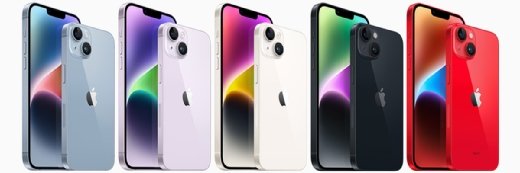
Drilling deeper into the technology drivers, the study found that 5G devices dominated trade-ins. For the fifth straight quarter, Apple’s iPhone 13 and Samsung’s Galaxy S22 Ultra 5G were the most frequently turned-in from trade-in and upgrade programmes.
For the first time, all top-five models were 5G-enabled devices. There was an evident circular economy impact to this. As more advanced 5G devices with better processors, cameras and batteries enter the secondary market, higher-value inventory is fuelling growth of the circular device ecosystem.
There was also a shift towards newer models. All top-five trade-ins came from the iPhone 13 and 14 generations for the first time, replacing older models like the iPhone 11 and 12, which had ranked in the top five since 2021 and 2022, respectively.
After reaching a record-high average age of 3.88 years in Q2, the average age of devices turned-in during Q3 dipped slightly to 3.8 years. Assurant said this suggested consumers are upgrading sooner, likely driven by the appeal of AI-enabled features and enhanced performance in newer models.
Looking forward, Assurant predicted that as consumers continued to embrace AI-powered smartphones, trade-in and upgrade programmes are playing a critical role in making these innovations more accessible. With Q4 underway, it stressed that the industry is poised to close out 2025 with another record-breaking year, benefiting consumers, mobile providers and the circular economy alike.
Read more on Smartphone technology
-
![]()
Rising memory costs reshape smartphone economics
By: Joe O’Halloran
-
![]()
Trade-ins returned $6.4bn to US mobile consumers in 2025
By: Joe O’Halloran
-
![]()
Q2 2025 strongest second quarter on record for smartphone trade-ins
By: Joe O’Halloran
-
![]()
US smartphone users kept same devices for longest time period yet
By: Joe O’Halloran