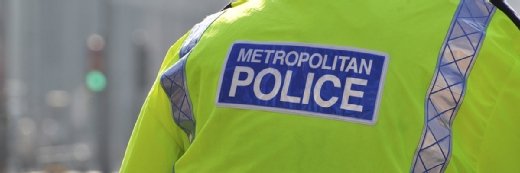
Dutourdumonde - stock.adobe.com
Met Police to ‘trial’ handheld facial recognition tech
London Mayor Sadiq Khan reveals in a scrutiny session with London Assembly members that the Met is set to trial a facial recognition phone app for police officers

The Metropolitan Police are set to trial handheld facial recognition technology that will allow officers to conduct biometric checks on the spot, the Mayor of London has confirmed.
Known as Operator-Initiated Facial Recognition (OIFR), the technology uses a mobile phone app to capture images of people’s faces and compare them to police databases in real-time.
London Mayor Sadiq Khan said that OIFR would allow officers to check and verify the details of any individuals stopped, instead of having to arrest them and take them to a police station. He added that the six-month pilot involves around 100 devices, with approximately £763,000 allocated to the programme.
However, the Met’s website still states at the time of publication that it “does not presently use the so-called operator-initiated facial recognition”, with the information only becoming public after Khan was pressed about the technology’s use by Green London Assembly member Zoe Garbett. She added during the meeting that this development is “alarming” and changes the relationship between the police and the public.
The OIFR trial revelation comes as the Home Office is still formulating a response to a consultation it held on a new legal framework for facial recognition technology, and the High Court is still deliberating on a judicial review over whether the Met has used the live version of the technology lawfully. So far, only a limited number of forces have used OIFR technology, via a joint trial between South Wales, Gwent and Cheshire Police.
Commenting further on the Met’s planned trial, Garbett said it is “shocking” that the information about the trial was only divulged through a Mayor’s question time.
“Londoners deserve transparency when it comes to such a fundamental expansion of police powers. What’s even more concerning is the Met’s website explicitly says they do not use this technology,” she said.
“We already have no clear legal framework for live facial recognition and now it’s being further expanded with handheld devices that allow officers to walk up and scan people’s faces. In Britain, no one has to identify themselves to police without very good reason and this unregulated technology threatens that fundamental right.”
She added that with the government’s consultation only closing on 12 February 2026, pressing ahead with the expansion of facial recognition “makes a mockery of the process – what’s the point of asking for public views if the expansion of surveillance technology continues regardless? The rapid and unchecked deployment of this technology must stop and robust protections must be put in place to safeguard our rights.”
Garbett previously called for the force to immediately halt its deployments of LFR in early February 2026, citing its disproportionate effects on Black and brown communities, a lack of specific legal powers dictating how police can use the tech, and the Met’s opacity around the true costs of deploying.
Khan said that both the Mayor’s Office for Policing and Crime and the London Policing Ethics Panel would oversee the use of the technology, ensuring its use was “right and proportionate”, and that because it was only a pilot, “it may not be rolled out”.
While Khan noted that OIFR captured-images are compared to custody records held by the Met, millions of custody images continue to be held unlawfully in the UK-wide Police National Database (PND), despite the High Court ruling in 2012 that images of unconvicted people must be deleted.
Khan previously told the London Assembly that if the Met were to deploy operator-initiated facial recognition, “I would expect the MPS to consult stakeholders, including the London policing ethics panel, as well as undertake careful consideration of legal, policy, community, data protection and ethical impacts.”
Lindsey Chiswick, the Met’s lead for facial recognition, who was present in the LFR judicial review proceedings on behalf of the force, said: “We are set to trial operator‑initiated facial recognition, an innovative tool which will help our officers take photos to help confirm the identities of people quickly and accurately, avoiding the need to detain people for longer than needed.
“This will initially be rolled out to a small number of officers while we test the technology. If an individual has their photo taken and there is no match, then their biometric information will be deleted straight away.”
Jasleen Chaggar, a legal and policy officer at Big Brother Watch, told the Local Democracy Reporting Service (LDRS) there was no policy in place for the OIFR and that the police were using the public like “guinea pigs” to test their surveillance technology.
“Placing a tool in the hand of officers which can lift the veil of anonymity in public in a matter of seconds by simply pointing a phone at a face is a disaster for civil liberties,” she said, adding that the technology could be used to “unlock a vast array of personal records”.
She added: “The Met has a history of rolling out facial recognition so-called ‘pilots’ that quietly become permanent fixtures – they must immediately halt OIFR trials until the Home Office bring forward clear laws that strictly limit and safeguard against its everyday use.”
Previous problematic trials
In September 2025, academics Karen Yeung and Wenlong Li published a comparative study of LFR trials by law enforcement agencies in London, Wales, Berlin and Nice.
They found that although “in-the-wild” testing is an important opportunity to collect information about how artificial intelligence (AI)-based systems such as LFR perform in real-world deployment environments, the trials conducted so far have failed to take into account the socio-technical impacts of the systems in use, or to generate clear evidence of the operational benefits.
They concluded that real-world testing of live facial recognition (LFR) systems by UK and European police is a largely ungoverned “Wild West”, where the technology is tested on local populations without adequate safeguards or oversight.
Highlighting the example of the Met’s LFR trials – conducted across 10 deployments between 2016 and 2020 – Yeung and Li said the characterisation of these tests as “trials” is “seriously questionable” given their resemblance to active police operations.
“Although described as ‘trials’ to publicly indicate that their use on these occasions did not necessarily reflect a decision to adopt and deploy FRT on a permanent basis, they were decidedly ‘real’ in the legal and social consequences for those whose faces triggered a match alert,” they wrote, adding that this means the trials were limited to the systems operational performance in relation to a specific organisational outcome (making arrests), rather than attempting to evaluate its wider socio-technical processes and impacts.
Another July 2019 paper from the Human Rights, Big Data & Technology Project based at the University of Essex Human Rights Centre – which marked the first independent review into trials of LFR technology by the Metropolitan Police – previously observed a discernible “presumption to intervene” among police officers using the technology.
According to authors Pete Fussey and Daragh Murray, this means the officers involved tended to act on the outcomes of the system and engage individuals that it said matched the watchlist in use, even when they did not.
As a form of automation bias, the “presumption to intervene” is important in a socio-technical sense, because in practice it risks opening up random members of the public to unwarranted or unnecessary police interactions.
Read more about facial recognition technology
- How police live facial recognition subtly reconfigures suspicion: A growing body of research suggests that the use of live facial recognition is reshaping police perceptions of suspicion in ways that undermine supposed human-in-the-loop protections.
- Met claims success for permanent facial recognition in Croydon: Met Police boasts that its permanent deployment of live facial recognition cameras in Croydon has led to more than 100 arrests and prompted a double-digit reduction in local crime, ahead of an upcoming judicial review assessing the technology’s lawfulness.
- Essex Police discloses ‘incoherent’ facial recognition assessment: An equality impact assessment of Essex Police live facial recognition deployments is plagued by inconsistencies and poor methodology, undermining the force’s claim that its use of the technology will not be discriminatory.
Read more on Artificial intelligence, automation and robotics
-
![]()
Met pushes ahead with major facial-recognition expansion
By: Larissa Steel
-
![]()
Civil society: Police facial recognition must be strictly limited
By: Larissa Steel
-
![]()
Essex Police halts live facial recognition over bias and accuracy risks
By: Sebastian Klovig Skelton
-
![]()
British Transport Police start using live facial recognition