Nutanix aligns to agentic AI era with platform & ecosystem overhaul

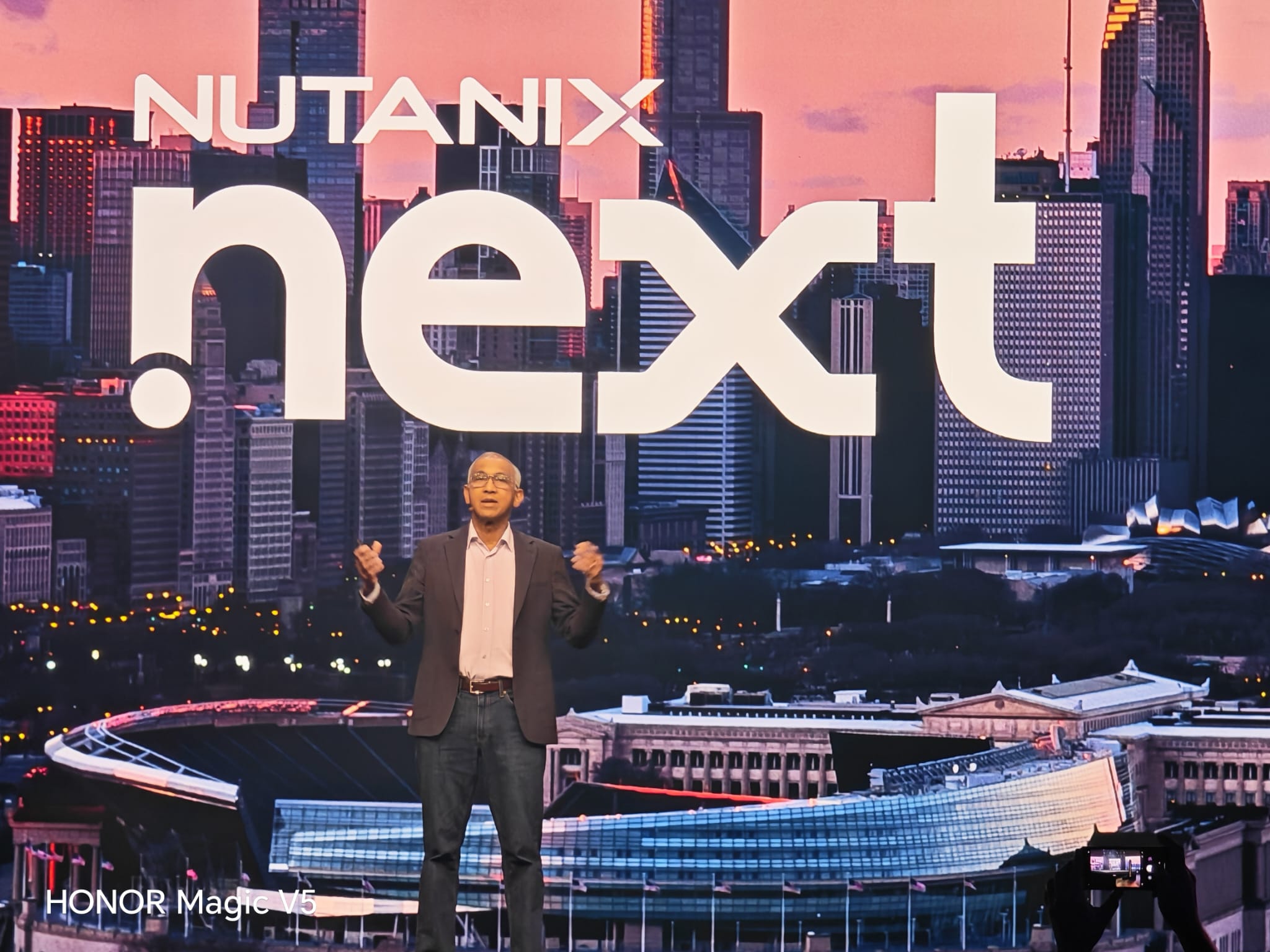
Nutanix used its .NEXT 2026 Americas conference in Chicago this week to lay out a framework of technologies that it promises will deliver a complete platform for the agentic AI era.
The hybrid multi-cloud computing company detailed new capabilities that sit in its Nutanix Cloud Platform (NCP) service, which are designed to help software engineering teams operate as AI workloads expand and, additionally, to cope with cloud environments as they grow more complex.
The company is also addressing hardware supply constraints that now drive the need for more flexible infrastructure platforms.
Virtualization vortex
Not even mentioning the number of enterprise software vendors who want to be seen as a “credible VMware alternative” these days, there is admittedly a lot of reassessment of longstanding incumbent virtualisation deployments today.
Nutanix says that NCP enables customers to make better use of existing infrastructure and choose from a broader ecosystem of hardware vendors, hyperscalers, neoclouds and service providers as they work to run virtualised, modern applications and AI workloads.
“As organisations continue to modernise their cloud infrastructure in a supply-constrained environment, organisations are having to balance leveraging the flexibility of hybrid multicloud infrastructure and the need to maintain sovereignty of their data and applications,” said Thomas Cornely, executive VP for product management, Nutanix.
Cornely points to NCP’s full-stack capabilities, that are now expanded to include new services for AI infrastructure, unified storage and advanced data services.
Update overview
The Nutanix Agentic AI service is designed to build and operate AI applications on NCP. It includes a secure, high-performance virtualisation foundation for AI infrastructure and integrates compute, storage, networking and Kubernetes services to simplify deployment and operations.
NKP Metal (which was announced during the event itself) is in early access and it extends the Nutanix Kubernetes Platform (NKP) solution to support Kubernetes deployments directly on bare-metal infrastructure. The company says it delivers on the performance requirements for edge environments and AI training workloads that rely on dense GPU infrastructure.
Nutanix Unified Storage (NUS) 5.3 is generally available now; the technology is designed to drive the transformation of object storage into a performance storage tier required for AI factories.
The updated Nutanix Data Lens 2.0 can run fully on-premises, including in air-gapped environments. The release brings ransomware analytics, data audit and governance and visibility across distributed storage footprints to sovereign and dark-site deployments that cannot rely on SaaS-based data security.
Partnerships with MongoDB and NetApp have also been announced, which we have covered as a separate story.
Service Provider Central (SP Central)
Nutanix Service Provider Central (SP Central), currently in early access, brings new multi-tenancy capabilities forward that enable Nutanix’s service provider partners to deliver a range of hosted infrastructure and AI services on NCP while helping to maintain secure, logical isolation between tenants sharing the same infrastructure.
Nutanix continues to support a broad range of workloads by offering flexible deployment architectures across a wide range of server and storage hardware, enabling teams to use their existing hardware investments when supply chains are constrained.
To enable this approach, Nutanix is detailing a new Foundation Central appliance that simplifies the deployment of Nutanix Cloud Infrastructure and the AHV hypervisor on a range of enterprise servers from Cisco, Dell, Fujitsu, HPE and Lenovo, as well as the NX Platform.
Other work sees the company work more closely with AMD CPUs, with Cisco by integrating Nutanix solutions with Cisco Unified Edge, Cisco Secure AI Factory and Cisco AI Pod. Old Nutanix favourite Dell also shows up here. Nutanix plans to make Dell PowerStore (A high-performance, scale-out storage platform using a modern container-based architecture) support generally available, along with enhanced Dell Private Cloud automation.
Together, these additions represent what the company tells us is “the broadest expansion” of infrastructure support in Nutanix’s history, offering customers proven deployment options across established enterprise platforms as well as maximum hardware flexibility and choice.
NCP also provides zero-copy migrations, generally available now, from VMware vSphere Virtual Volumes to AHV vDisks, enabling organisations to perform near-instantaneous, in-place workload conversion without data duplication. This capability can accelerate migration timelines and minimise infrastructure overhead and operational disruption.
Sovereign control across multi-cloud
Nutanix Cloud Clusters (NC2) is being expanded to support more deployment options across hyperscalers, including the addition of secure government cloud regions such as AWS GovCloud, generally available now, and AWS European Sovereign Cloud is coming later this year. The introduction of Hyperdisk and C3 bare-metal instance support with NC2 on Google Cloud in the second half of 2026 and will provide customers the flexibility to scale storage independent of compute and leverage bare metal instance types that do not have any local storage.
“Customers can run workloads in the cloud in support of regulatory, latency, or procurement needs without refactoring while retaining the flexibility to bring them back on-premises. For organisations facing hardware availability challenges, these options provide the flexibility to continue deploying and scaling critical workloads without lengthy delays,” notes the company, in a press statement.
 As infrastructure spans clouds, on‑premises datacentres and sovereign environments, organisations need a consistent way to build, operate and govern large sites and distributed estates, including highly secure, air‑gapped environments. Nutanix Cloud Manager (NCM 2.0) is generally available now and built on a new architecture that enables customers to manage large numbers of clusters at scale, across multiple Prism Central (PC) instances.
NCM 2.0 provides multi-site, multi-domain management that unifies operations across large deployments. A new secure onboarding workflow enables multiple PCs to be managed from a single console, so teams can centralise inventory, alerts, playbooks, reporting, capacity planning and what‑if analysis instead of relying on fragmented consoles and scripts. It also brings cost governance on‑premises as part of this platform rearchitecture, eliminating the need for a separate SaaS application.
“The market is facing multiple pressures as organisations grapple with the uncertainty and potential cost increases from AI transformation and modernisation initiatives, virtualisation market changes, and hardware supply chain disruptions in both memory and media, which are going to take several quarters, if not years to resolve. By expanding its ecosystem and providing alternative deployment options, including on-ramps to public cloud,” said Dave Pearson, group VP and global lead for core infrastructure, IDC.
Other news saw the company announce new platform and program enhancements for Nutanix Elevate Service Provider Program partners, including the new multi-tenant cloud capabilities enabled by the Nutanix Service Provider Central program, designed to help partners scale and differentiate their services.
“Service providers are at the heart of helping customers modernise and adopt cloud operating models on their terms,” said Tarkan Maner, president and chief commercial Officer, Nutanix. “With the Nutanix Cloud Platform and our Elevate Service Provider Program, we will deliver multitenant capabilities, flexible licensing, and the go-to-market support partners need to build differentiated offerings that drive growth and long-term customer value.”
Service Provider Central with the Nutanix Cloud Platform (NCP) solution aims to provide a clear path for recently disenfranchised VMware Cloud Service Provider partners to continue offering profitable services to their customers. It is a new product that will be available in the second half of 2026 and is designed to address the pressing market need for an enterprise-grade multitenant Infrastructure as a Service (IaaS) on NCP.
Multiple tenants + automated workflows
Service Provider Central will offer a single pane of glass through Nutanix Central, enabling service providers to run multiple tenants with automated workflows on shared Nutanix infrastructure without compromising control or compliance.
Individual tenants will get their own private cloud environment with access to the familiar Nutanix Prism solution. Tenants will be able to manage their own compute, storage and networking, identity and authorisation. Service providers will maintain centralised operational control and governance.
New program offerings include a new “Powered by Nutanix: Verified Solutions” where service providers delivering offerings aligned with Nutanix best practices and architectural standards can earn official verification from Nutanix, helping customers identify trusted, high-quality services built using Nutanix software.
Key takeaways
How did Nutanix do then?
Well, the company positioned its multi-cloud multi-tenant multi-site multi-domain platform (actually, Nutanix just says multiclouid, one word) as the must-have go-to foundation for running AI services from an infrastructure, storage, compute, networking and cloud management perspective. That’s what a lot of medium to large-scale technology vendors are doing i.e. the industry has an (arguably justified and admittedly positive) obsession with provisioning infrastructure for the era of AI and showing us that it has the toolsets to span every workflow. Where Nutanix could be argued to be differentiating itself successfully is in its track record and heritage of working in the virtualisation space, the scope and breadth of its partner network and the “fullness” of its full-stack platform approach for building and operating AI applications. With NKP Metal now extending Kubernetes support to bare-metal infrastructure, targeting edge and GPU-intensive workloads, the company’s total ecosystem play sees it delivering deeper integrations with Cisco, Dell, Lenovo, NetApp, and AMD. There’s alignment to verified and certified deployments for robustness and there’s neocloud goodness in there too. What we might say in summary is that Nutanix is opening up (and facilitating) a route for the most modern software teams to change their core platform and toolset alignments to make sure they get long-term platform relevance workloads without being held hostage by any notion of constrained infrastructure supply or functional deployment controls.
The only question now is, who does Nutanix talk to when it rolls out its technologies i.e. is it developers, is it wider DevOps teams, is even wider platform engineering teams or is it hard-core cloud-native software engineers with primary responsibilities for cost governance, multi-site management, data sovereignty and operational control? You already know the answer; it’s all of those stakeholders.