Bradford datacentre with heat reuse gains planning consent
Deep Green’s 5.6MW AI datacentre will take 24 months to build and will link up to an energy centre to heat buildings across Bradford city centre via pre-laid pipes
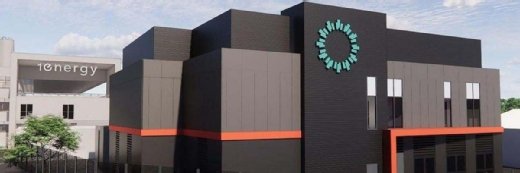
Bradford is to be the site of one of the UK’s first projects to reuse waste heat from a datacentre, after operator Deep Green this week gained planning consent for a 5.6MW facility. The datacentre will be built next to and integrate with heat generation at the under-construction Bradford Energy Centre.
The site – near the junction of Listerhills Road and Thornton Road – aims to provide artificial intelligence (AI)-capable datacentre resources, which are estimated to come on stream around the end of 2028, after a 24-month construction period.
Instead of venting heat drawn away from computer equipment into the atmosphere, the Deep Green datacentre will transfer excess heat into the Bradford Energy Network and make it available to buildings in the area.
The datacentre will use a closed-loop cooling system, which practically eliminates water wastage, and will enable the transfer of heat for further use.
Deep Green hopes the Bradford site will provide high-density colocation capacity for universities, public sector bodies and businesses that want to run AI inference and data-intensive workloads.
The UK needs more datacentres. But it does not need more waste. Our model is simple – use the electrons twice. First to power AI and high-performance computing. Then to heat homes and buildings
Mark Lee, Deep Green
Reuse of heat from datacentres has made little progress in the UK. Elsewhere, Deep Green has a datacentre project in Greater Manchester that will provide heat for a nearby swimming pool. Meanwhile, in London, Vantage Data Centres has a project underway where datacentre heat could be used to warm up to 25,000 homes.
Mark Lee, chief executive of Deep Green, said: “The UK needs more datacentres. But it does not need more waste. Our model is simple – use the electrons twice. First to power AI and high-performance computing. Then to heat homes and buildings.”
Datacentres produce heat to practically the same level as they consume electricity for compute. So, for every megawatt expended on compute, that amount of heat is produced. In the not-too-distant future, AI racks of 1MW each – achievable by 2028, according to Nvidia’s roadmap – will produce the equivalent heat of 200 electric ovens.
But there are challenges to using that heat. A major one is that the temperature of cooling water coming out of datacentre racks is not very hot in the power generation scheme of things. For that reason, it is not possible to generate electricity from it, so it can only really be used for a local heating scheme.
There are almost none of these in the UK, so there is nothing for a datacentre that wants to reuse heat to link up to.
The Bradford Energy Scheme is an exception. It is a large-scale heat pump with underground pipes that transport heat across the city, which were laid ahead of the recent pedestrianisation of Bradford city centre. They link to university and college buildings and Bradford City Hall, with the option for others in the city centre to connect in the coming years.
Tracy Brabin, mayor of West Yorkshire, said: “Deep Green’s pioneering approach will power our businesses, heat our communities, support the creation of good jobs and help us meet our net-zero ambitions. As the UK’s youngest city and its leading producer of applied AI postgraduates, Bradford is perfectly placed to harness this opportunity and help us innovate to build a stronger, better off West Yorkshire.”
Read more about datacentres
UK datacentre focus shifts to M62 and points north: Barbour ABI data shows 8GW of total datacentre pipeline with most big projects in the north and Scotland, while London and the M4 corridor are about 25% of projected capacity.