SAP Sapphire showcases ‘new SAP’ with agentic AI infrastructure ecosystem & tools

SAP Sapphire is always a guaranteed firehose of product and service announcements (in a good way, usually) and an opportunity to engage with key spokespeople from the company’s board itself and, wider, outwards through the arms of SAP’s domain-specific, practice-specific and industry-specific leaders who know their toolsets inside out and (where necessary) upside down as well.
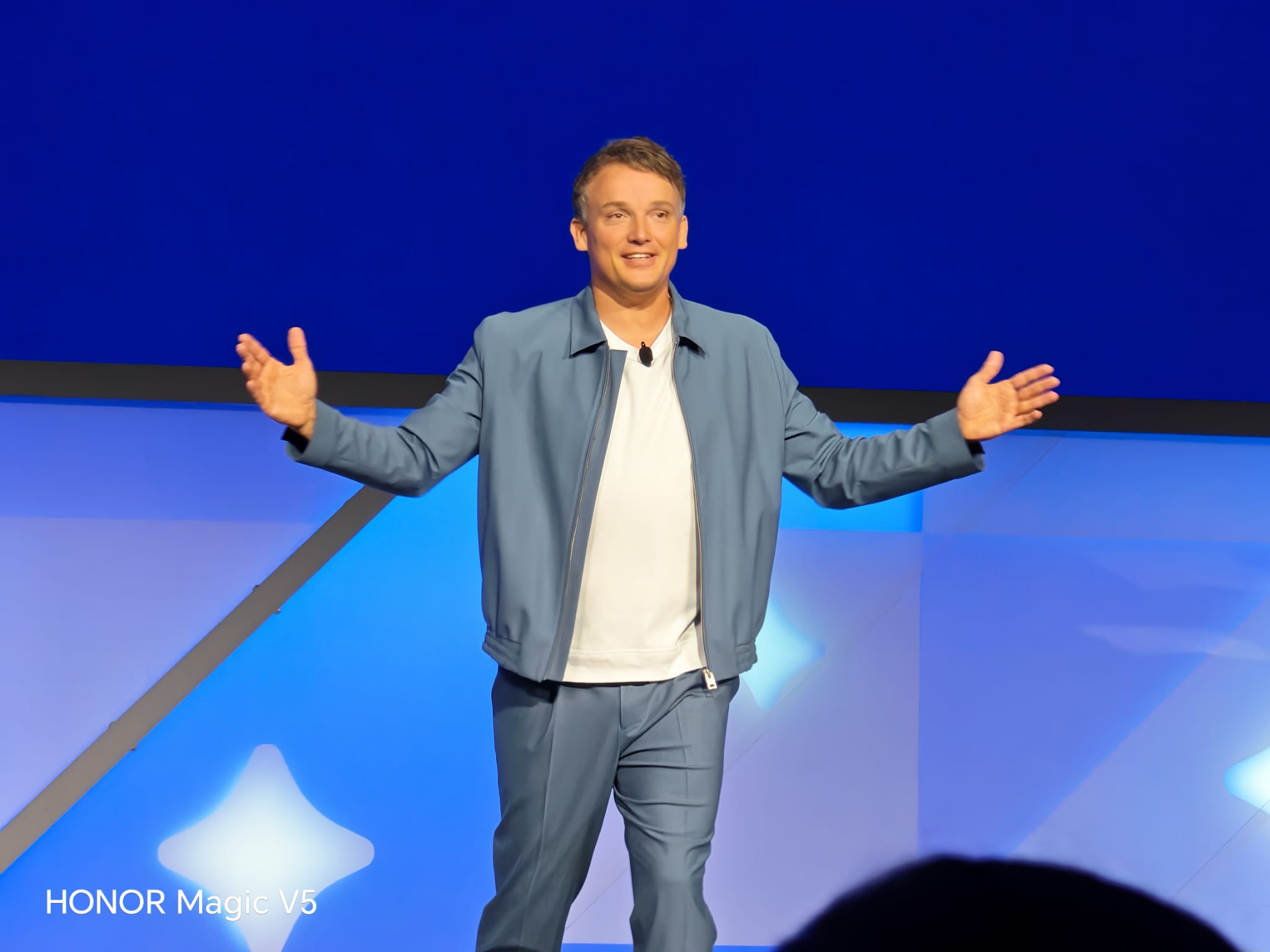
Starting at the top of the technical tree (no disrespect intended towards SAP CEO Christian Klein, who started his career as a developer and is never far away from the codebase even in his now more elevated position), SAP CTO Philipp Herzig is always affable, approachable and open.
The Computer Weekly Developer Network sat down with Herzig at the start of SAP Sapphire 2026 in Orlando, Florida, to find out how he feels about the so-called “enterprise AI gap” and discover what SAP has done to overcome this chasm.
Mind the gap
“So yes, the enterprise AI gap, it’s very real – even with all the phenomenal things a business can do with Claude Code and other tools,” said Herzig. “The problem is that customers have trouble making live deployed AI secure, compliant and capable of working within the realms of its own lifecycle management so that it stays functional and well-formed.”
He reminds us that this challenge is tough at a granular individual level, but it’s even tougher when doing it at scale, where systems often suffer from risk of brittleness.
“Implementing enterprise AI out of the box means teams will find some functions are prone to hallucinations – and that’s not good for anyone… so we looked at those realities and looked at how to make things better,” said Herzig. “SAP wants to be able to help people build tools with the right processes to achieve the right outcomes and we have the backbone for business data context to do this.”
This approach means spanning various tiers of the stack.
- The process layer (which may span multiple applications within an integrated and flexible suite, where agents and workflows run across every part of the business, from finance to procurement and so on) starts us off.
- The product level data and AI fabric comes next (the entities and the business objects that power the underlying process) as a fundamental substrate.
- The operational layer model provides a channel to execute all business processes and represents a single business domain in which a team wants to work. exists as one semantic layer that denotes the specific domain that a team want to work within.
What about developers then?
What should developers think about now that SAP has created the “new SAP” with agentic enrichment inside its platform at so many levels?
“They can think about building agentic services that exist within the SAP ecosystem with knowledge of the fact that all the apps are underwired and fully connected in a secure way, which in itself engenders some extra freedom to innovate and know that all the plumbing and lower substrate engineering is taken care of,” said an upbeat Hezig. “But because so many developers may not even know what they should be building to improve business processes and KPIs, we also make sure SAP Signavia is there [SAP’s Process management software for end-to-end business transformation and operational excellence] to help provide a process consulting agent and really help create new services – it also helps identify the areas where things could be improved without the use of AI.”
In May of this year at the time of SAP announcing the intent to acquire Prior Labs to bring a Tabular Foundation Models (TFM) research firm into the SAP family, Herzig further noted that early on, SAP recognised that the greatest untapped opportunity in enterprise AI wasn’t large language models; it was AI built for the structured data that runs the world’s businesses.
“We built SAP-RPT-1 to prove that conviction for enterprise data. Prior Labs has built a leading TFM on public benchmarks and built one of the leading research teams in this category. Combining their frontier model work with enterprise data and customer reach is how we intend to shape this category globally,” he added.
SAP BTP lead: agentic function democracy
Moving onwards, the Computer Weekly Developer Network also spoke to
Michael Ameling, president, SAP Business Technology Platform (BTP). Ameling was keen to discuss SAP’s use of data and the BTP story, discussing build agents, apps, extensions in Joule Studio and the new integration suite.
“We want to remove any limits or barriers to using agentic services across our toolset and total SAP ecosystem. That’s why everything has been intelligently wired together so that software application developers and businesspeople alike can both interact with services to drive the autonomous enterprise forward,” said Ameling.
He further stated that agentic controls can now enable all parties to “just log on” as the infrastructure services SAP has put in place oversee and confirm user identities and policy access privileges.
“But, as always, the IT function stays in control at all times and is there to ensure appropriate levels of governance are applied,” said Ameling. “This means observability metrics now come to the fore as SAP also aligns to OTEL as the open standard for the transfer of observability data. SAP is in fact the 9th largest contributor to the total universe of open source code commits, so this runs in line with our DNA on a fundamental operational level.”
Core workflows, algorithmic logic
Extending the technology proposition he puts forward here, Ameling reminds us that going forward, organisations need to embrace an efficiency directive when it comes to the deployment of applied AI at the operational surface of business. This means that, for a “basic” organisational workflow, a business doesn’t need to “burn away tokens” and drain resources through LLM usage – instead, core algorithmic logic for business decisioning is okay. For more non-deterministic use cases, use some AI.
“The working example here might be, if a company needs to drive invoice processing functions, that’s doesn’t always need to be an AI job as it’s essentially a deterministic process with a start, middle and finish. But, wider, when more non-deterministic nuances need to be analysed, and a company needs to assess whether those invoices generated fall in line with company invoicing policy (which may be a changeable beast in and of itself), then we can bring AI into the picture to enable a more efficient and now more autonomous enterprise,” clarified Ameling.
Hands-on with Grandpierre
Providing lots of practical hands-on demo energy and a deeper dive into some of the core agentic functionality on offer from SAP today was Richard Grandpierre, VP product management, SAP Business AI.
With a focus on the new AI capabilities and our Business AI Platform, Grandpierre talked about the progression we’ve been through in recent years with predictive, prescriptive, descriptive and now agentic AI (with a fair amount of RAG in between), he says that these cycles have made it hard to keep up sometimes as we have (as an industry) needed to factor in so many updates.
“As we have progressed towards where we are today with agentic workloads – although a lot of factors are still changing, I do firmly believe that agentic workloads are here to stay,” said Grandpierre. “This is because agentic workloads actually do work i.e. they perform tasks, they use tools, they manipulate data and so much more.”
Pointing to the way SAP-RPT-1 (SAP’s tabular foundation model – a Relational Pretrained Transformer – built specifically to understand relational database structures and deliver instant predictive insights directly from structured enterprise data) Grandpierre ran a demo live on his smartphone to showcase the technology’s ability to work not with language models, but with complete tables and fields in the ERP arena to autocomplete and suggest values for working business operations.
Interoperable AI agents: SAP & beyond
Last but not least, the Computer Weekly Developer Network met with Balaji Balasubramanian, CX Lead at SAP.
Discussion at SAP Sapphire this year with Balasubramanian centred on his heartfelt validation for the use of CX today (this is not 20-years ago when developers just passed user needs off as “operator error” when apps didn’t work properly… and he talked extensively about how SAP now moves from a company focused on systems of record & systems of transaction, through the period when we talked about systems of engagement… to now emerge as a firm that drives systems of agentic engagement and experience.
Balasubramanian has previously spoken on how SAP and Google Cloud have formed a partnership that will help marketers put AI agents to work at scale. Through integrations between the SAP Engagement Cloud, SAP Customer Experience (SAP CX) and Joule solutions and Gemini Enterprise, joint customers can now deploy agents that securely access unified data stored across both ecosystems to execute complex marketing strategies based on high-level goals defined by the user.
“This is more than a data integration; it’s a leap forward for AI agents that can collaborate naturally and execute seamlessly,” said Balasubramanian. “By combining SAP Business Data Cloud Connect for Google with interoperable AI agents across SAP and Google Cloud, we’re giving organizations a path from AI experimentation to AI-enabled customer experience at scale. Marketers can spend less time on manual tasks and more time shaping the customer journey.
Joule to close
Joule (AI Voice) closed this events main keynote and said that this year at Sapphire, SAP has shown how to turn the promise of business AI into reality.
“SAP Business AI platform provides the data, process, and governance AI needs to deliver accurate and secure outcomes at scale. We introduced the Autonomous Suite, where applications reason, decide, and act for you. And we showed how we manage change management with Rise. Together with customers and partners, we showed how SAP is helping companies realise the vision of the autonomous enterprise,” said the agentic service, in the main hall.