OpenAI details GPT-5.2-Codex

As something of a recent open technology recap, we can note that (very late last year) OpenAI released GPT-5.2-Codex.
This is a version of GPT-5.2 that is optimised for Codex.
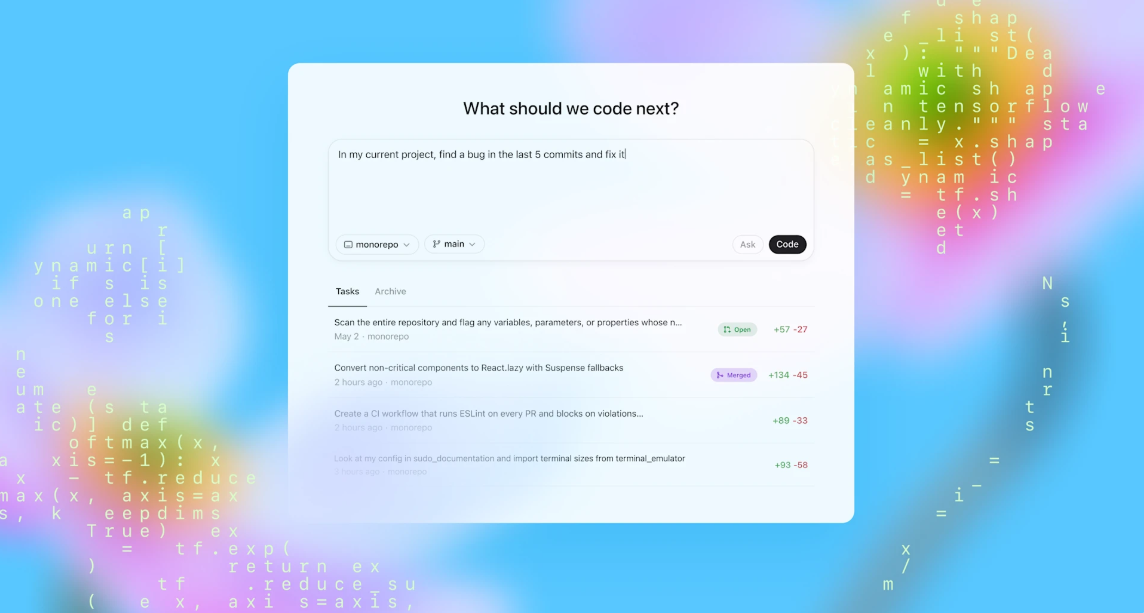
Codex is OpenAI’s own software application development coding agent. The company refers to it as a cloud-based software engineering agent that can work on many tasks in parallel.
Codex can perform tasks like writing an application’s features, answering questions about a codebase, fixing bugs and proposing pull requests for review.
Each task runs in its own cloud sandbox environment, preloaded with a developer’s repository.
The team claim that Codex usage has increased by more than twentyfold since the launch of GPT-5-Codex in August of last year.
“Within OpenAI, nearly all code contributions now come from developers using Codex… and it has been the engine behind recent new launches like Aardvark, Atlas, and the Sora Android application,” notes the OpenAI team.
NOTE: OpenAI’s Aardvark (AI Security Agent) is an autonomous security tool that works to find and fix vulnerabilities in source code automatically. It scans codebases, creates threat models, validates potential exploits in sandboxed environments. It also suggests specific patches for human review.
The team say that GPT-5.2-Codex pushes the frontier of real-world software engineering with SOTA on SWE-Bench Pro and Terminal Bench 2.0 as well as being optimised for complex, long-running engineering tasks where reliability over time matters.
Managing migrations
Users can navigate large repositories, refactoring code, managing migrations and creating and reviewing pull requests.
“[GPT-5.2-Codex offers]stronger long-context understanding, native compaction, and token-efficient planning. [There is also] improved performance in Windows environments and with visual inputs like screenshots and diagrams. The model is paired with stronger safeguards as cybersecurity capabilities advance,” says OpenAI.
GPT-5.2-Codex is described as the “most cyber-capable” Codex model to date i.e it is being deployed with additional cybersecurity safeguards and a more intentional access model, including ongoing monitoring and evaluation against the Preparedness Framework.
Authorised defensive work
OpenAI is also introducing a trusted access pilot, which aims to provide vetted security professionals & organisations controlled access to advanced capabilities for building authorised defensive work.
Developers can access this technology upon sign-in with ChatGPT and API access will follow.