Nutanix Cloud Analysis: The reasons why AI is driving container adoption

Hybrid multi-cloud computing platform company Nutanix has detailed its eighth annual Enterprise Cloud Index (ECI) survey and research report.
This is the company’s most (internally, if not also externally) revered market analysis and it is carried out every year with precision in order to provide software engineering teams in the cloud-native space with bellwether markers that point to the most important macro trends (even when they are being played out at the micro-level) in the industry.
Unsurprisingly, perhaps (actually, not perhaps, it’s definitely) artificial intelligence plays a big part in the study this year. We can say with some certainty that the deployment of AI is central to the need for application and infrastructure modernisation in enterprises.
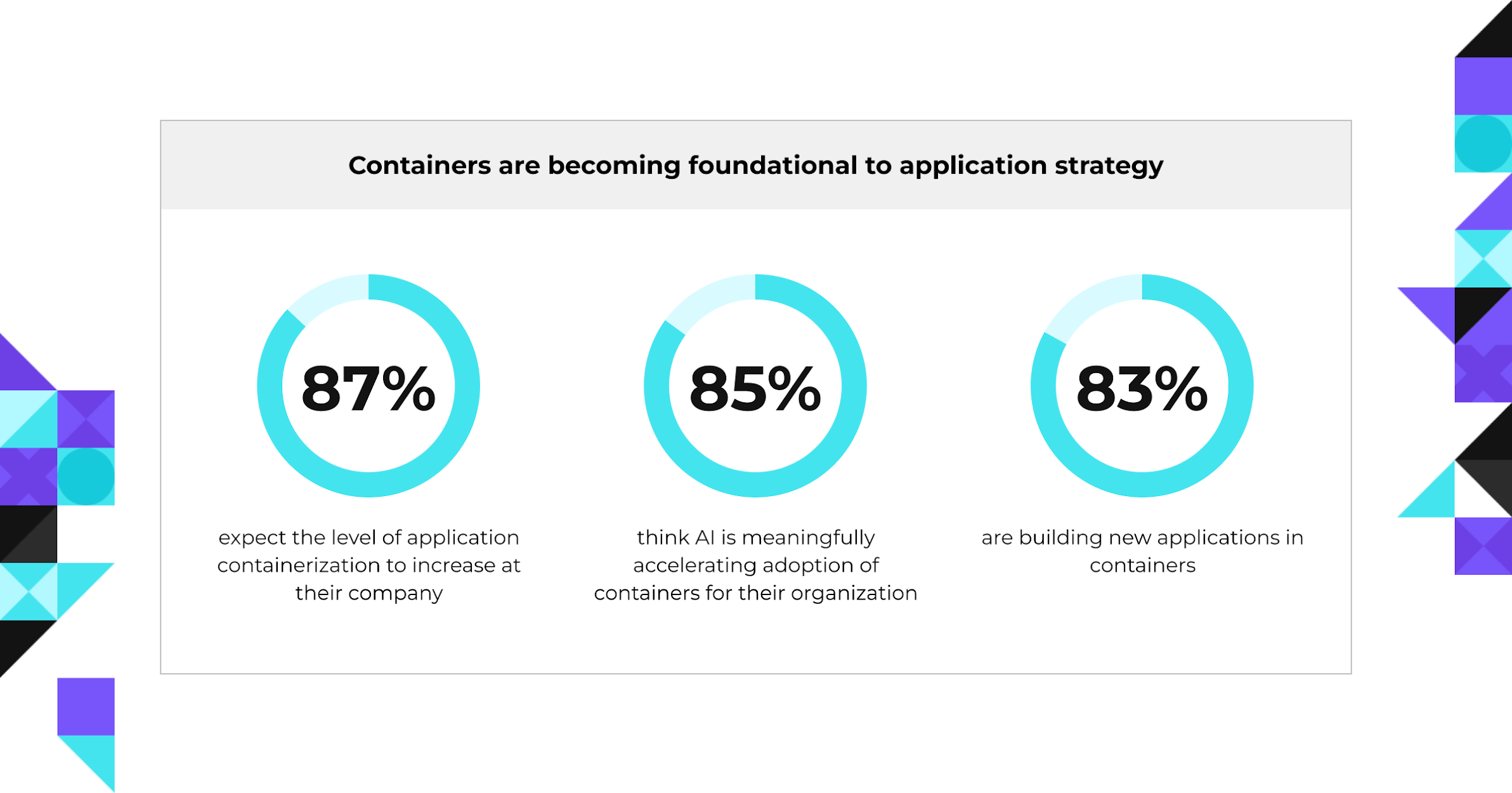
This race for infrastructure modernisation in the face of AI sees containers become an even more central and core component of enterprise application strategy. Almost all (85% of respondents) have reported that AI is accelerating their adoption of containers to improve speed, reliability, and scalability.
Why AI drives container adoption
There are manifold reasons why AI is driving container adoption, so let’s unpack this.
We can say that a core rationale here is the fact that containers provide a more standardised environment, contained (yes, the clue really is in the name) in one place so that complex software application libraries can execute without experiencing fragmented and broken dependency fragilities. Further, containers also allow AI models to be more portable (they’re “contained”, get it) and this in turn allows them to be more easily moved to different cloud services depending on the cost-performance-functionality optimisations that any given hyperscaler is offering… all of which sounds like welcome news to Nutanix of course (remember how it calls itself the hybrid multi-cloud computing platform company?) and means that more elastic scaling is possible. Additionally, container-contained AI models can be more easily run as isolated sandboxes, which makes a lot of sense if a team is prototyping some new-age esoteric agentic services. Basically, containers are a good fit AI.
Nutanix notes that containers are being used to support AI-enabled workloads and modern application development with 87% of respondents expecting the use of containers for applications to increase over the next three years.. at the same time, 83% say they are already building new applications in containers.
Get a handle on containers
Further, 85% percent of respondents believe AI is accelerating container adoption, which may well highlight why enterprises need to evolve their infrastructure strategies to handle more containerised workloads.
“The findings indicate organisations need enterprise-grade security, resilience and portability as AI workloads can run anywhere,” said Lee Caswell, SVP, product and solutions marketing at Nutanix. “Organisations would also benefit from a common operating environment for virtual machines and containers that enables their IT leaders to scale AI confidently across hybrid environments.”
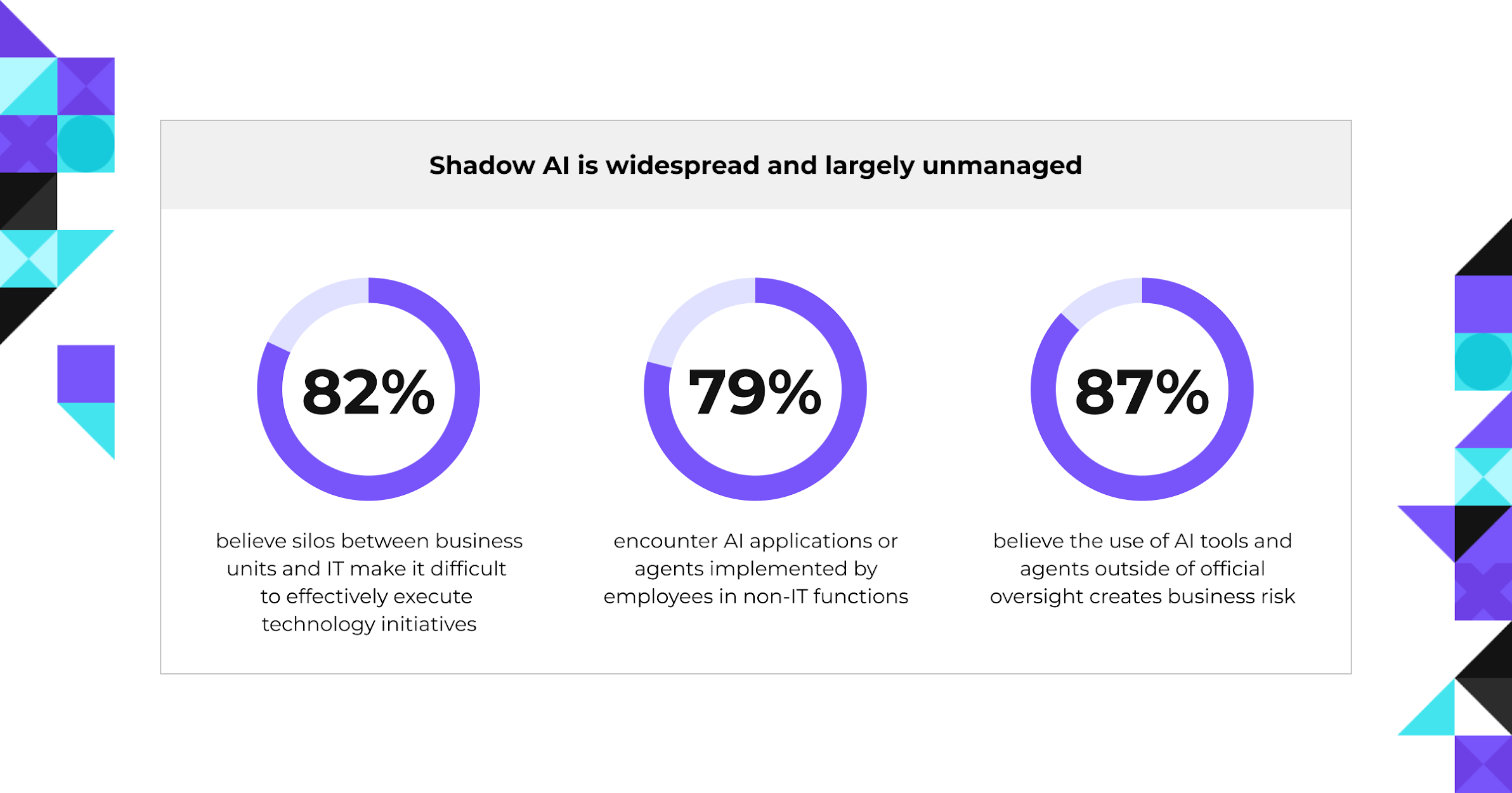
While AI adoption is driving a lot of new technology, it is also introducing operational challenges. A large number of Nutanix survey respondents believe silos between business units and IT make it difficult to effectively execute technology initiatives, slowing deployment timelines and increasing complexity.
In the shadows
Many respondents encounter AI applications or agents being implemented by employees in non-IT functions. They believe unauthorised AI use introduces risk, including exposure of sensitive data and intellectual property. Nutanix says that this highlights the need for closer collaboration between IT teams and business stakeholders to ensure AI deployments remain secure, compliant and aligned with organisational goals.
The majority of IT executives (61%) expect AI agents to enhance customer or employee experiences. Some 57% percent also anticipate that AI agents will improve productivity and efficiency. Additionally, some believe that AI agents can play a deeper role with 57% seeing potential for AI agents to create new products, services, or revenue streams.
For 80% of respondents, data sovereignty is a high priority when making infrastructure decisions, including where to utilise containers.
The science of compliance
Compliance obligations often drive organisations to keep data physically within the country where it was collected. More than half (57%) feel the need to run their infrastructure within a single country, whether on-premises or through a local cloud region, largely due to security or data protection concerns.
A somewhat unconvinced total of 59% percent of respondents anticipate that their organisation will have more than five AI-enabled applications in the next three years. Yet if their organisation needed to deploy AI workloads on-premises, 82% view their current infrastructure as not fully ready to support this.
Conducted in November 2025 by Wakefield Research, the survey gathered responses from 1,600 cloud, IT and engineering executives with at least a manager-level title. Respondents represented organisations with 500 or more employees across Australia, Brazil, France, Germany, India, Italy, Japan, Mexico, the Netherlands, the Kingdom of Saudi Arabia, Singapore, Spain, the United Kingdom and the United States.