For decades, mobile operators have built their business around a relatively simple proposition: connecting people, devices and enterprises. Every new generation of mobile technology, from 3G to 4G and, more recently, 5G, has promised faster speeds, greater capacity and new digital services.
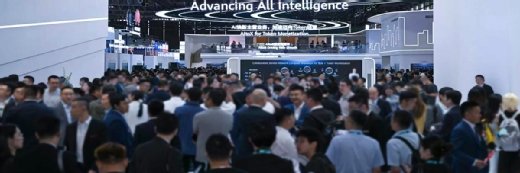
But as the telecoms industry gathers at MWC Shanghai 2026, a different question is beginning to dominate conversations: what comes after connectivity?
Artificial intelligence (AI) has emerged as the defining theme of this year’s event, with operators, equipment suppliers and industry analysts increasingly arguing that future growth will depend less on selling bandwidth and more on enabling AI-driven services. Central to that discussion is the concept of the token economy, a shift that could fundamentally change how operators create, deliver and monetise digital infrastructure.
While tokens have traditionally been viewed as technical units used by large language models to process information, they are increasingly becoming a proxy for economic value. Every AI query, inference request or agent interaction consumes computing resources, network capacity and storage. As enterprise AI adoption accelerates, those computational tokens become the currency powering the intelligent economy.
For telecoms operators facing years of pressure to generate meaningful returns from multibillion-dollar 5G investments, the prospect is significant. Rather than monetising connectivity alone, operators could begin generating new revenue from AI inference, computing services, network application programming interfaces and intelligent digital platforms.
AI becomes the largest digital transformation investment
The timing reflects broader changes in enterprise technology priorities. According to research presented by GSMA Intelligence at MWC Shanghai, AI has become the largest area of enterprise digital transformation spending through 2030, accounting for around 20% of total investment, surpassing 5G connectivity, cloud infrastructure, cyber security and internet of things (IoT) technologies.
Enterprise adoption has also reached a new level of maturity. GSMA data suggests that almost four in five organisations are already using AI at either a moderate or an advanced level. At the same time, among large enterprises employing more than 10,000 people, adoption exceeds 80% globally and 85% in China.
The findings suggest AI is no longer viewed as an experimental technology but increasingly as core business infrastructure. “Moving from limited or moderate AI deployment towards advanced implementation is now becoming the next priority for enterprises,” GSMA Intelligence noted during the event, adding that organisations expect AI to deliver measurable improvements across productivity, operational efficiency, cyber security and revenue generation.
From selling bandwidth to enabling intelligence
This shift has important implications for telecoms operators. Historically, operators invested heavily in networks that transported data. AI, however, requires something fundamentally different. Large-scale AI applications demand high-performance computing, low-latency deterministic connectivity, secure data infrastructure and increasingly intelligent networks capable of orchestrating workloads across cloud, edge and devices.
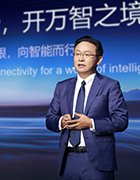
Huawei believes this convergence of computing and connectivity creates a unique opportunity for operators. Speaking during his keynote at MWC Shanghai, David Wang, deputy chairman and rotating chairman of Huawei, explained that the industry is entering what the company describes as the token economy, a future where AI tokens become a new unit of economic value, requiring operators to rethink not only their networks but also their business models.
“AI is accelerating its transformation into a productive force. Looking ahead, we have every reason to believe that artificial general intelligence will emerge and trigger profound changes. AI will move beyond the digital world into the physical world”
David Wang, Huawei
Huawei believes telecoms operators are uniquely positioned to participate because they own two of the critical foundations of AI: connectivity and computing infrastructure. “The industry needs to study and address a series of critical issues,” Wang said during his keynote. “These are not only technical challenges, but many are also business challenges as well.”
Among those challenges, he highlighted questions that could shape the next decade of telecommunications: what services future mobile networks should provide, how AI should integrate with mobile communications, how spectrum should be allocated, how AI-native core networks should be designed and, perhaps most importantly, how operators can achieve sustainable business success.
Rather than presenting AI as simply another application running over telecoms infrastructure, Wang positioned artificial intelligence as the force driving the next evolution of mobile communications.
From connecting people to connecting intelligence
The telecoms industry has historically evolved in distinct phases. First came voice communications, then mobile broadband, and then the connection of billions of smartphones, while the arrival of the IoT expanded networks to connect machines, sensors and industrial assets.
According to Wang, the next stage is fundamentally different. “Mobile networks will evolve from connecting people and things to connecting intelligence itself,” he said.
That evolution reflects AI’s rapid transition from software capable of assisting users to systems increasingly able to reason, collaborate and interact autonomously.
“AI is accelerating its transformation into a productive force,” Wang said. “Looking ahead, we have every reason to believe that artificial general intelligence [AGI] will emerge and trigger profound changes. AI will move beyond the digital world into the physical world.”
Mobile networks will evolve from connecting people and things to connecting intelligence itself
David Wang, Huawei
For telecoms operators, that transition represents more than another increase in network traffic. Today, most AI applications remain cloud-based and are largely consumed through smartphones and PCs. Huawei believes the coming decade will introduce billions of AI agents operating across cloud platforms, edge infrastructure, autonomous machines, robots and intelligent devices.
Single AI assistants will evolve into collaborative ecosystems of specialised agents capable of interacting with each other in real time. “The decade after 2030 will witness explosive growth in both the capabilities and numbers of intelligent agents,” Wang added. “The number of AI agents may reach hundreds of billions, or even trillions.”
Such a future, he argued, places unprecedented demands on communications infrastructure. Current mobile networks were designed primarily for human communication and content consumption. AI introduces fundamentally different traffic patterns, with continuous machine-to-machine interactions, deterministic performance requirements and significantly greater uplink demands.
Coverage, Wang said, must also expand far beyond traditional terrestrial networks. “We need to move from roughly 20% terrestrial coverage today to seamless global coverage across land, sea, air and space.”
Why the token economy matters
Unlike previous generations of digital services, AI workloads consume measurable computing resources every time a user asks a question, an autonomous system makes a decision, or an AI agent communicates with another agent.
Those interactions consume tokens. Huawei argues that, increasingly, tokens are becoming not merely a technical metric but an economic one. “In addition to serving as a technical model measurement unit, tokens are being used to measure value in the intelligent economy,” the company said at MWC Shanghai.
For decades, operators monetised bits, charging consumers and enterprises for bandwidth and connectivity. Huawei believes the AI era creates opportunities to monetise something different: computing capacity, AI inference, intelligent services and the infrastructure required to generate, transport and process tokens securely and efficiently.
Rather than simply carrying AI traffic, future telecoms networks could become active participants in AI production. According to Huawei, operators capable of combining high-performance computing with deterministic connectivity could participate across the entire AI value chain, from producing AI tokens inside datacentres to transporting them efficiently across intelligent networks and ultimately delivering AI-powered services to enterprises and consumers.
Why the GCC could become an early adopter
Although many of these discussions are currently being driven by developments in China, the Gulf region may be one of the best-positioned markets to translate the concept into reality. Governments across Saudi Arabia, the UAE and the wider Gulf Cooperation Council (GCC) have spent recent years investing heavily in sovereign AI strategies, hyperscale datacentres, advanced connectivity and national AI infrastructure.
Rather than treating AI as a standalone technology initiative, policymakers increasingly view it as an economic transformation programme spanning government, healthcare, manufacturing, energy and financial services.
Some of our customers already see the token era as the new oil
Mohamed Madkour, Huawei
Mohamed Madkour, vice-president of ICT strategy and marketing at Huawei, believes this strategic approach places the GCC in a strong position to benefit from emerging token-based business models.
“The GCC has always been among the first adopters of new technologies,” he said. “Five years ago, the ambition centred on 5G. Today, the ambition is AI.” Madkour added that governments across the region are focusing less on AI as an isolated technology and more on how it can improve citizen services, increase productivity and transform entire industries.
“They are looking at how AI can be infused into every aspect of life and business,” he said. “Governments, enterprises and CIOs are all taking action, not only by investing in AI itself, but by building the communications infrastructure and computing infrastructure that AI depends on.”
According to Madkour, many organisations across the Gulf increasingly view tokenisation as the next phase of digital value creation. “Some of our customers already see the token era as the new oil,” he said.
The comparison reflects the region’s ambition to build AI economies around digital infrastructure rather than natural resources alone. Initiatives such as sovereign AI platforms, national GPU clusters, AI factories and hyperscale cloud investments suggest Gulf governments are positioning themselves to become regional hubs for AI development and deployment.