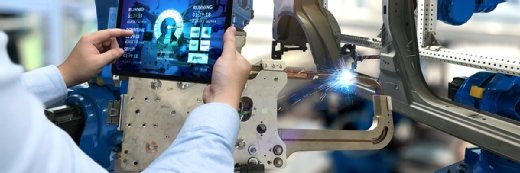
zapp2photo - stock.adobe.com
CES 2026: Qualcomm expands IE‑IoT portfolio
Edge AI technology made available for developers, enterprises and OEMs, integrating chipsets, software distribution and tools to scales across verticals

With a robot powered by its Dragonwing processor front and centre at its show floor demonstration at leading trade show CES, Qualcomm Technologies has revealed its go-to-market portfolio for the internet of things (IoT).
Qualcomm Technologies said that it is now positioned to address the needs of a much wider spectrum of customers, ranging from global enterprises to independent local developers, offering core edge compute and artificial intelligence (AI) technology across all industrial and embedded verticals.
Qualcomm hit the accelerator in IoT in earnest in February 2025 with the launch of Dragonwing range, designed to represent its industrial and embedded internet of things (IE-IoT), networking and cellular infrastructure solutions, looking to address industrial applications. The Dragonwing products support edge intelligence custom-designed for business and industry, with on-device hardware and software AI solutions seeing use in a number of use cases.
The net result is that the IoT solutions can be used in simplifying complexity, empowering smarter decision-making and optimising operational efficiency, forming what Qualcomm said would be “blueprints for industry transformation”, from enhancing everyday needs to solving the world’s most mission-critical challenges.
Fast forward almost a year and the company now has an expanded set of processors, software, services and developer tools. These include offerings and technologies from the five acquisitions of Augentix, Arduino, Edge Impulse, Focus.AI and Foundries.io. Qualcomm Technologies also claims to have the ability to provide system-on-chips tailored for intelligent IP cameras and vision systems.
The Dragonwing Q-8750, the latest in the series, is said to have been engineered for high-performance edge computing and immersive experiences. Its AI engine achieves 77 trillions of operations per second (TOPS) with support for INT4/8/16 and FP16 precision, enabling real-time inference and even on-device large language models up to 11 billion parameters. This later facet is said to eliminate cloud dependency for critical applications. The processor’s camera architecture supports up to 12 physical cameras and triple 48 MP ISPs, making it appropriate for use in drones, media hubs, and multi-angle vision systems.
Designed for consumer and industrial IoT devices, the Dragonwing Q-7790 boasts performance of 24 TOPS of on-device AI performance, and is seen as enabling advanced inference for applications – such as smart cameras, AI TVs and collaboration systems – without relying on the cloud. Its multimedia capabilities include dual 4K60 display support, 4K60 encoding and 4K120 video decoding, including AV1 hardware decode. It also has enhanced security features for environments where data integrity is paramount.
Also at CES, the firm announced that it was redefining its IE-IoT business to become a provider of edge compute and AI solutions across industrial and embedded sectors. This transformation will introduce distinct product lines with competitive roadmaps, a unified software architecture supporting Linux, Windows and Android, enabling deployment-ready solutions for multiple verticals.
Combined with its partner ecosystem and accessible developer platforms such as Arduino, Edge Impulse and Foundries.io, Qualcomm Technologies said that it was lowering barriers to entry and accelerating innovation from prototype to commercialisation.
By integrating Arduino and enhancing developer accessibility through Edge Impulse and Foundries.io, Qualcomm Technologies was confident that it could empower its developer communities to innovate faster and more securely. The unified ecosystem merges Arduino’s open-source capability with Qualcomm Technologies’ AI, connectivity and security technologies, while Edge Impulse and Foundries.io will provide machine learning and security-focused deployment tools.
“We’re not just introducing new products – we’re launching a comprehensive new approach to help organisations of virtually all sizes, across virtually all verticals, reap the benefits of AI and edge compute in their pursuit for efficiency and new opportunities,” said Nakul Duggal, executive vice-president and group general manager of automotive, industrial and embedded IoT, and robotics at Qualcomm Technologies.
“Our expanded industrial and embedded IoT portfolio, combined with a robust developer ecosystem, positions us as the ultimate platform for building intelligent, connected business solutions that scale.”
Read more about IoT
- Real-time analytics tops priorities for 82% of IoT enterprise: Research finds IoT is evolving from simple data collection to process automation, with enterprises starting to layer additional services like AI and machine learning to process data from IoT deployment.
- Vodafone IoT teams with Iridium for NTN NB-IoT connectivity: Global voice, data and PNT satellite services firm forges a partnership with comms operator’s IoT division to deliver narrow band internet of things connectivity to devices even in the most remote locations.
- AI becomes major accelerator for IoT: Survey reveals ‘soaring’ enthusiasm for IoT, with multiple emerging technologies acting as catalysts, and efficiency and productivity gains demonstrating return on investment.
- Kodiak AI looks to transform trucking with autonomous tech, IoT connectivity: 5G telematics and ThingSpace IoT management services enable autonomous vehicle technology operating model and manage massive amounts of data generated from its driverless trucks.
Read more on Internet of Things (IoT)
-
![]()
Telefónica and Halotech drive smart industrial safety with IoT and AI
By: Joe O’Halloran
-
![]()
Neura Robotics accelerates next-generation physical AI
By: Joe O’Halloran
-
![]()
Motive accelerates Edge AI safety for automotive operations
By: Joe O’Halloran
-
![]()
Qualcomm claims enterprise mobile processor world first
By: Joe O’Halloran