GreenOps - Digitate: AI agents set to work on cloud carbon wastage billions

This is a guest post for the Computer Weekly Developer Network written by Efrain Ruh in his capacity as field CTO at Digitate.
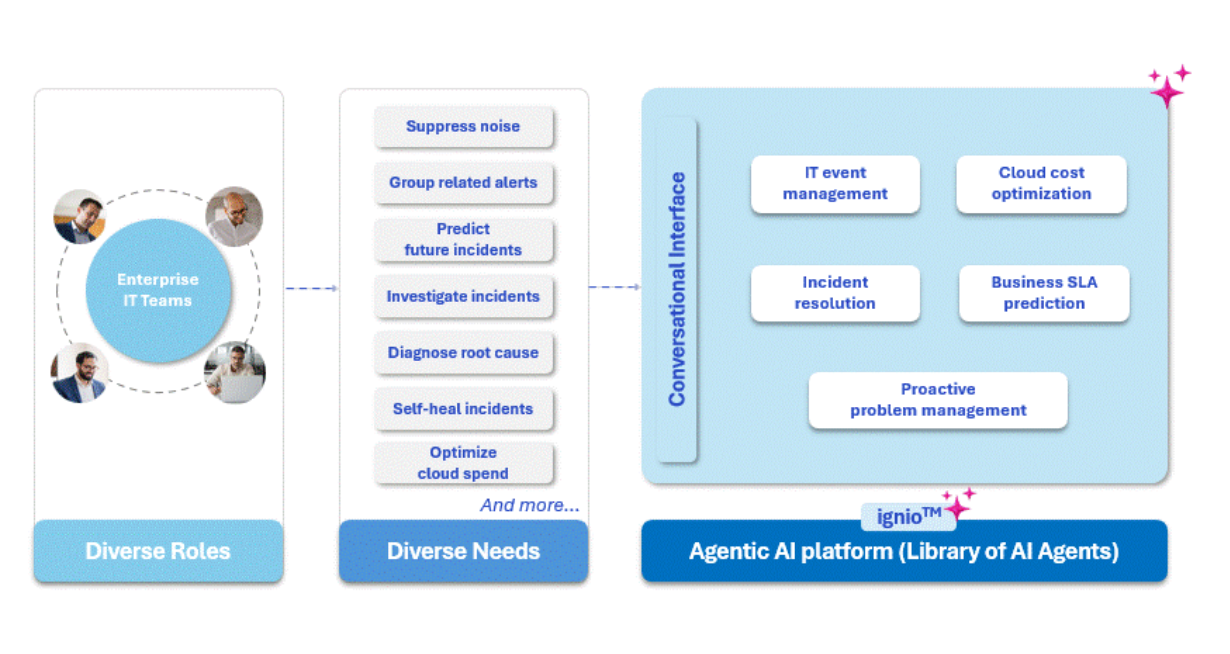
Digitate provides ignio™, an AI-driven platform that automates and optimises complex enterprise IT and business operations for increased efficiency.
Ruh writes in full as follows…
Beyond AI hype
2026 is shaping up to be the year when the agentic AI hype of 2025 is put to the test and turned into measurable business value, with interesting early use cases being defined in the worlds of FinOps and GreenOps.
The fact is that enterprises have been slow to unlock business value from cloud optimisation. In many cases, it’s remained a reactive, periodic and heavily manual process that attempts to repair damage already done, as opposed to an autonomous discipline that potentially prevents billions in wasted spend and carbon emissions before they happen. That said, we are starting to see that change with the introduction of AI agents that specialise in cloud optimisation.
Why? Because the financial and environmental stakes are huge.
Gartner expected global cloud spending by enterprises to reach $723.4 billion in 2025, with $44.5 billion of that figure representing pure waste.
Abortable copy jobs
This isn’t a rounding error, but money lost to over-provisioned instances running half-empty, idle resources consumed without reuse or “abortable copy jobs” accidentally triggered every month.
What’s more, an estimated 30% of cloud spend was typically wasted on underutilised resources, and with cloud spending projected to exceed $1 trillion globally by 2027 (Source: IDC), this trend is unacceptable to CxOs constantly being asked to explain why cloud spend is astronomical.
Wasted cloud = costly carbons
This might come as a surprise, but wasted cloud spend translates to wasted electricity consumed the net out being costly carbon emissions.
It’s that simple.
So, if your organisation is paying for idle resources, over-provisioned instances, “zombie assets” or wrong region placements, you are literally pouring money, electricity down the drain and creating spurious carbon emissions, and all without generating any business value in return.
Visibility? Check… basic attribution? check!
You know the drill. The traditional FinOps process revolves around visibility and attribution, ensuring every dollar spent in the cloud can be tied back to a product team, department, application or workload via tagging, labeling and organisational policies. GreenOps extends this to ensure teams can easily identify carbon emissions consumed alongside dollars spent.
These foundational FinOps and GreenOps practices matter more than ever but still require humans to analyse cloud cost and consumption data, identify waste and take action to stop the bleeding. Zombie resources can multiply your cost and carbon footprint in hours or days, but most dashboards and reporting tools are only looked at on a monthly cadence by already overworked IT and finance teams.
The bigger problem is that Fortune 1000 organisations are not running infrastructure in one cloud. AWS, Azure and GCP all report millions of cost and consumption records every month. While proper tagging will allow teams to surface zombie load balancers, staying on top of this level of operational detail at scale requires more attention than any finite group of humans can provide.
An hour-a-day resource drain
Image: Digitate
Does your organisation know every compute instance running at 100% utilisation? Every Kubernetes cluster oversubscribed 4x its actual workload? Every container that could be replaced by a serverless function? Of course not. But running these over-provisioned assets also isn’t seen until someone reviews a report or Cost/CARBON allocations spike.
Hours lost to debug.log files accidentally left on in production equals higher cloud spend + unnecessary carbon emissions produced. Days lost to data replication tasks accidentally executed equals potentially ex-employees’ salaries + benefits + harmful carbon footprint added to the atmosphere for nought. Months paid for storage volumes bought to support a project that was cancelled before implementation equals financial and environmental waste that enterprises can no longer afford.
Agents help solve FinOps & GreenOps
AI agents that specialise in cloud optimisation offer a solution that:
- Perceives and continuously understands usage patterns across the enterprise cloud estate.
- Performs reasoning about both cost AND carbon impacts.
- Proactively takes action to stop the waste.
- Continuously learns and improves.
Enterprises implementing continuous optimisation that works around the clock, eliminating cost and carbon waste before it happens, can detect and contain weeks of potential cost/spend leakage within hours. Imagine what that does to operating margins.
How do they do it?
- By reasoning about both costs and carbon implications of every action they take.
- By looking for opportunities to right-size over-provisioned instances and platforms. Optimisation Agents can help save money and reduce electricity consumption.
- By surfacing zombie resources. Waste Detection Agents will stop wasteful spending on unused cloud resources as well as curb needless energy usage.
- By reducing carbon emissions. Workload Agents can schedule workloads to run when grid carbon intensity is lowest-moving workloads to regions where it will consume the least amount of carbon when complete.
… and agents do it all automatically.
The simple economics is this: Rightsizing cloud resources and rescheduling workloads saves money AND cuts electricity usage, eliminating cloud waste saves dollars AND energy, and using serverless and auto-scaling to shift from persistent to on-demand computing lowers cost foundation while dramatically reducing idle power consumption. Agents can even help enterprises effectively orchestrate spot instances to their fullest potential – avoiding power up new capacity to serve workload.
Democratising finance & enviro intelligence
Traditional FinOps and GreenOps tools require specialised expertise to interpret results and translate findings into actionable recommendations. This technical barrier means insights remain confined within IT teams, even though financial and environmental implications affect the entire organisation.
Conversational AI interfaces are help change this dynamic. Finance leaders could ask “Where are we overspending this quarter?” while sustainability officers could query “What’s our largest source of carbon emissions?” and business executives would simply ask “What’s driving our cost and environmental impact spikes?” All will receive intelligent, contextualised answers without needing to understand underlying cloud architecture or complex allocation models, empowering them to make more informed decisions that impact the entire organisational bottom line.
This democratisation supports the emerging shared accountability culture that both FinOps and GreenOps advocates promote.
By any measure, cloud has become too critical to businesses to operate without a controlling optimisation layer. For enterprises navigating multi-cloud complexity while facing pressure to demonstrate both cloud ROI and ESG progress, AI agents may prove to be not just a valuable tool, but an essential component of financially and environmentally sustainable cloud strategies in the years ahead.