


Cloud, controlled: Nutanix tightens agentic AI governance & cost mechanisms

Cloud computing is for everyone, but not everything – or so the cloud industry’s mantra has variously specified over the years in an attempt to balance the -as-a-Service based model of software and data delivery with some real world pragmatism.
But also, cloud computing is for everyone, but not for every organisation’s IT budget where (for example) AI token usage starts spiralling, reserved instances languish unused and where over-provisioning in general has created deployment inefficiencies.
Nutanix wants to address cloud governance and cost imbalances with its new Nutanix Agent Gateway service, a technology designed to provide a centralised control point to govern AI agents, secure access to enterprise tools and monitor token consumption at scale.
We’re now told that this week represents the point of general availability of Nutanix Agent Gateway as part of Nutanix Enterprise AI 2.7.
As organisations move from AI pilots to production-scale agentic AI deployments, autonomous agents are increasingly interacting with AI models, enterprise applications and business data to automate complex workflows. This shift introduces new challenges around governance, access security, and the rising costs associated with model usage.
A centralised front door
Nutanix Agent Gateway acts as a what the company calls a “centralised front door” that manages interactions between AI agents, large language models (LLMs), and enterprise tools. It provides AI developers and platform teams with a single control point to govern agent activity, manage access policies, and monitor token consumption across agentic AI deployments.
Integrated with Nutanix Enterprise AI, the service helps secure interactions between agents, models, and business applications while providing consistent governance across AI environments, whether they rely on frontier models hosted in the public cloud or self-hosted, private models.
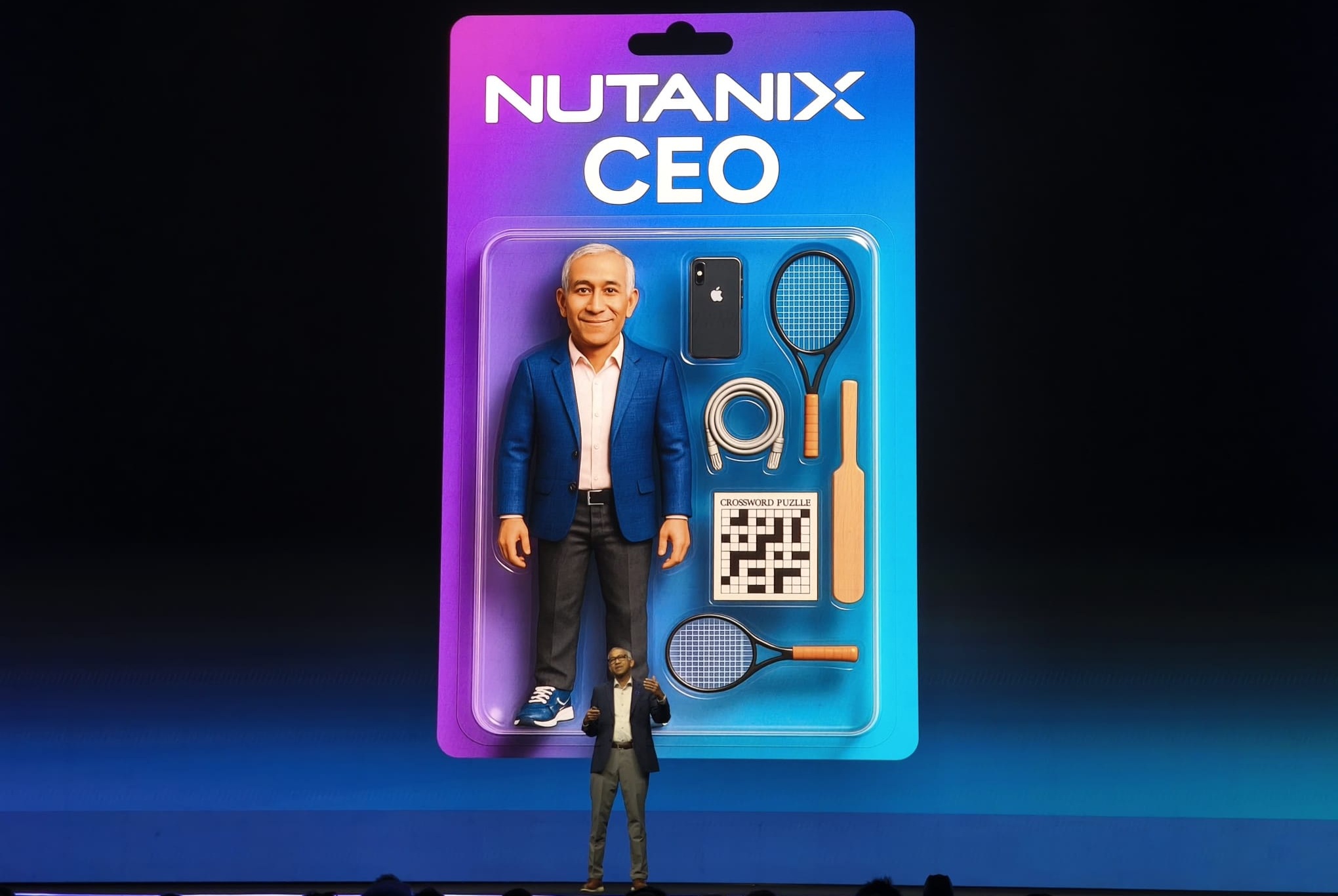
Speaking at a media gathering in London this week, Nutanix CEO Rajiv Ramaswami said that, “The industry has been evolving so rapidly, so we have focused on our own productivity experiences to drive our own product development. What we see now is widespread adoption of AI in our employee base, but the catch is that tools are getting more expensive, so with tokenisation in mind, we have looked at how to approach optimisation the right way. It’s all about putting controls on tools so that we know who has policy privileges to use which tools at which point… and simple jobs should only be executed on simple models, we need to move away from the free-for-all model that has resigned up to now.”
Ramaswami also talked about how engineering teams should manage the execution of models at the widest level, but with the most granular focus. It’s all about cutting out what he calls the “unfettered use* of not just AI, but all cloud services.
He qualified these statements saying that small use case deployments won’t always need management at this level, but Nutanix is inherently in the enterprise space anyway, so the market relevance factor holds water.

Nutanix CEO Ramaswami: Keep calm and carry on controlling cloud costs and governance controls.
Nutanix Agent Gateway addresses the challenges outlined in this story by centralising token observability across model providers, enabling IT and platform teams to monitor usage, allocate costs, and better control AI spending. This visibility also helps organisations identify workloads that can be shifted to self-hosted models, reducing reliance on external services and helping optimise costs.
Control connecting requestors
Serving as a control layer connecting requestors (AI users and agents) to AI models and Model Context Protocol (MCP) servers, Nutanix Agent Gateway applies access control policies and tool-level filtering across agents. This enables agents to securely access enterprise resources within a governed environment.
Key capabilities of Nutanix Agent Gateway include Nutanix Agent Gateway Governance for MCP, which allows cloud-native developers and their operations counterparts to set granular access control to MCP servers, enabling agents to securely connect to business tools and private data sources.
Also here we find the following key functions:
- Unified Observability: Centralise visibility into token usage, MCP server access, and LLM activity.
- Audit Logs: Record every MCP request with a comprehensive audit trail for AI governance.
- Unified API: Access external provider models and self-hosted models through a single API, allowing developers the freedom to use the right model for the right use case.
There is also granular token-based rate limiting to allow users to enforce token quotas and limits centrally that deliver real-time visibility into token usage across every agent and team.
“Organisations are rapidly moving from pilot projects to large-scale agentic AI deployments involving hundreds or even thousands of autonomous agents,” said Sammy Zoghlami, SVP EMEA at Nutanix. “Without centralised governance, it becomes difficult to control costs, access, and compliance. As autonomous agents continue to proliferate within enterprises, Nutanix Agent Gateway provides a unified governance framework to secure and oversee agentic AI deployments.”
Nutanix Agent Gateway enables organisations to apply consistent governance across agentic AI deployments, regardless of whether they rely on public cloud-hosted or self-hosted models. IT teams benefit from unified management of access policies, governance controls, and token consumption across their AI environments.
What developers should think
It’s an interesting proposition from a software application development (and wider Ops-operations team) perspective if we look at how Nutanix Agent Gateway provides developers with both freedom and operational guardrails.
By using a unified API, coders can move and switch between public and self-hosted models to fit the right use case without rewriting code, or indeed without the need to invoke agent code tools to inject more lines that might skew or bloat a project.
Perhaps more importantly, this technology works as a centralised front door to handles the headaches of Model Context Protocol (MCP) access, real-time token tracking and rate limiting… and that means developers should (in theory) be able to focus entirely on building production-scale autonomous code, cloud, agents and connectors.
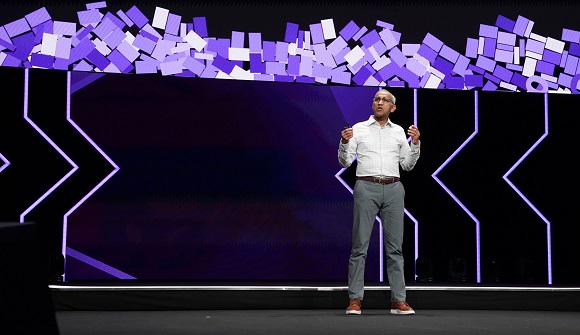
Rajiv Ramaswami, president & CEO of Nutanix.