Sapphire 2026: SAP executives admit route change on high road to business AI
SAP shifted its AI strategy eight to nine months ago to focus on business outcomes over tech, launching an SAP Business AI platform said to integrate business context with AI agents

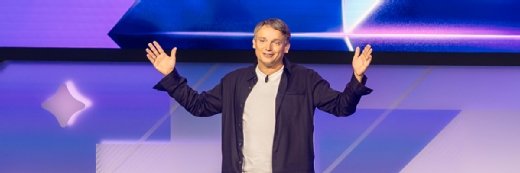
SAP changed direction on its “journey” to becoming a wholescale business artificial intelligence (AI) provider “around eight or nine months ago”, according to its CEO Christian Klein.
The company aimed to communicate to attendees of its Sapphire events in Orlando and Madrid 2026 that it had changed its focus somewhat to de-emphasise AI technology in favour of business outcomes that add up to, in its view, “autonomous enterprise”.
The supplier said its AI technology stack is being retuned to capture more of the specific business context of each customer. At Sapphire, the supplier unveiled a raft of AI applications and development and data management tools under new brands, SAP Business AI and SAP Autonomous Suite.
At a press and analyst conference immediately after the day one keynote at Sapphire in Madrid, Klein responded to a Computer Weekly question about when the “penny had dropped” that the supplier’s AI messaging was missing the mark with customers in search of business value.
“I guess the penny dropped only around eight, nine months ago, [when] we were looking at the end user feedback about Joule, about our AI, and what we found was there was some really positive feedback, but the biggest challenge was still that on our Business Technology Platform we had our agent builder, then we have BDC [Business Data Cloud], where you have the data content, but they were not really connected,” he said. “And then on the governance side, this was also again completely independent.
“So, you could pick Anthropic as a standalone model, build an agent, and you get the same results as if you had built it on BTP,” said Klein.
“And that was the moment in time where we said: ‘Let’s build and engineer the new AI platform, where you can build with any LLMs you want’. We are not competing here. But what we can do is give right away the business context into the agent so that when I’m using, for example, Anthropic on the SAP AI platform, the agent immediately understands my business goals, my business data.
“That’s when we had our Code Red moment as a company and brought all of our engineers together,” added Klein. “It was really hard work to show what we have announced. The customers were not all negative, but they said: ‘The accuracy, the outcome was not being 100% accurate. And when you’re asking business questions, you need higher reliability on the results you’re getting.
“With the new platform, with the agents now, we are very confident from the first customers and partners testing the platform that this experience will be much, much better than what we delivered a year ago.”
Manos Raptopoulos: avoid agentic chaos
Manos Raptopoulos, global president of customer success for Europe, APAC, the Middle East and Africa at SAP, told Computer Weekly in an interview at Sapphire in Madrid that “in terms of adoption of AI, I wouldn’t say there is a particular industry or type of customer that is more sceptical than others, other than the more or less obvious consideration these days about sovereignty”.
“If there is a growing consideration – which is a consideration, not a concern – it is how do you make all the agents controllable in your estate and avoid an agentic chaos type of situation. That I would consider the CEO or C-level nightmare – having uncontrolled agents roaming across your most valuable data and publishing those data to people that shouldn’t see them. That’s a security concern, a governance concern.
“If you go to any country, it could be a European country or it could be an APAC country, or even in the Middle East, it doesn’t make a difference, you have the same issue,” he said. “And that is not so much about ‘can you bring me AI or not?’ It’s firstly making sure that you have a relevance in the conversation because your AI is providing outcomes to the customer.
“And secondly, it’s about the pace because of sovereignty requirements – if SAP needs to do some type of engineering in order to make sure that it’s compatible with those,” added Raptopoulos.
Read more about Sapphire 2026
- Disrupted by AI, SAP grapples with exposing its ERP data.
- The AI technology behind SAP's Autonomous Enterprise pitch.
- SAP unveils agentic AI tools to partially automate ERP suite.
- How SAP sees the future of HR in the age of AI.
At Sapphire, in Orlando and Madrid, SAP harped on a knowledge management theme of “company memory”.
Raptopoulos expanded a little on this concept. “Basically, every company has its own golden rules somehow: the way things are done around here, the diligence that you have,” he said. “It’s not even coded. Sometimes it exists in some type of a manual, but you often don’t find it in a manual. It’s just how things are done.
“So, you need to make the system be able to learn from that behaviour, and that’s the company memory concept.
“Plus, on top of that, we have the privilege to be in the very detail of how companies are running their processes, end to end. SAP Signavio does that. With that, you have the digital twin of the processes that the customer is running, which is another layer of context and company memory. You can see which processes are automated, which processes present opportunity for automation, which are non-standard versus standard functionality, and you can actually visualise the outcome of an agentic workflow.”
Raptopoulos conceded that customers could use other process mining software, such as the one offered by Celonis. “Yes, they can, and some do,” he said. “The differentiation, we believe, it’s always, if you think about SAP, we’ve always been talking about integration, that means fewer friction points, less interfacing, more tight collaboration between processes, but customers do have optionality, always. And we are committed to an open ecosystem, an open collaboration.”
Haleon: out-of-the-box agentic preference
One customer at Sapphire who said SAP’s messaging is resonating was Claire Dickson, chief digital and technology officer at Haleon, which is a British multinational consumer healthcare company formed in 2022 through the merger of portfolios from GSK, Pfizer and Novartis.
She said, in an interview with Computer Weekly: “When we entered into the partnership with SAP, we made some assumptions that there would be more agentic capability coming, and therefore the partnership was premised on being [SAP] “clean core” and we trust that the agents are coming.
“So, we were delighted with the announcement here because clearly a lot of that comes out of the box as standard,” said Dickson. “Our AI strategy is to leverage as standard out-of-the-box from our suppliers where possible. We don’t want to be systemically building huge numbers of agents ourselves. We are building some, but we don’t want to do that as a strategy.”
Read more on Enterprise resource planning (ERP) software
-
![]()
Dutch critical infrastructure lags Europe’s cloud sovereignty divide, SAP executive warns
-
![]()
SAP Sapphire 2026 news, trends and analysis
By: Molly Driscoll
-
![]()
Disrupted by AI, SAP grapples with exposing its ERP data
By: David Essex
-
![]()
Tricentis delivers agentic AI Testing for SAP Business Transformation
By: Adrian Bridgwater