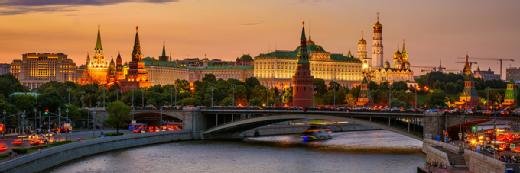
ekaterina_belova - Fotolia
Moscow champions digital sovereignty and AI-driven city management
By ensuring strategic technology capabilities are developed in-house, megacities can protect their critical infrastructure from cyber threats and global unpredictability, says Moscow government minister
In Moscow, artificial intelligence (AI) has transcended its science fiction origins to become the backbone of urban management, provided the city retains sovereignty over its technology capabilities.
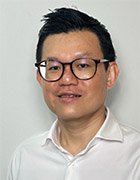
Speaking at a fireside chat at Gitex AI Asia 2026 in Singapore, Sergey Cheremin, minister of the government of Moscow and head of the department for external economic and international relations, outlined the Russian capital’s use of AI across public services, while cautioning against over-reliance on foreign technology vendors.
Managing a metropolis of 15 million people with a GDP exceeding $450bn demands an efficient digital ecosystem, Cheremin noted. Today, the city implements AI in more than 130 programmes, spanning traffic control, healthcare, education, waste management and construction.
“AI for us is not science fiction or about The Matrix,” he told the audience, referring to the 1999 movie that predicted a world dominated by AI. “It’s really online management of all municipalities.”
But as governments around the world race to build their computing capacities, Cheremin stressed that true security will only come from having true digital sovereignty.
“For big megacities like Moscow, it’s very important to provide security for your infrastructure, and you cannot be dependent on a few companies or technical solutions,” he said. “You cannot allow the vendors to dictate how you are going to manage the city.”
To mitigate these risks and protect against cyber attacks that could trigger catastrophic electricity blackouts or system failures, Cheremin said all strategic and sensitive technologies for Moscow are developed in-house by expert IT teams. “It’s not good to be isolated, but it’s also important to be sovereign so you’re not dependent on anyone,” he added.
From Moscow to Singapore
Noting the importance of international knowledge-sharing, Cheremin recalled his first trip to Singapore in 2010 to study the city-state’s advanced intelligent transport management systems.
Realising that foreign systems could not be transplanted into another city wholesale, Moscow studied other models from New York, London, Paris and Barcelona, among other cities, and engaged companies such as Siemens, Cisco and Thales, eventually creating a traffic management system tailored to its needs.
Today, the city’s transport system uses AI to optimise traffic flow, reducing congestion and saving commuters up to 30% of travel time. Furthermore, subway access is now processed through automatic biometric billing, removing the need for traditional transport cards.
Moscow has also deployed a massive security network of more than 260,000 CCTV cameras integrated into a single data-processing system. According to the minister, this has slashed the city’s crime rate by 90% over the past decade and reduced car thefts by 15 times.
Beyond security and transport, AI has delivered economic and social returns for the city. In healthcare, AI-assisted radiology can identify diseases and predict cancers with high accuracy, saving both time and money for Moscow’s healthcare system.
In urban planning, Moscow has spent a decade building a digital twin, a virtual model of the city featuring more than 9,000 data layers, from underground infrastructure such as subway lines to district demographics, allowing planners to predict the impact of future construction projects.
Despite his strong advocacy for digital sovereignty, Cheremin reiterated that Moscow is not turning its back on the global tech community. He pointed to city-to-city diplomacy, noting that Moscow actively shares its technological playbook with cities across Southeast Asia, China, India, Africa and Latin America.
“We understand that the situation is difficult...and it becomes unpredictable sometimes,” he said, referencing global geopolitical tensions that make events such as Gitex vital for sharing technological experience.
“We are really proud for several decades that we have a very good partnership with Singapore,” Cheremin said. With 80% of the world’s population expected to live in cities within two decades, he added, Moscow will continue to strengthen its partnerships with ASEAN and Chinese cities such as Beijing, Shanghai and Chengdu to build a stable urban platform.
Read more about AI in APAC
- Digital Realty’s CTO talks up the pace of AI silicon innovation, the growth of inferencing workloads, and why boasting about datacentre megawatts misses the point.
- DayOne and Cortical Labs are bringing ‘wetware’ computing to Singapore, using living neurons grown from stem cells to support the demand for AI while addressing sustainability concerns.
- Singtel and Nvidia have teamed up on a multimillion-dollar facility to help organisations scale enterprise AI deployments, tackle extreme datacentre power densities, and prepare for the era of embodied AI.
- The Australian government has struck a major five-year volume sourcing agreement with Microsoft to speed up adoption of AI and cloud technologies across the public sector.
Read more on IT strategy
-
![]()
Artificial intelligence powers Egypt’s USD 27bn city project
By: Andrea Benito
-
![]()
India’s push for sovereign AI to lift Asia’s tech ecosystem
By: Aaron Tan
-
![]()
Singapore Cyber Security Agency chief: Cyber stability a necessity, not a luxury
By: Aaron Tan
-
![]()
G42 expands global AI ambitions with sovereign cloud partnership in Vietnam
By: Andrea Benito