Red Hat capitalises on Nvidia for open source ‘rack-scale’ AI

Every enterprise vendor wants to now come forward with a so-called “complete AI stack” comprising of software application development and data science tools, service intelligence layers and (often most crucially of all) the infrastructure backbone needed to make it all happen.
Red Hat is one of those companies.
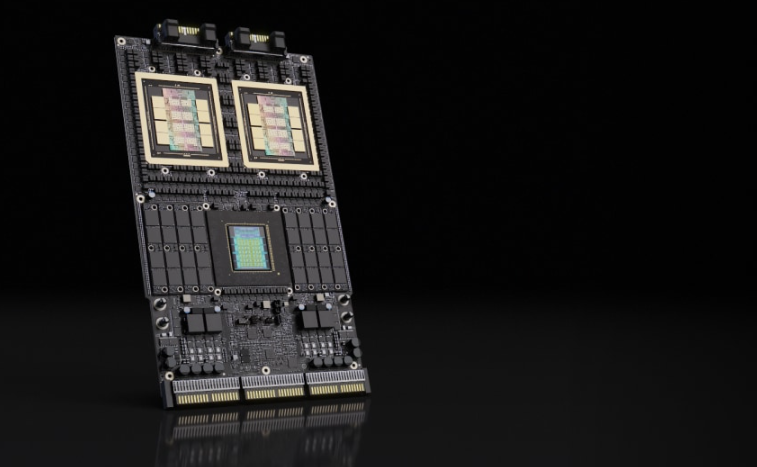
The Linux leader says it now wants to accelerate enterprise AI adoption with a complete AI stack optimised for capitalisation-focused GPU company Nvidia and its Vera Rubin platform with Red Hat Enterprise Linux, Red Hat OpenShift and Red Hat AI.
What is Nvidia Rubin platform?
Essentially a set of chips, this is the graphics acceleration company’s route to delivering what it calls “one incredible AI supercomputer” because Rubin harnesses extreme codesign across hardware and software to deliver up to 10x reduction in inference token cost and 4x reduction in number of GPUs to train MoE (mixture of experts) models, compared with the Nvidia Blackwell platform.
RHEL reality
How does it all come together for Red Hat?
The company now expands its collaboration with Nvidia to align enterprise open source technologies to AI and what has been termed “rack-scale AI advances”… a technology tier which sees the industry move beyond individual servers toward unified, high-density systems,.
“Nvidia’s architectural breakthroughs have made AI an imperative, proving that the computing stack will define the industry’s future,” said Matt Hicks, president and CEO, Red Hat. “To meet these tectonic shifts at launch, Red Hat and Nvidia aim to provide Day 0 support for the latest Nvidia architectures across Red Hat’s hybrid cloud and AI portfolios.”
Hicks and team suggest that moving into 2026, organisations are poised to move AI from experimentation into production, with top-down strategies and centralised AI toolboxes that incorporate AI agents and other advances.
This shift demands a stable, high-performance and more secure infrastructure stack, from the underlying architecture to the software running on top of it.
With Red Hat optimising its hybrid cloud portfolio for Nvidia, starting with Day 0 support for this new platform, Red Hat promises to help organisations to scale their AI initiatives more confidently, with enterprise-grade reliability and a consistent operational model across the hybrid cloud.
Confidential Computing
Red Hat Enterprise Linux will now also introduce support for Nvidia Confidential Computing for AI lifecycles, so this means security for memory and model data while giving organisations cryptographic proof that their most sensitive AI workloads maintain extensive protections.
The company pledges stability here and notes that Red Hat Enterprise Linux for Nvidia remains “fully aligned” with the main build of the operating system.
“As improvements from Red Hat Enterprise Linux for Nvidia make their way into Red Hat Enterprise Linux, customers will be able to easily transition to the traditional Red Hat Enterprise Linux as their specific production demands require with the confidence that production systems will maintain expected performance levels and application compatibility,” noted Red Hat, in a press statement.
Red Hat Enterprise Linux support for the Nvidia Vera Rubin platform will coincide with its general availability in the second half of 2026.