Genspark AI Workspace 6.0 & SecondBrain Note

Genspark this week launched Genspark AI Workspace 6.0, but there’s a lot to unpack here, so let’s break it down.
Described as all-in-one AI workspace, AI Workspace 6.0 is launched alongside a SecondBrain – a horizontal and persistent memory layer for agents that connects scattered context across email, meeting notes, calls, documents, systems of record etc.
This launch also comes with the arrival of SecondBrain Note – a hardware device that captures conversations that happen away from the screen and syncs to SecondBrain – product review section at end of story.
Genspark AI Workspace 6 features a new persistent memory foundation, an enhanced agent suite and a collaboration layer that (as all the vendors love to say now) treats AI agents as full teammates.
This software and hardware combination arrives at a moment when model capability improves nearly every week, yet independent research suggests that as of 2026, only a small fraction of people and organisations have been able to turn those advances into real usage or value.
AI is like a genius goldfish
The company says that frontier labs build powerful AI models and coding agents, but getting full value from them still typically requires specialised skills. Genspark says it builds those much-needed skills into capabilities that exist in a workspace for knowledge workers who never learned to drive, and one day won’t need to, because the car drives itself.
“Today, using AI is like collaborating with a genius who has a goldfish memory,” said Eric Jing, co-founder and CEO of Genspark. “With Genspark AI Workspace 6.0, we’re giving knowledge workers a second brain that never forgets, an agentic engine that builds for them, and a place where people and agents finally work side by side. When you combine full context with smarter agents, work can begin to do itself.”
Workspace 6.0 works in an arc: it captures a user’s context, acts on it and scales that work.
SecondBrain (the software component) gives Workspace 6.0 a persistent memory of a user’s work across email, meeting notes, calls, documents, systems of record like CRMs etc.
It synthesises those connected sources into a single layer that both the user and agents can read, use and update. With that full picture, the agents go beyond simple retrieval and can carry out tasks at a higher human-like level, so working with them feels less like querying tools and more like working with human colleagues.
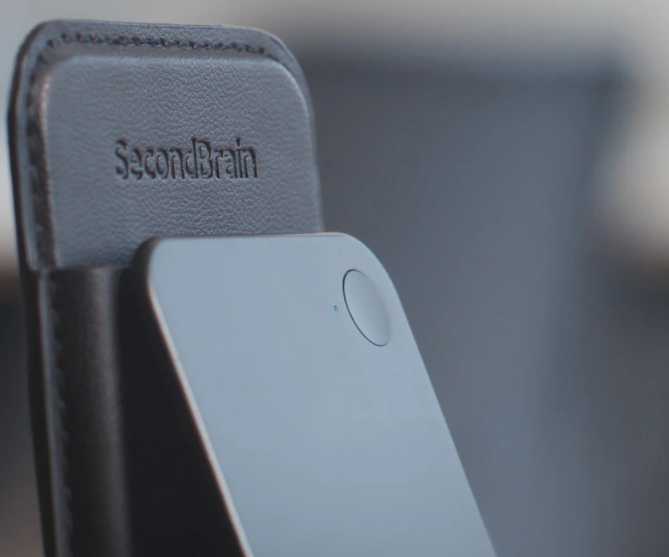
SecondBrain Note (the hardware component) is Genspark’s first hardware product. It captures meetings, calls, and spoken ideas, then syncs them into SecondBrain as searchable, structured memory. Once again, see review below.
GenMail: an agentic email client
The company’s GenMail is an agentic email client that builds an “email brain” from thousands of a user’s emails, learning their role, priorities, work relationships, calendar, and writing voices. An agent lives inside the inbox, prioritising what matters, understanding context, and drafting replies in the user’s voice.
The user’s email routine can be saved as reusable skills for the agent to move work forward.
GenTeam is team chats for people and agents. This is powered by shared memory so work moves forward together. People and agents work side by side in shared channels, so agents become part of the team’s workflow with the context to understand, remember and act.
AI Design and AgentBase from Genspark is as follows: AI Design turns a prompt into production-quality visuals, prototypes, brand assets etc – and AgentBase lets users build custom software, such as CRMs, dashboards and trackers, by connecting any data sources or by dropping in the spreadsheets they already use, without needing to code.
SecondBrain Note product review
Excuse the switch to first person in this story, but oh boy, I was sceptical.
Genspark actually sent me a SecondBrain Note before the software itself was finalised, but once the version was updated, this is an exciting product. As a working journalist, I can honestly say that this unit will be with me at most meetings I now attend, it will be say alongside me on Zoom calls and it will even be in my pocket for personal use, just to capture what’s going on around me.
A built-in light signals whenever recording is active, and every recording syncs to SecondBrain as user-owned memory the user can review, edit, download, or delete.
Information stays encrypted and protected by SOC 2 Type II and ISO 27001 certifications. Afterwards, a user can text Genspark, “build me slides from that conversation,” and the context is already there.
Credit card sized
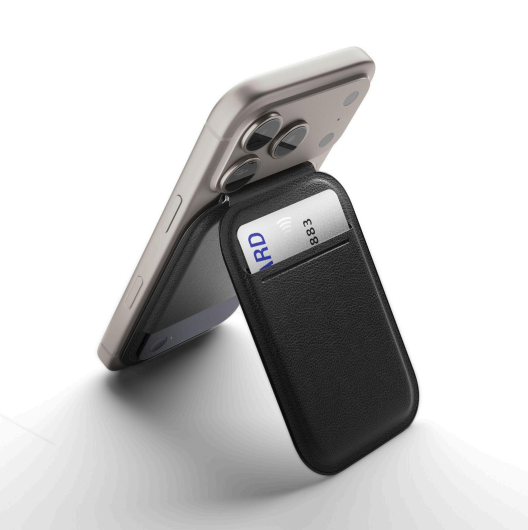
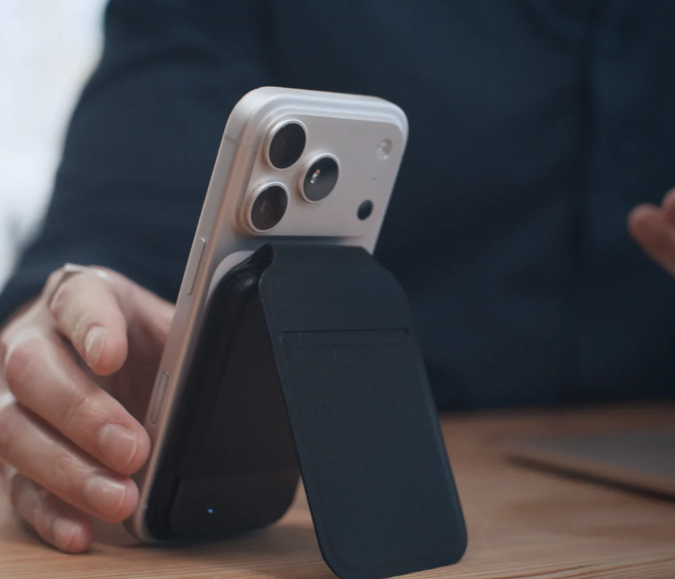
SecondBrain Note is a card-sized recording device that magnetically attaches to
your phone. It connects to apps including Slack, Notion, Gmail, Outlook, Salesforce, HubSpot etc. and everything syncs in automatically so that, over time, SecondBrain builds a complete picture of your work.
Because SecondBrain is built directly into Genspark Workspace, the AI can use everything it remembers to complete work with context. It can draft emails that reflect previous conversations, build presentations using decisions made in meetings, update projects, research next steps, and coordinate work across AI agents without asking the users to re-explain everything.
SecondBrain Note is 2.95mm thin and weighs 26g. It is credit-card sized, about three cards thick, so it can fit in a wallet, card holder, shirt pocket, or attach magnetically to a phone – note, it doesn’t attach magnetically to my Honor Magic V5 and so it may not attach to other foldable phones.
Audio capture
The device uses a 4-MEMS microphone array and one bone sensor. AI beamforming captures audio from up to 5 meters away, while voice processing helps keep conversations clear in real-world environments like cafés, crowded meeting rooms, and mobile settings.
So in practice (and I did this) it captures conversations in room while still inside my man-bag and indeed inside my pocket, you could be downloading really essential stuff without making it obvious that you’re recording (or, well, AI-recording) and the transcription happens just a few seconds afterwards when you connect with your smartphone app.
NOTE: A feature I think is superb is the freedom of use i.e. you don’t even have to have your smartphone with you, the SecondBrain Note will record a conversation and start working away to transcribe it afterwards when you are ready. The app produces not only a full transcription, it also produces an AI summary of conversations, which I have to say is more useful than trawling through a whole transcription.
SecondBrain Note includes a built-in contact sensor that picks up call vibrations directly from the back of your phone, helping capture important phone conversations. It is designed for one-button control. Users can tap to record, with no mode switching required.
A single press can mark key moments during a recording, helping users capture important parts of a conversation.
Genspark’s broader system
Most AI notetakers stop at the transcript and action items. SecondBrain Note is an input channel for Genspark’s broader SecondBrain memory system, so conversations can become searchable context across people, projects, decisions, timelines, and follow-ups inside Genspark Workspace.
Physical size is 2.95mm thin, 26g, credit-card size. Second Brain Note delivers up to 35 hours of continuous recording on a single charge. It includes 64GB of local storage, enough to store up to 7,000 hours of recordings offline. Once recordings are synced to the app, local files are automatically cleared to free up storage.
Much like Otter, there’s a free usage plan, users get 300 minutes free every month, not all the creative app functions are available on the free plan either. But all that said, for a tiny device that doesn’t look particularly sexy from the outside, the actual user experience here is really good.
The credit card-sized device is available here now for £150 (a lower introductory price is offered for launch at the time of writing).