ServiceNow Knowledge 2026: FedEx digital chief unpacks agentic AI’s potential
Speaking to Computer Weekly at ServiceNow Knowledge 2026, Vishal Talwar, FedEx’s executive vice-president and CDIO, lays out the company’s mission to scale artificial intelligence responsibly
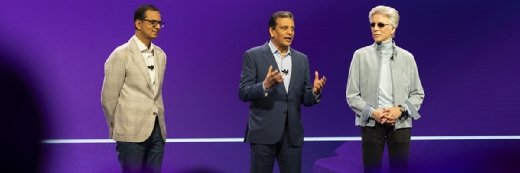
When Vishal Talwar, executive vice-president and chief digital and information officer (CDIO) at FedEx, was brought out alongside the firm’s CEO during ServiceNow boss Bill McDermott’s Knowledge keynote, his importance to the operation was clear to see.
Raj Subramaniam, FedEx’s chief executive and president since replacing founder Fred Smith in 2022, recognised Talwar before attendees as his partner in both thought and strategy, a sentiment that echoed McDermott’s own testimonial: “Thanks, Vishal, first, for being such a great partner; a technical thought leader, who also participated in some of our all-hands meetings. Our company loves you, man.”
Talwar headed straight from his keynote cameo to speak to Computer Weekly about FedEx’s partnership with ServiceNow, building secure end-to-end workflows, and the non-negotiables of business reinvention.
“We are a big believer that fundamentals are important,” he says, describing how ServiceNow’s AI Control Tower customer relationship management platform is facilitating FedEx’s digitisation. “In most scenarios, the fundamentals don’t change. It starts with understanding the business process, and then having the right controls and data in place to be able to drive it more seamlessly.
“We want to make the supply chain smarter for everyone,” says Talwar. “And to make supply chains smarter, you first have to understand how supply chains work. There is a lot of fragmentation in supply chains today.
“Most customers do not understand their inbound supply chain. They don’t have an end-to-end view for their inbound; they don’t have an end-to-end view for their outbound – forget connecting the inbound to the outbound. But you can’t boil the ocean at once and say, ‘One magical day will arrive where I’ll just release a capability and the fragmentation disappears’. You’ve got to chip at it in small pieces.
“We want to elevate the industry,” he says. “We want to make sure that $1.8tn of value that’s getting leaked stops. And it starts with making sure the signals and data that our vast network generates are put to good use for our customers.”
Otto launch
Having joined FedEx from his role as senior managing director and chief growth officer at Accenture last year, Talwar has been forthright in bringing his digital blueprint to reality, and part of that vision has emerged with the launch of ServiceNow’s Otto artificial intelligence (AI) assistant.
We are very clear that we want to use ServiceNow in our enterprise functions to build a digital backbone for every workflow that exists there
Vishal Talwar, FedEx
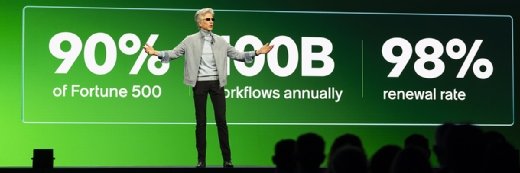
“We want to use ServiceNow in our enterprise functions to build a digital backbone for every workflow that exists there,” he says. “Right now, they are in about five million of our workflows … [and] we are not able to connect the dots as seamlessly, with fragmented processes. But Otto’s going to allow us to have more seamless integration on the digital front.”
Talwar sees the Otto announcement as a two-pronged opportunity. “Our first opportunity is, we announced One FedEx a couple of years ago, where we bring different operating companies into one operating market,” he says. “FedEx Express, as an example, had its own way of running its processes. FedEx Ground or Service had its own way of running processes. But there’s going to be one FedEx in the way we run.
“We have an opportunity in front of us to align to a common way of working. This means you have to reimagine your workflow and consolidate to a single end-to-end workflow.
“The second opportunity for us is to make sure we take that workflow and embed AI capabilities as they are available today, and as they continue to become more mature and available in the future,” says Talwar. “And in our hire-to-retire and source-to-pay is where we are starting. That’s where Otto’s going to help us.”
Security and education
Talwar is as glowing in his appraisal of agentic AI as McDermott, but FedEx also sings from the ServiceNow hymn sheet when it comes to two of its major implications: security and education.
“Security’s always been top of mind for us,” says Talwar. “Even if agentic wasn’t here, supply chain resilience is a hot topic now – more than it was before. When you talk about supply chain resilience, a lot of those roads lead directly to us. We can’t be saying, ‘We will help you with supply chain resiliency’ but not be resilient ourselves.
“We’re looking at our entire attack surface across operational technology, digital technology, our entire technology landscape, our network, and we are reassessing exactly how we want to embed security into every dimension of it, right from design. Embedded inside the application itself – data privacy and standards – right inside data classification itself. So, we believe we will continue on that journey for the next six, eight, nine months.
“The other good news for us also is, because we’re driving this special transformation that’s so comprehensive, we are modernising our entire technology,” he adds. “It allows us to embed security right down to the way we are architecting our landscape.”
The evolution of this process is the leveraging of AI capabilities to combat the technology’s exponential threat. “You have to fight AI with AI, and we’re also scaling a lot of those capabilities inside the enterprise,” says Talwar.
Asked whether some employees may suffer at the hands of AI’s humbling rate of adoption, Talwar points to FedEx’s joint initiative with his former colleagues at Accenture to educate its workforce in AI fluency.
“You get nervous about a capability you don’t understand,” he says. “[Last year] we launched an AI literacy programme for the entire enterprise. The programme tailor-made the AI curriculum for you based on your role. So, if you’re a courier, and you’re an operator, your curriculum looked different from if you were in finance, which [again] looked different if you were in data and technology in our organisation.”
The programme was launched for a couple of reasons. “One, we believe not just FedEx, but the world, will be better if everybody becomes more AI-fluent, because this is a general-purpose technology that’s here to stay,” says Talwar. “It’s going to change the world. The better we understand it, the better the world will be; the better we will be.
“It’s also an investment in our workforce. I have emails coming in from operators, from couriers, across the organisation to say they want to reinvent their career, because it’s opening up new channels for them.
We believe not just FedEx, but the world, will be better if everybody becomes more AI-fluent. It’s going to change the world. The better we understand it, the better the world will be; the better we will be
Vishal Talwar, FedEx
“We believe it’s going to complement and supplement our workforce,” he adds. “We’re going to operate in a world where AI and humans will work alongside each other, and each will make the other better. Where we are concerned, we are not looking at this as an anxiety level in the workforce. We are looking at this squarely as an opportunity for us to do more with what we have.”
Hold your horses
When asked if he’s impatient for any breakthroughs that could increase productivity even further, Talwar shoots back with the same meticulous pragmatism that’s made him so valuable as McDermott’s man in Memphis.
“I’m not impatient,” he asserts. “I am not the one who believes I just need to be on every hype cycle. I am more grounded in fundamentals, and I think there is still a lot of capability that’s mature that we haven’t leveraged yet. Let’s just capture the opportunity that’s ahead of us now, first and foremost. Then let’s start thinking about what else.”
Reframing the question around the current state of play, Talwar ruminates on what the advent of agentic AI means for the enterprise.
“AI has been a great equaliser,” he says. “The speed at which I can build and release functionalities for my business is phenomenal: the speed at which I can create a digital twin of our physical network to simulate what different environments or challenges we might have before us.”