The UK government recently unveiled its UK fusion strategy 2026, which includes £125m of funding to develop the artificial intelligence (AI) growth zone at Culham, Oxfordshire. This includes a £45m investment in “Sunrise”, the new fusion-dedicated supercomputer.
One area in which Sunrise will be used is accelerating simulation, surrogates and design, where AI could simplify simulations or learn the behaviour of complex systems such as plasmas to speed up simulations that previously took weeks or months to run.
It will also be used for data management, making the UK Atomic Energy Authority’s (UKAEA) fusion research and experimental data consistent, accessible and electronically readable. In addition, Sunrise offers the UKAEA – an executive non-departmental public body, sponsored by the Department for Energy Security and Net Zero – the ability to enhance experimental operations and control in real-time diagnostics, where AI can be trained to spot anomalies and flag issues.
The role of high-performance computing (HPC) AI acceleration hardware within the government’s strategy for nuclear fusion is to prepare fusion data for AI applications to ensure that researchers from small and medium-sized enterprises (SMEs) and academic institutions can access data, supporting greater collaboration and engagement with industry partners.
The 6.76 exaflops Sunrise AI supercomputer involves a collaboration between AMD, DESNZ, the Department for Science, Innovation and Technology (DSIT), Dell Technologies, Intel, UKAEA, the University of Cambridge, and Weka, a data platform provider.
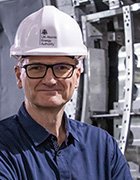
Looking at its headline performance data, Rob Akers, UKAEA’s director for computing programmes, says: “It’s very challenging to define how powerful a piece of hardware like Sunrise is, because it depends on your metric for success.”
Sunrise offers the full spectrum of floating point precisions, from 8-bit right the way up to 64-bit precision, but, as Akers points out, each one of those targets a different part of the problem. “The important thing for us is that we can’t forego 64-bit precision, because that’s what’s going to feed the artificial intelligence algorithms that we’ll be applying when using Sunrise as an engineering tool,” he says.
“Sunrise is not just a very powerful laptop – it is a very complex piece of machinery that we’ll be putting to the task of solving a very large set of complex problems”
Rob Akers, UKAEA
AI makes it possible to collapse high-fidelity models that need very high bit precision down into what UKAEA calls “surrogate” models, according to Akers, who adds that these surrogates can run on a workstation or a laptop in a tiny fraction of the time it would take the big solvers running on large supercomputers.
“It’s almost like an instrument for discovery,” he adds. “Sunrise is not like a laptop. It’s not just a very powerful laptop – it is a very complex piece of machinery that we’ll be putting to the task of solving a very large set of complex problems.”
One of the interesting numbers that pop up in the specification for Sunrise is the figure for 8-bit precision, especially given that 8-bit computing harks back to the era of the home computer some 50 years ago.
“The interesting thing is that 8-bit precision has become an incredibly powerful part of the computing landscape now because of large language models [LLMs],” says Akers.
Running LLMs is in the UKAEA’s plans. “We are going to be doing work in that space, building very bespoke models that will ingest text document archives that have been collected over many, many decades, and turning that into useful information and knowledge,” he says.
Read more about high-performance computing (HPC)
AMD pushes GPU advantage with HPC top spot: AMD’s El Capitan is the world’s fastest supercomputer and is being used in nuclear weapons safety.
How business leaders can prepare for quantum-AI integration: AI completely changed the way we work, and quantum computing has the potential to upend our work completely. How can these technologies integrate to achieve further innovation?
Digital twins
Akers says this information will be put together with the Mega Amp Spherical Tokamak (MAST) experimental data run at Culham. “Working out how to achieve this needs the full spectrum of precision,” he says.
Although 8-bit precision is the domain of the LLMs that need to process tokens as quickly as possible to understand volumes of textural information, Akers says 64-bit precision is the realm of high-fidelity simulation, which needs to achieve a high degree of accuracy. “Because of the way we run models forward in time, we can’t allow them to drift. They need to preserve certain physical quantities to ensure the simulations are meaningful,” he says.
Sunrise will allow us to take on a moonshot-like problem, a lot more cost-effectively, to reduce risk and accelerate the time to deliver commercial fusion
Rob Akers, UKAEA
So, while floating point precision is regarded as a metric for comparisons against other AI machines, for Akers, it is not necessarily the best metric to measure the outright performance of an AI scientific machine. What is needed, he says, is “the ability to simulate very high-fidelity, strongly coupled models”.
This is due to the sheer complexity of a machine that aims to mimic the way the sun generates its power. “In a nuclear fusion power plant, there are lots of different physical mechanisms that couple the plant together – everything from structural forces due to gravity, but also due to electromagnetism. Then there’s the heat flow and radiation flow across the system. Everything’s coupled together,” says Akers.
Historically, UKAEA has not been able to simulate this environment at scale. “What we worry about is the black swans or emergent behaviour that is a result of that coupling,” he adds.
Akers says digital twins running on Sunrise will be able to model these very complex systems, which can then be compared with the results of experiments. “We are able to tune up our ability to step forward in time or step outside where we’ve been before, or indeed to create new pieces of machinery that we’ve never seen before, and take a giant leap where we have confidence in having nailed down the known unknowns into the simulations,” he says.
“Test-based design is expensive, and it’s slow,” Akers adds. The goal is to use Sunrise to reduce the amount of test-based design that UKAEA has to do. “It will allow us to take on a moonshot-like problem, a lot more cost-effectively, to reduce risk and accelerate the time to deliver commercial fusion.”