NTT Data / NYMH
NTT Data and HYMH claim physical AI breakthrough
Collaboration embeds AI‑driven quality assurance directly into production, helping validate assembly process in real time to support quality assurance, improve efficiency and enable smarter manufacturing

Building on a long-standing collaborative relationship, NTT Data and Hyster-Yale Materials Handling (HYMH) have revealed that they have been exploring how physical AI can be scaled to drive repeatable, high-quality production outcomes, and claim to have advanced more adaptive and intelligent manufacturing processes.
Artificial intelligence (AI), digital business and technology services company NTT Data believes that as manufacturers accelerate automation, demand is rising for physical AI that can operate safely in complex environments, driving efficiency, quality and resilience.
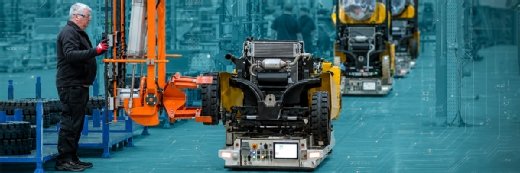
Working for over 100 years, and notably the manufacturer of Hyster and Yale vehicles, HYMH designs, engineers, manufactures, sells and services industrial forklifts, warehouse solutions and energy solutions. Its lift trucks help materials handling operations with use cases spanning transporting containers at ports to product deliveries.
The firm said its “breakthrough” application of physical AI with NTT Data introduces AI-driven quality assurance directly into its manufacturing operations. The capability embeds intelligence directly into manufacturing processes. The approach uses sensor data to enable machines and systems to perceive, understand and act in real time within real-world operations.
The two companies regard their co-developed approach as representing a “first-of-its-kind use case” of how physical AI can be applied in an industrial assembly environment by embedding intelligence into production workflows, helping to safeguard that products are built to consistently high standards.
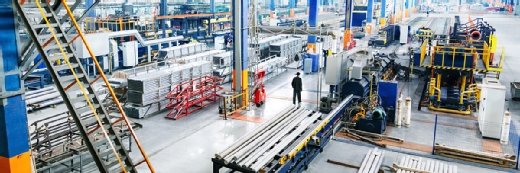
NTT Data designed and developed the solution at HYMH’s manufacturing facility in Berea, Kentucky, integrating vision sensors, edge AI that processes data on-site and advanced analytics into a critical assembly workflow.
Together with partner Archetype AI, NTT Data and HYMH adapted a physical AI model that analyses assembly activity against expected production steps, validating that all parts are installed and that assembly stages are completed, flagging deviations before the product moves to the next stage.
By validating quality throughout the assembly process, the firms said they can now help identify and address potential issues before products leave the factory floor. Furthermore, they said the initiative demonstrates a step-change in how AI can be applied in manufacturing environments.
Combined with edge computing, the solution can run locally so all processing happens on-site, enabling faster roll-out and quicker time-to-value. Early results showed that physical AI cuts deployment timelines from months to weeks when compared with legacy techniques, accelerating adoption and iteration across manufacturing operations.
“Our confidence in physical AI continues to grow, and we’re starting to see the countless benefits that AI can bring to our global manufacturing operations,” commented Barbara Binda, director of global manufacturing innovation at Hyster-Yale Materials Handling.
“Working with NTT Data allows us to leverage how physical AI can help our production teams maintain high-quality standards and deliver the most reliable products to our clients.”
NTT Data’s global head of edge services, Shahid Ahmed, added: “This deployment shows what physical AI looks like in real production environments, not as a concept, but with tangible impact on the factory floor. By combining real production data with physical AI models at the edge, we’re helping leading manufacturers like HYMH deliver high-quality products, support frontline workers and apply AI in ways that deliver real-world outcomes.”
Read more about physical AI
- Physical AI to drive private 5G market: Study finds non-public networks based on 3GPP-defined 5G specifications are increasingly replacing LTE across many verticals, with a market potential far exceeding that of previous technology generations.
- Motive offers vision of new era of physical AI operations: New products aim to shift operational burden from people to technology, automating ‘busy work’ so fleets can prioritise strategic safety, productivity and profitability.
- CES 2026 - AI gets physical: Continuing our round-up of this year’s CES, we look at key use cases and how the generation of artificial intelligence and connected devices will evolve.
- Neura Robotics accelerates next-generation physical AI: Robotics firm inks strategic collaboration with chip giant to advance next-generation robotics and physical AI, and work jointly on reference architectures for full-stack robotics systems.
Read more on Collaboration software and productivity software
-
![]()
NTT Data puts more body into physical AI
By: Adrian Bridgwater
-
![]()
Pushing pilots-to-production: NTT DATA expands collaboration with Google Cloud
By: Adrian Bridgwater
-
![]()
Lab for autonomous agents to drive boost in manufacturing in India
By: Joe O’Halloran
-
![]()
NTT Data, Ericsson team to scale private 5G, physical AI for enterprises
By: Joe O’Halloran