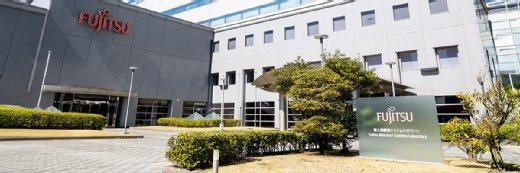
Timon - stock.adobe.com
Fujitsu exits hardware business in ASEAN in IT consulting move
Fujitsu is walking away from its legacy hardware business in the region and pitching itself as a supplier-neutral technology consultant to help customers cut through the AI hype

For a while now, Japanese technology giant Fujitsu was synonymous with the blinking lights of server rooms, building the physical architecture that powered global business. Today, the 90-year-old behemoth is turning its back on the Unix and mainframe hardware that made it famous.
In a move that was formalised about two years ago but only set in motion in ASEAN in April 2026, Fujitsu is winding down its legacy infrastructure business and setting its sights on the lucrative, though increasingly chaotic, world of artificial intelligence (AI) and technology consulting.
In an interview with Computer Weekly, Alfee Lee, Fujitsu’s vice-president and head of international business for Singapore and Thailand, said the transition is a direct response to the changing demands on CIOs, who are now expected to drive top-line revenue and integrate AI into daily operations, beyond keeping the lights on.
“Pre-Covid, CIOs were very focused on resilient operations. Today, no customer comes to me to say, ‘How do I run stable IT operations?’” said Lee. “Today, it’s more about, ‘How do I support my business requirements?’ The conversation has shifted, and that’s one reason why we are transitioning.”
Fujitsu’s departure from hardware might seem to go against the grain amid the growing build-out of AI infrastructure, but Lee argued that the infrastructure space has become very crowded.
“We’re not only competing against the global systems integrators; there are also a lot of local integrators we need to consider. We don’t think that this is the ground that we want to compete on anymore,” he said.
By exiting hardware, Fujitsu can also pitch itself as a supplier-neutral adviser. Rather than promoting its own offerings, the company’s intellectual property makes up only 3 to 5% of what it delivers to clients. For the rest, it relies on partners such as Microsoft, ServiceNow, SAP, and Palantir.
Fujitsu has also started to diversify its customer base. Japanese-affiliated companies now account for just 20% of its business in Singapore, compared with 70% in Thailand which has a strong automative industry that has long been dominated by Japanese car makers.
The AI reality check
Fujitsu’s move into consulting also enables it to act as a voice of reason for corporate boards swept up in the AI hype. Lee pointed to the frequent disconnect between business leaders who demand immediate AI adoption and the disorganised state of their data.
For such customers, Fujitsu consultants will conduct design-thinking workshops to help clients understand where they sit on the AI maturity curve. “Many customers want to drive AI, but they are not mature on the data,” Lee said. “We always ask: are you ready to have one source of data before we even talk about automation? You can’t start an AI journey without the data.”
Unlike some other players in the market, Fujitsu does not run proofs-of-concept for free. Lee insists that clients must pay for the testbeds to ensure their management teams are invested in the inevitable disruptions to people and processes that follow.
Fujitsu is applying that same standard to itself. It recently consolidated data from disparate systems and introduced a mandate requiring its global delivery teams to adopt AI tools to improve operational efficiency before advising clients to do the same.
As AI upends business operations, it is also fracturing software pricing models. The industry is debating how to charge for generative AI – whether through tokenomics, where customers pay based on computational usage, or outcome-based models, where consultants are paid for the results they deliver.
Lee was sceptical about outcome-based agreements, noting the difficulty of establishing a baseline metric that both parties can agree on. “The tricky part of this is, if I gain so much, I’m not going to pay you; but if I lose so much, I expect you to pay,” Lee said of the client mindset. “Where’s the boundary, and how do you truly have the data to measure the benefit?”
Consumption-based AI pricing also poses a threat to IT budgets. “If you are saying any question you ask the AI, IT needs to absorb the cost – I’m not sure if IT has the budget to pay for it,” he noted.
As Fujitsu steps away from hardware, its approach to enterprise security has evolved too. Rather than selling standalone security services, it now bundles security into broader consulting engagements.
It also operates a small security operations centre (SOC), though Lee said the security talent crunch means it is not staffed to run a managed security service. Instead, Fujitsu handles the initial deployment and integration of cloud-based security platforms, leaving day-two operations to the software itself or the client.
While the ongoing divestment of its hardware business makes measuring overall corporate growth complex, Fujitsu’s push into consulting appears to be bearing fruit.
“The areas we intend to grow are growing about 20%,” said Lee, pointing to a growth in business from workplace management consulting. “Before, we were probably number seven. Now, we are one of the top consulting partners in Singapore.”
Read more about IT services in APAC
- FPT Software is experiencing rapid growth in the APAC region, driven by its diverse workforce, focus on key technologies and ability to navigate a highly competitive IT services market.
- Microsoft has teamed up with four of India’s largest IT services companies to deploy agentic AI capabilities across enterprises in the subcontinent.
- AsiaPac CEO Andrew Cheng outlines the company’s growth from a laptop PC distributor to a regional technology service provider known for its multicloud capabilities.
- Logicalis is doubling down on delivering high-end, consultinf services to mid-market customers in APAC, a region that has become its fastest-growing segment.
Read more on IT consultancy
-
![]()
Fujitsu UK job cuts as staff pay the price for failures of top executives
By: Karl Flinders
-
![]()
Fujitsu’s role in the Post Office scandal: Everything you need to know
By: Karl Flinders
-
![]()
Fujitsu targets private AI with Japanese LLM on Nutanix
By: Aaron Tan
-
![]()
Major strike by Fujitsu staff at ‘cash cow’ HMRC
By: Karl Flinders