zapp2photo - stock.adobe.com
TeamViewer, Microsoft bring AI, AR for clearer, smarter remote assistance
TeamViewer inks new partnership with Microsoft to bring on-device AI capabilities to spatial computing platform, enhancing remote assistance for frontline and industrial workers

Looking to enhance the experience faced by frontline workers in industrial environments, delivering high-quality video resolution even under challenging network conditions, TeamViewer has entered into a partnership with Microsoft to bring on-device artificial intelligence (AI) capabilities to its Assist AR (augmented reality) remote assistance solution.
The remote connectivity and digital workplace solutions provider said that when a field engineer needs remote guidance to fix a piece of industrial equipment, every second counts.
It added that frontline workers are frequently in locations where mobile coverage is patchy at best, such as factory floors, remote worksites or out in the field. As a result, blurry or freezing video feed can be the difference between a quick fix and hours of costly downtime. Traditional remote assistance tools can struggle to maintain quality under such conditions, said TeamViewer.
TeamViewer Assist AR now uses Windows AI application programming interface (API) for video super resolution (VSR) in the core TeamViewer Frontline suite. The result is said to be sharper video for remote supporters guiding field technicians, even when the technician is on a weak or unstable mobile connection.
For organisations that depend on remote expertise – in manufacturing, utilities, healthcare or field services – TeamViewer said this translates directly into faster problem resolution, fewer on-site visits and reduced operational costs. Teams can collaborate more effectively regardless of where people are or what network they’re on.
Assist AR is capable of using the new capabilities to deliver “better video quality in poor network conditions, reduced video artefacts and errors and optimised bandwidth use”, said the company. VSR uses models running locally on the receiving device to reconstruct and sharpen incoming video in real time across a broader set of Windows PCs with powerful CPUs.
The VSR-enhanced version of Assist AR is now available in closed beta, with general availability planned in the coming weeks with VSR on Copilot+ PCs. TeamViewer intends to bring this capability to other products across its portfolio.
Alfredo Patron, executive vice-president of global partner ecosystem and channels at TeamViewer, said: “TeamViewer is a global leader in frontline worker augmentation and specialises in remote guidance. We’re thrilled to collaborate with Microsoft to deliver top-tier video resolution even under challenging network conditions for our users. This collaboration underscores our dedication to addressing real-world issues faced by those who keep operations running.”
Mik Chernomordikov, head of windows developer relations and partnerships at Microsoft, added: “At Microsoft, we continue to invest in enabling on-device AI capabilities for Windows app developers, and we’re pleased to partner with TeamViewer to enhance remote support experiences for our shared customers using the new Windows AI API for VSR.”
TeamViewer said that it currently has more than 620,000 customers across industries relying on its digital workplace platform. In a key deployment with Mercedes-AMG Petronas F1, TeamViewer’s Frontline technology saw use among the racing team’s test and development department to accelerate rig assembly for its testing programme by moving away from using printed drawings to real-time AR instructions.
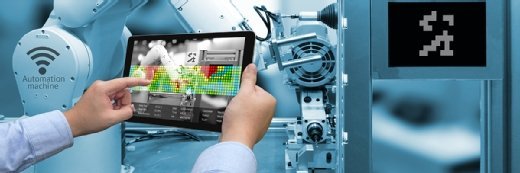
Engineers were able to use a tablet to see clear, real-time AR instructions that show exactly how parts should come together. This manual checking from rig to paper proved to be a time-consuming approach, which has been sped up by the introduction of animated overlays showing step-by-step assembly sequences.
Read more about spatial computing
- Hadean, Google Cloud team to develop AI-powered spatial computing: Technology partnership looks to facilitate the creation of highly realistic and responsive simulations, optimising training exercises and planning scenarios to help organisations develop deeper understanding of processes.
- Spatial computing redraws the world of work: Immersive technologies such as augmented, mixed and virtual reality are nothing new but next-generation capabilities are coalescing into a spatial computing ecosystem that is set to create a new immersive work environment.
- Qualcomm expands strategic advanced driver assistance systems, immersive eyewear collaborations: Mobile technology platform provider inks deal with Snap company to expand decade-long collaboration on XR services, and with Bosch to make ADAS offerings for enhanced safety and comfort.
- Nimo Planet completes spatial computing system for hybrid work: Spatial computer productivity platform provider launches proprietary hardware and OS to enable virtual workplace system comprising personalised, multi-screen workspace experience to hybrid workforce.
Read more on Collaboration software and productivity software
-
![]()
Intelligent eyewear market sees opportunities
By: Joe O’Halloran
-
![]()
Snapdragon START kicks off next phase of personal AI with XR smart glasses
By: Joe O’Halloran
-
![]()
Enterprise AR and VR: Building the UC business case
By: Venus Kohli
-
![]()
Mercedes-AMG Petronas F1 revs up testing with augmented reality
By: Joe O’Halloran