NicoElNino - stock.adobe.com
SpaceLocker launches first shared satellite mission
French startup looks to redefine space infrastructure by turning satellites into shared platforms, and claims faster, more sustainable missions

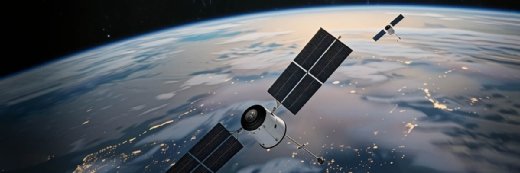
In-orbit hosting services provider SpaceLocker is claiming to have reached a milestone in its history by transitioning into the ranks of satellite operators and towards a gateway to space through Out of the Box, a shared satellite model offering a direct response to both economic and environmental challenges.
SpaceLocker was founded in 2022 with the aim of becoming a global reference for access to orbit.
In the long term, the company aims to operate across multiple orbital regimes, scale its mission cadence and open space to a new generation of users.
Rather than multiplying dedicated satellites, the French orbital hosting firm said it was maximising existing capacity by hosting multiple missions on a single platform. This approach, it believes, not only reduces costs, but also helps limit space debris and decrease total mass launched into orbit.
The new phase for SpaceLocker comes a year after its first in-orbit mission, and Out of the Box is its first fully owned and operated satellite. At the core of the new service is a patented “universal space port” technology, comparable to a USB port for satellites. Plug-and-play and payload-agnostic, it is designed to transform satellites into shared infrastructures capable of hosting multiple payloads simultaneously.
Offering more detail on this transition from dedicated satellites to a “space cloud”, the company said that until now, sending technology to orbit required designing or procuring an entire satellite – a long, costly and inflexible process that has remained largely unchanged for decades. In addition, it argued that currently, nearly one in five space missions is dedicated to technology demonstration, yet these opportunities remain complex and expensive to execute. By simplifying access to orbit, SpaceLocker said it was positioning itself as a key enabler of space innovation.
“We want to do for space what cloud computing did for IT: shift from ownership to shared infrastructure,” said SpaceLocker CEO and co-founder Théophile Lagraulet. “In the future, sending an instrument to orbit won’t require building a satellite. Access to space can become a standardised service.”
Read more about space communications
- In-orbit test of Atlas-1 laser terminals sees 100x comms speed gains: Industry first test of compact and energy-efficient satellite laser terminals in orbit to pave way for more secure, high-bandwidth and affordable space-to-Earth communication for small satellite operators.
- Starlink reshapes satellite communications as industry enters terabit era: Lower-cost capacity, rapid scaling and improved service quality are all factors resetting expectations across the satcom market, with the entire ecosystem being pushed to innovate, differentiate and rethink strategic positioning.
- SES, K2 Space further meoSphere satellite network: Next-generation medium Earth orbit multi-mission constellation targeted at meeting fast-growing commercial and defence needs with flexible scaling approach.
- SWISSto12 opens Switzerland’s largest GEO satellite production site: Aerospace and satellite technology manufacturer opens domestic territory’s first domestic end-to end GEO satellite production site including 1,000m² cleanroom assembly facility.
With Out of the Box, SpaceLocker says it has reached a key inflection point – becoming a satellite operator and building its own mission portfolio, demonstrating rapid execution in a sector known for long development cycles.
It is deploying a 16U CubeSat (~20kg) carrying five European customers – making access to space possible without building a dedicated satellite. Customers develop their payloads independently and integrate them into a standardised “container” using the company’s universal space port. SpaceLocker then manages the full orbital stack, from integration to operations.
The company claims that such a model reduces costs “dramatically”, up to three times cheaper than traditional missions, while cutting time-to-orbit in half. It also significantly lowers environmental impact through resource sharing, and helps limit space debris and decrease total mass launched into orbit.
The Out of the Box mission carries five payloads from across the European ecosystem, showcasing the diversity of next-generation space applications. Among the customers onboard, the Out of the Box mission brings together four European players.
EDGX, which develops technologies that enable compute in orbit, will demonstrate edge computing capabilities, enabling satellites to process data onboard and reduce reliance on ground infrastructure. Fédération Open Space Makers will fly FOSM-1, a payload dedicated to amateur radio and open communication experiments, supported by CNES. Solar MEMS will operate a high-precision star tracker for satellite orientation, while Arcsec will test two advanced star trackers to demonstrate high-performance attitude determination for small satellites.