Hoda Bogdan - stock.adobe.com
NetApp targets E-Series at AI and neoclouds with EF50 and EF80
High-performance non-ONTAP workhorse targets AI use cases and aims to ensure GPUs get fed optimally, with claimed 2.5x boost in performance over previous models

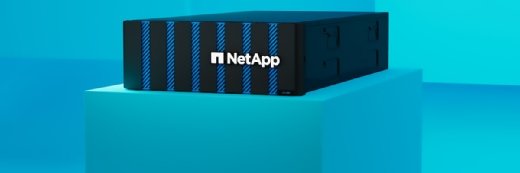
NetApp has refreshed its E-Series line with two all-flash models – the EF50 and EF80 – aimed at artificial intelligence (AI) training, inferencing and high-performance computing (HPC) workloads.
The launch comes with a claimed performance boost of 2.5x for these E-Series arrays. E-Series has long been the speedy option in NetApp’s portfolio for applications that require dedicated bandwidth rather than the advanced storage functionality of the Ontap-based FAS and AFF lines.
The new arrays are built to tackle the “data-starving” problem seen in GPU-heavy environments where storage I/O does not keep GPU utilisation at optimum levels. According to NetApp, the EF80 delivers more than 100GBps read throughput and 57GBps write throughput, and targets checkpoint writes during generative AI (GenAI) training, for example.
The 2.5x performance improvement over the previous generation is a significant jump from the existing EF models. In terms of density, NetApp packs 1.5 petabytes of storage into a 2U chassis, a move designed to curb the ever-growing power and cooling footprint in modern datacentres.
Targeting neoclouds
Sandeep Singh, senior vice-president and general manager for storage with NetApp, said: “We are delivering proven and affordable high-performance, extreme performance, for the most performance-intensive and demanding workloads.
“That includes AI use cases inclusive of AI training, AI inferencing, HPC workloads and transactional database workloads, not only for the enterprises, but also for neoclouds, sovereign AI clouds and AI-powered manufacturing use cases.”
Singh said EF-Series is intended to serve as the high-speed “scratch space” in a tiered architecture, often paired with parallel file systems such as Lustre or BeeGFS. This allows the E-Series to act as a high-performance engine at the front end, while larger, more persistent data stores sit behind it.
E-Series heritage
The E-Series has occupied a unique space within NetApp. Its DNA doesn’t come from the company's famous WAFL-based filers, but from the 2011 acquisition of Engenio (from LSI). This gave NetApp a much-needed block-storage play and for workloads where the bells and whistles of Ontap were actually a hindrance.
E-Series has been a quiet workhorse, often found working with offerings from IBM, Dell, and Teradata. While NetApp’s primary AFF/FAS lines focus on unified storage with heavy data reduction, the E-Series has remained the go-to for dedicated, high-duty-cycle applications. Its SANtricity operating system favours raw performance and simplicity.
Powering the rack
As the focus in the datacentre shifts from mere capacity to power draw, E-Series density is a primary defence. Singh noted that storage draw is a “small fraction” of what a rack of GPUs pulls. By feeding GPUs more efficiently and reducing idle time, the net effect is a more streamlined, if still power-hungry, AI infrastructure.
Singh said: “When you put it in the context of GPUs, these arrays enable the GPUs to not be sitting idle and starving. And to that part of it, if you can optimise it, you’re reducing wasted power and boosting utilisation of those GPUs. That also goes into the equation for customers.”
This release puts NetApp into tighter competition with the likes of Pure Storage and its FlashArray//XL, as well as Dell’s Project Lightning. While Pure focuses on a unified architecture, NetApp’s strategy remains “horses for courses”, using E-Series for raw throughput while keeping ONTAP for general-purpose enterprise data management.
Read more about NetApp storage
- NetApp: Not just NAS filers, and a comprehensive cloud strategy. NetApp market share has slipped, but it has built out storage across file, block and object, plus capex purchasing, Kubernetes storage management and hybrid cloud.
- NetApp E-series: Not part of the big message, but here to stay, says CEO. We asked NetApp about its high-performance computing-focused E-series block storage arrays and found inconsistent messaging but ultimately a commitment from CEO George Kurian to retain it.
Read more on Flash storage and solid-state drives (SSDs)
-
![]()
NetApp adds AI Data Engine, expands Nvidia partnership
By: Beth Pariseau
-
![]()
NetApp: Not just NAS filers, and a comprehensive cloud strategy
By: Antony Adshead
-
![]()
NetApp adds cheaper options to all-flash block storage line
By: Tim McCarthy
-
![]()
New componentry extends NetApp ASA and E-series block storage
By: Antony Adshead