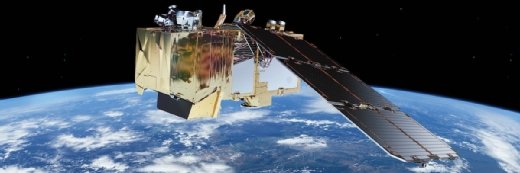
As space gets crowded, cyber threats from jamming to stalker satellites loom large
Experts at the inaugural CYSAT Asia in Singapore warn of the urgency of securing space assets amid growing geopolitical tensions and supply chain vulnerabilities

From Russian satellites allegedly stalking European spacecraft to the jamming of Starlink internet signals in conflict zones, threats to space security have moved from theoretical wargames to reality.
As the global space economy is expected to reach $1.8tn by 2035 – up from $630bn in 2023 – experts warn that cyber security is no longer an afterthought, but critical to realising the industry’s full potential.
“There’s a lot of pressure around space infrastructure because it’s so important for communication, navigation and understanding what’s happening in some geographies,” said Patrick Trinkler, CEO of CYSEC, a European space cyber security company and organiser of the inaugural CYSAT Asia conference in Singapore.
Speaking to Computer Weekly on the sidelines of the event, Trinkler cited a Financial Times report detailing how a Russian satellite was manoeuvred to spy closely on Europe’s key satellites, as well as the jamming of Starlink terminals in Iran in a bid by the government to block internet access amid political upheaval in the country.
In addition, Noushin Shabab, lead security researcher at Kaspersky, noted the growing number of attacks on global navigation satellite systems (GNSS), such as GPS satellites used by airborne and terrestrial applications.
Such incidents usually involve blocking satellite signals or spoofing, where fake signals are used to deceive GPS receivers regarding their location or time. “We saw a lot of instances of flights affected by wrong GPS signals where the plane doesn’t know exactly where it is,” Shabab told Computer Weekly in a separate interview.
She noted that while spoofing has become the norm for border defence in conflict zones, the ripple effects also impact civilian infrastructure, where ground receivers used by industries ranging from autonomous vehicles to agriculture are vulnerable to attacks.
Recent scans found that nearly 8,000 GNSS receivers connected to the internet were exposed to potential hacks. “If a receiver is not patched with the latest version of its operating system or software, it can be vulnerable to over 50 known vulnerabilities,” said Shabab.
Securing the space frontier
Securing space assets is often more difficult than securing terrestrial technology. Because the supply chain for satellites is complex and global – involving launchers from different countries and components from various suppliers – the risk of backdoors being built into the hardware is ever-present.
Furthermore, once a satellite is in orbit, fixing a problem or patching vulnerabilities is nearly impossible. “When it is in space, you cannot update it or do a reboot,” said Trinkler. “And with a $1bn satellite, you cannot say, ‘It does not work, so let’s launch another one’.”
Like operational technology (OT) systems, where safety and operational resilience are often prioritised over cyber security, space assets are also converging with IT systems. This increases their risk of falling prey to IT security threats, which could multiply should space-based datacentres take off.
CYSEC, founded in 2018 with support from the European Space Agency, is addressing some of these space technology vulnerabilities through key management systems that help to secure a satellite’s software and data.
“You cannot use the same key for all satellites,” said Trinkler. “If you lose one key, you lose all satellites.”
CYSEC’s software manages unique keys for every satellite in a fleet, ensuring that a breach in one device does not compromise the entire network.
To mitigate the risk of tampering, CYSEC uses a trusted platform module (TPM), a hardware device that stores the encryption keys. By using a certified TPM, operators can ensure the satellite’s onboard software cannot be altered from the time the satellite leaves the factory to the time it is launched into space.
Read more about cyber security in APAC
- Nikkei has confirmed a major data breach that potentially exposed the personal information of more than 17,000 employees and business partners after hackers infiltrated its internal Slack messaging platform.
- Australian privacy commissioner warns that the human factor is a growing threat as notifications caused by staff mistakes rose significantly even as total breaches declined 10% from a record high.
- Philippine bank BDO is shoring up its cyber security capabilities to protect its data and systems as it moves more services to the cloud and expands its physical presence into remote areas of the archipelago.
- AI agents require standardised guidelines, clear human responsibility and a shared language between developers and policymakers to be secure and trusted, experts say.
Meanwhile, the industry is pushing for space security standards, which are currently lacking. Trinkler likened the goal to the Linux Foundation, envisioning a community that shares recommendations and standards before regulators impose them.
This creates opportunities for Singapore. Despite not being a spacefaring nation with its own launch pads, the city-state is pitching itself as a hub for the software of space: security, standards and talent.
Tong Hsien-Hui, executive director of SGInnovate, Singapore’s early-stage fund for deep tech startups and co-organiser of CYSAT Asia, said Singapore has been monitoring the space sector for years. “If we don’t secure things like cyber, for instance, then datacentres in space will never happen,” he said.
SGInnovate has invested in startups such as SpeQtral, which is developing a satellite-based quantum key distribution (QKD) system, and is looking at how companies in other sectors can adapt their solutions for space.
However, it can be a challenge to find talent well-versed in both space engineering and cyber security. “In Singapore, the curriculum does not gear itself specifically to this intersection of cyber and space,” said Tong. “We need to cross-train some of these people.”
Trinkler added that if Singapore can develop this specific talent pool, it will possess a unique asset and sovereign capability to build a local space industry, which already employs about 2,000 professionals in diverse roles, from designing and manufacturing space components to providing satellite-based services.
In April 2026, Singapore will set up a national space agency to tap new opportunities in the space technology sector. It will also develop space-related legislation and regulations to spur innovation and investments while achieving space safety and sustainability.
Read more on Hackers and cybercrime prevention
-
![]()
Singapore to transform industrial island into AI-ready datacentre hub
By: Aaron Tan
-
![]()
Singapore unveils space lab to fuel ASEAN space economy
By: Aaron Tan
-
![]()
Why trust and resilience are foundations of Singapore’s digital maritime future
-
![]()
Southeast Asia’s space economy set for $100bn lift-off
By: Aaron Tan