
eyetronic - stock.adobe.com
South Korea debuts foundation model in sovereign AI push
A consortium led by SK Telecom has built a sovereign AI model designed to reduce reliance on foreign tech, lower costs for local industry and propel South Korea into the top ranks of AI powers
SK Telecom (SKT) is leading efforts to turn South Korea into a global heavyweight in artificial intelligence (AI) with the release of A.X K1, a sovereign foundation model that not only excels in Korean-based tasks, but also mathematics and coding.
As more countries look to develop sovereign AI capabilities, enabling them to build and operate AI services using domestic infrastructure, data and workforce, South Korea has set its sights on becoming one of the world’s top three AI powers.
To achieve this, the Ministry of Science and ICT initiated the Sovereign AI Foundation Model project, ultimately appointing an SKT-led consortium after a competitive process to execute a full-stack strategy. This involves localising the entire AI value chain, from AI chips and datacentres to models and services.
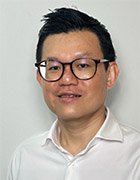
Leading the charge is Kim Tae-yoon, head of the foundation model office at SK Telecom. According to Kim, A.X K1 is not just a commercial product, but a piece of national infrastructure aimed at closing the gap between South Korea and global AI players.
The 519 billion-parameter hyperscale model was developed by a consortium of eight organisations, including SKT, gaming giant Krafton, mobility firm 42dot, chip startup Rebellions, agentic AI startup Liner, data specialist SelectStar, Seoul National University and Korea Advanced Institute of Science and Technology (KAIST).
But rather than position the model purely for direct commercial use, SKT intends to use it to train smaller, more efficient models for specific industries through knowledge distillation.
“It transcends being a model that merely consumes knowledge,” Kim explained. “Instead, it assumes the role of a teacher model, supplying knowledge to smaller models of 70 billion parameters or fewer. In this way, it functions as digital social overhead capital that supports the AI ecosystem.”
The distillation approach allows Korean firms to deploy specialised, cost-effective AI tools without needing the massive compute power required to run the full A.X K1 model, which was released earlier this year on Hugging Face under an Apache 2.0 licence.
Despite the dominance of Western models like OpenAI’s GPT-5, SKT claims A.X K1 holds a distinct advantage in cultural and linguistic nuances that global models often struggle with.
“Unlike other AI models that primarily use English, A.X K1 was designed from the ground up to learn in Korean,” said Kim. “It is highly suitable for creating customised services for Korean citizens, deeply understanding the country’s culture, economy and history.”
Technically, the consortium reported that the model is competitive with state-of-the-art open source models, such as the larger 685 billion-parameter DeepSeek V3.1.
In mathematics, for example, A.X K1 scored 89.8 on the AIME25 benchmark, surpassing the performance of the DeepSeek-V3.1 model, which scored 88.4 points. The AIME25 benchmark evaluates the mathematical abilities of AI using questions from the American high school mathematics Olympiad, which includes creative and complex problems.
In real-time coding evaluations measured by LiveCodeBench, A.X K1 achieved 75.8 points for English-based tasks and 73.1 points for Korean-based tasks, demonstrating its ability to solve coding problems in real time. These scores surpass those of DeepSeek V3.1, which scored 69.5 for English-based tasks and 66.2 for Korean-based tasks.
Additionally, the model is capable of processing 128,000 tokens in a single input. For Korean, this translates to about 100,000 words, allowing the AI model to simultaneously review complex content such as an entire novel or a company’s annual report.
“While larger models require significantly more effort in training and optimisation to achieve high performance, the SK Telecom-led elite team successfully accomplished this feat within a short period of just four months,” Kim said.
How the model was trained
The SKT consortium trained A.X K1 using 1,000 GPUs. The total amount of training was estimated based on the training period and the scale of GPU resources, and the maximum model size was designed according to scaling theory (the idea that model performance is proportional to the resources invested).
As a result, a 519 billion-parameter model was targeted, and approximately 10 trillion data points were used for training. To maximise the efficiency of the GPU resources used, the consortium mathematically designed and managed the optimal training computation.
Notably, A.X K1 achieved its target without government support, relying solely on self-procured GPUs during its development period, which adds greater significance to this accomplishment.
The model’s training used a variety of high-quality data, including web data, code, Stem (science, technology, engineering and mathematics) data and inference data. It also parsed Korean-specialised PDF documents to create synthetic data and applied a curriculum learning approach based on difficulty levels.
To manage the energy costs associated with running a large model, SKT used the mixture-of-experts architecture, activating only a fraction of the parameters – 33 billion out of 519 billion – for any given task.
“A.X K1 reduces the number of tokens generated by an average of 4.6 times and up to eight times more than similar-performing competitor models,” Kim said, adding that the model’s tokeniser is optimised for the Korean language, reducing token consumption by 33% compared to foreign models.
Particularly in computationally heavy tasks like mathematical reasoning, Kim said the model maintains top performance while performing inference with three to four times fewer tokens, directly translating to reduced graphics processing unit (GPU) usage, power consumption and costs.
So far, more than 20 organisations, including SK Group companies like SK Hynix, SK Innovation, SK AX and SK Broadband, as well as the Chey Institute for Advanced Studies and the Korea Foundation for Advanced Studies, have indicated their interest to use and validate A.X K1 in real-world applications. The SKT consortium plans to gradually integrate the model across its AI services to achieve its AI for Everyone vision.
On the use of the model in industrial and enterprise applications, Kim said A.X K1 is highly open and can scale across consumer and enterprise domains, with plans to expand the model into sub-parameter units. The consortium has also expanded the scope of its research through collaborations with the KAIST Graduate School of Physical AI and the Department of Mathematical Sciences at Seoul National University.
Security and future roadmap
For government and enterprise clients, security and data sovereignty are as critical as performance. SKT is leveraging its background as a telecoms operator to assure clients that sensitive data will remain within South Korea’s borders, complying with local regulations.
“SK Telecom ensures the safe protection of sensitive data through both technical and operational measures,” Kim said. “The company maintains complete control over all pipelines, including data training, storage and inference.”
SK Telecom also employs a robust security framework and a monitoring and response system to block unauthorised access to the model. Additionally, it has established ethical and safety policies to prevent sensitive information from being incorporated into AI training during model development and operation.
Beyond technical safeguards, Kim said the company has built trust under high levels of regulatory oversight by collaborating with government agencies, public institutions and corporate clients in data-sensitive sectors, such as semiconductors. “These efforts have been recognised for delivering significant value,” he added.
Kim said the next phase of development will focus on building multimodal capabilities so that the model can process images, speech, and video. The SKT consortium also plans to expand the volume of training data and extend language coverage to English, Chinese, Japanese and Spanish.
According to Gartner, a technology research firm, 35% of countries will adopt region-specific AI platforms using proprietary contextual data by 2027.
“Countries with digital sovereignty goals are increasing investment in domestic AI stacks as they look for alternatives to the closed US model, including computing power, datacentres, infrastructure and models aligned with local laws, culture and region,” said Gaurav Gupta, vice-president analyst at Gartner.
“Trust and cultural fit are emerging as key criteria. Decision-makers are prioritising AI platforms that align with local values, regulatory frameworks and user expectations over those with the largest training datasets,” he added.
Read more about AI in APAC
- Japanese banking giant MUFG aims to transform into an AI-native company by using agentic AI, changing how it handles data, and inking key partnerships with OpenAI and Sakana AI.
- Malaysia’s Ryt Bank is using its own LLM and agentic AI framework to allow customers to perform banking transactions in natural language, replacing traditional menus and buttons.
- Singapore researchers show how adapting pre-trained AI models can solve data scarcity issues in countries with limited resources.
- Lenovo’s CIO Playbook 2026 reveals that 96% of APAC organisations are planning to invest more in AI, with a growing reliance on hybrid infrastructure to manage rising inference costs.
Read more on Artificial intelligence, automation and robotics
-
![]()
SKT teams up with Nvidia on gigawatt-scale AI cloud
By: Aaron Tan
-
![]()
Ericsson, SK Telecom ink memorandum of understanding to strengthen AI-RAN, 5G to 6G innovation
By: Joe O’Halloran
-
![]()
SK Telecom outlines mid- to long-term 6G network evolution
By: Joe O’Halloran
-
![]()
How APAC telcos are reclaiming relevance with AI-ready infrastructure