Toyota
CES 2026: Toyota enhances SUV range with added infotainment
New version of RAV4 now available with Snapdragon Digital Chassis for personalisation and immersive infotainment, as well as advanced safety, convenience and real-time connected features

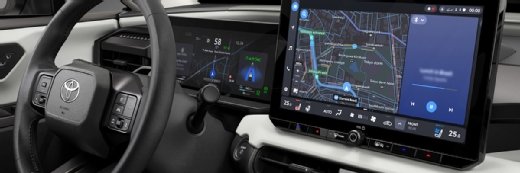
The newly launched Toyota RAV4 comes equipped with the Snapdragon Digital Chassis from Qualcomm Technologies to deliver a personalised, intuitive and seamlessly connected driving experience.
Having had its beginnings in 1994, when sport utility vehicles (SUVs) were positioned as off-road vehicles, Toyota unveiled details of the outline of the new RAV4 to the world in May 2025, setting out plans to launch the model in Japan before the end of the calendar year.
The manufacturer said that over five generations, the RAV4 has “evolved into a beloved model” around the world, continuing to meet the changing lifestyles of the times. The fifth-generation RAV4 introduced a platform based on the Toyota New Global Architecture (TNGA), Toyota’s structural software within the automobile manufacturing process. This was designed to offer responsive driving performance with manoeuvrability and stability for any road surface.
Under the concept of “Life is an Adventure”, the sixth-generation RAV4 has been advanced with newly developed hybrid software focused on ease of use for the driver. At the heart of the vehicle, advancing drive intelligence, is Toyota’s Arene software development platform, accelerating the company’s plan to develop software-defined vehicles (SDVs). With Arene, Toyota aims to achieve a greater level of safety and enrich the mobility experience, whether in urban living or outdoor driving modes.
Toyota’s vision of the value that SDVs can provide includes a safe future that offers peace of mind with zero traffic accidents. Arene has also realised two functions to gain more from their mobility. For example, improved functions see the use of an emergency driving stop system (EDSS), whereby in the event of a person becoming incapacitated due to sudden illness or other reasons while driving, the system automatically slows down and stops the vehicle.
By using sensor information to identify a safe place to pull over, the system has been improved to slow down and guide the vehicle to the safe area. Sudden acceleration suppression restrains acceleration when it detects excessive or accidental accelerator pressure, whether or not there are obstacles.
In the future, Toyota plans to not only improve development efficiency with Arene, but also accelerate the development of safety and peace of mind technologies through software updates.
In addition, the car boasts a new-generation multimedia system that comes with a customisable home screen for improved operation tailored to each individual. It also includes faster and more accurate voice recognition for easier interactions.
Through its technology collaboration with Qualcomm Technologies, the new Toyota RAV4 utilises a next-generation Snapdragon Cockpit platform – a key component of the Snapdragon Digital Chassis – to deliver what are promised to be premium in-vehicle experiences, providing a personalised, intuitive and “seamlessly connected” driving experience. Based on advanced artificial intelligence (AI) capabilities, the Snapdragon Cockpit platform-activated controls are designed to enhance the overall user experience.
“By leveraging our next-generation Snapdragon Cockpit platform, Toyota is delivering an elevated driving experience that combines personalisation, immersive infotainment and connectivity,” remarked Mark Granger, vice-president of product management at Qualcomm Technologies. “This collaboration brings advanced capabilities and safety innovations designed to make every journey smarter, more intuitive and more secure for RAV4 drivers and passengers.”
Toyota plans to successively roll out the latest RAV4 globally to customers in over 180 countries and regions.
Read more about intelligent vehicles
- Real AI use cases emerge for SDVs but readiness gaps persist: Research finds nearly two-thirds of global automakers believe artificial intelligence use cases – such as predictive maintenance, over-the-air optimisation and personalisation – will drive software-defined vehicles.
- Rubber hits the road for Qualcomm automotive: Mobile tech leader uses CES to outline advances in automotive through key collaborations with Chinese startup technology company, IT behemoth and manufacturing group to boost, ADAS, IVI and AI compute.
- Sony Honda Mobility drives out Afeela SDV prototype: Japanese joint venture mobility tech company advances vision of mobility as a creative entertainment space.
- Kodiak AI looks to transform trucking with autonomous tech, IoT connectivity: 5G telematics and ThingSpace IoT management services enable autonomous vehicle technology operating model and manage massive amounts of data generated from its driverless trucks.