NicoElNino - stock.adobe.com
British space comms tech heads into orbit
Successful launch of constellation seen as increasing the availability of advanced information from space, to help meet the fast-growing global demand from civil, national security and defence customers

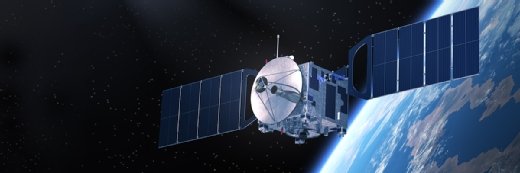
As the country’s space sector continues to reach higher levels, in particular with the UK Space Agency gaining funding in the summer to help transform the delivery of public services, a cluster of British designed and built satellites from BAE Systems have been successfully launched into low Earth orbit.
The three BAE Systems Azalea radio frequency (RF) satellites were taken into space via Exolaunch as part of the Transporter-15 rideshare mission with SpaceX on 28 November 2025. Communications with the UK-produced satellites were successfully established across the first three contact opportunities between 23:05 and 04:55 GMT.
The craft are joined by a Synthetic Aperture Radar (SAR) satellite that can see through clouds to create images of the earth’s surface. Launched aboard the same SpaceX Transporter-15 mission, the satellite from Finnish company ICEYE becomes part of a four-satellite cluster with advanced multi-sensing capabilities.
Weighing around 150 kilograms each, the RF spacecraft carry the Azalea Enhanced Software Defined Radio – designed, developed, built and operated by BAE Systems. The equipment uses artificial intelligence (AI) to accurately process RF and SAR data onboard the satellites, turn it into actionable intelligence and transmit it securely back to Earth. The satellites will travel at approximately 7.6km per second, orbiting the Earth every 90 minutes.
The developer notes that like a mobile phone operating system update, the payload can be rapidly reconfigured remotely while it’s in orbit, ensuring Azalea remains at the cutting edge of space technology to deliver future customer missions.
BAE Systems regards the launch as a crucial milestone in its self-funded Azalea mission, which will see the three satellites fly in formation at an altitude of 350 miles, using their ultra-wideband RF sensors to monitor and geolocate radio signals on Earth across vast distances. They are designed to provide defence, security and civil sectors with UK space-based intelligence, surveillance and reconnaissance to enhance the nation’s ability to protect against modern threats.
The cluster will work on processing RF and SAR data in space, looking to deliver actionable information directly to decision-makers across land, sea and air in near-real time – helping them protect armed forces, safeguard critical national infrastructure and detect illegal activity at sea. BAE Systems adds that over the coming months, it will trial the fusion of RF and SAR data, collaborating with customers to explore a range of use cases including intelligence gathering and supporting disaster relief.
Read more about space-based communications
- Proximus Global, Starlink expand European direct-to-cell satellite connectivity: Collaboration enables satellite leader to expand its footprint in connecting more European operators with IPX network.
- Orange claims Euro first with satellite direct-to-device SMS service: Telco’s customers in France, England and 35 other countries will be able to use core mobile network to send messages even if they have no mobile or Wi-Fi coverage using direct-to-device satellite technology.
- Vodafone, AST SpaceMobile form base for EU satellite constellation: Looking to further strengthen Europe’s digital sovereignty, European operator and space comms leader advance partnership and select Germany for satellite operations centre.
- Requtech retrofit programme sees creation of Satcom hub: Long-standing antenna design company that boasts deployments of parabolic, phased array and troposcatter antennas expands portfolio into the infrastructure side of the Satcom industry.
Andrea Thompson, group managing director at BAE Systems’ Digital Intelligence business, said: “Building on decades of experience in defence, security and space innovation, our Azalea mission reflects the critical role space plays in defence and national security, offering a unique vantage point of Earth which enables us to better understand and respond to today’s complex threats.
“This cutting-edge technology is designed to deliver near-real-time, space-based insights directly to users, empowering them to make informed decisions that help protect the UK and its allies. I’m incredibly proud of the team for their work to boost the UK’s space capability.”
UK Space Agency CEO Paul Bate added: “The successful launch of the Azalea constellation will increase the availability of advanced information from space, to help meet the fast-growing global demand from civil, national security and defence customers. The new satellites, which will use AI to convert raw data into actionable intelligence, represent a significant and welcome investment by BAE Systems in the UK space industry, which plays a vital role in driving economic growth and keeping us safe.”
Read more on Telecoms networks and broadband communications
-
![]()
Swissto12, HPS/LSS intro satellite unfurling antenna reflector
By: Joe O’Halloran
-
![]()
Filtronic unveils DIFI service to enable virtualised satellite ground stations
By: Joe O’Halloran
-
![]()
SWISSto12 opens Switzerland’s largest GEO satellite production site
By: Joe O’Halloran
-
![]()
In-orbit test of Atlas-1 laser terminals sees 100x comms speed gains
By: Joe O’Halloran