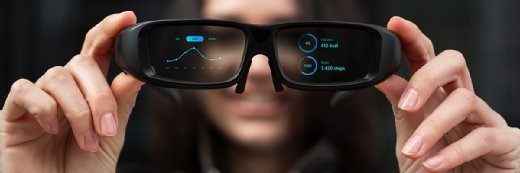
tete_escape - stock.adobe.com
Applied Materials unveils integrated visual system for next-gen smart glasses
Co-optimised smart glasses system designed to bring high-performance augmented reality displays to market faster, featuring improved visual performance, integration and scalable manufacturing

Just as market research has revealed that the smart glasses market has surged over the past six months, materials engineering solutions firm Applied Materials has launched the SENZ integrated ambient visual platform.
The new platform combines waveguide optics, light engine, sensing, vision correction and electronic dimming technology in a single system designed for AI-powered next-generation display smart glasses.
Assessing the dynamics of the industry, Applied Materials said the smart glasses market has historically been constrained by fragmented supply chains and disparate components.
SENZ aims to address this by delivering all core visual components as a single cohesive system, eliminating traditional engineering trade-offs between performance and form factor. By giving customers a complete co-optimised solution, Applied Materials claimed SENZ will be able to reduce time-to-market and manufacturing complexity while enabling more flexible product designs and premium user experiences.
Brand partners are now able to create bespoke products using the SENZ system solutions and reference designs. Key partnerships supporting the SENZ launch include a strategic collaboration with semiconductor company GlobalFoundries that allows Applied to produce its waveguides at scale, using the latter’s high-volume fabrication facility in Singapore. A joint development programme with EssilorLuxottica will accelerate the commercialisation of next-generation intelligent optical systems for augmented reality and AI-powered smart eyewear.
A collaboration with Qualcomm Technologies, as part of the recently launched Snapdragon Scalable Turnkey AI-Ready Toolkit (Start) programme, will bring engineering prowess in design and manufacturing to support AI-powered, next-generation smart glasses. The programme is designed to help brands bring their own personal AI devices to market faster and with greater flexibility, starting with smart glasses.
“Smart glasses are bringing humans to the centre of how technology is advancing, transforming how people interact with the world and each other. Delivering the best human experiences requires achieving a new level of engineering excellence that quickly and easily brings together hardware, software, connectivity and developer innovation,” said Paul Meissner, vice-president and general manager of Applied Materials’ Photonics Platforms Business, commenting on the launch.
“Building on Applied Materials’ tradition of delivering advanced technology solutions at scale, SENZ combines industry-leading waveguide technology and our advanced device production capabilities into an integrated, co-optimised platform built to help our customers get to market faster with exciting experiences.”
SENZ is being launched into a fast-growing market. A recent study from IDC found that the smart glasses market surged 167% year on year (YoY) in the first quarter of 2026, reaching approximately 2.25 million units in the three-month period.
The IDC Worldwide quarterly wearable device tracker and the IDC Worldwide augmented and virtual reality headset tracker noted that companies which can deliver seamless, always-on assistance through a pair of glasses that people want to wear will define this decade’s computing transition.
It said that the extended reality (XR) market now stands at a genuine inflection point where viewing technology has crossed the fashion threshold and people will wear the latest devices, and that the real competition for players in the industry is not hardware but instead platform, ecosystem and artificial intelligence (AI).
Looking at the leading companies, the ISC data showed that Meta continued to dominate, with 69.2% market share in Q1 2026, which is a commanding lead built on the strength of its Ray-Ban partnership with EssilorLuxottica, which has been a “marketing machine that few hardware companies can replicate”.
Read more about smart glasses/AR
- Comms tech consortium begins XR trials on 5G Standalone network: Collaboration between Ericsson, T-Mobile and Qualcomm looks to pioneer the next wave of 5G low latency operator services, beginning with supporting demanding mobile immersive.
- RealWear looks to reshape industrial AR with Almer acquisition: In what is said to mark a pivotal moment in a key part of the spatial computing sector and boost frontline worker productivity, industrial wearable technology firm acquires manufacturer of ultra-compact devices.
- AR/VR headset market reaching ‘critical tipping point’: Research finds marked uptick in immersive technologies market with 18.1% year-on-year growth fuelled by immersive and versatile experiences, with future growth anticipated to be driven by mixed and extended reality.
- University of Oulu shows machine vision can replace expert presence: Finnish university and tech hub reveals advances in immersive augmented reality technologies to support remote work and operations and address unique challenges and skill shortages of northern regions.
Read more on Social media technology
-
![]()
Samsung brings Galaxy ecosystem into eyewear
By: Joe O’Halloran
-
![]()
Intelligent eyewear market sees opportunities
By: Joe O’Halloran
-
![]()
Snapdragon START kicks off next phase of personal AI with XR smart glasses
By: Joe O’Halloran
-
![]()
XR market rewriting its own rules as smart glasses use surges
By: Joe O’Halloran