SiHo - stock.adobe.com
STT GDC launches 30MW datacentre in South Korea
The Singapore-based datacentre operator has entered the South Korean market with STT Seoul 1, a hyperscale-ready facility built though a joint venture with Hyosung Heavy Industries
ST Telemedia Global Data Centres (STT GDC) has expanded into South Korea with the launch of its first datacentre in the country to meet the burgeoning demand for cloud and artificial intelligence (AI) infrastructure.
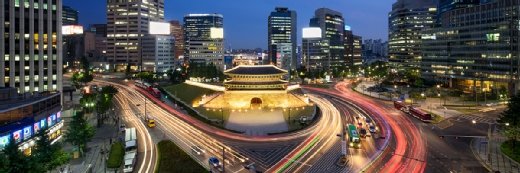
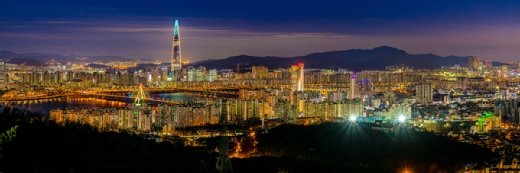
Located in the Gasan-dong district of Geumcheon-gu, Seoul, the STT Seoul 1 facility offers up to 30 megawatts (MW) of IT load capacity across 40,000m2 of gross floor area. The carrier-neutral site has been developed and is operated through a joint venture established in 2021 between STT GDC, which holds a 60% stake, and local partner Hyosung Heavy Industries, which holds the remaining 40%.
According to market research firm Research and Markets, the South Korea datacentre market is slated to grow from an estimated $5.04bn in 2025 to $16.23bn by 2031, growing at a compound annual growth rate (CAGR) of over 21%.
Historically dominated by domestic telecoms giants such as LG Uplus, KT Cloud and SK Broadband, the market has seen increasing activity from global heavyweights in recent years. Global operators including Equinix and Digital Realty, as well as hyperscalers such as Amazon Web Services, Google Cloud and Microsoft have been expanding their capacity in the Seoul metropolitan area to capitalise on this demand.
Charles Chulhoy Huh, country head for STT GDC Korea, noted that AI infrastructure demand is “increasingly concentrating in markets where digital capability, power availability and customer requirements come together”.
He added: “STT Seoul 1 establishes an important foundation for STT GDC’s presence in Korea, extending a globally consistent platform into a key Northeast Asian market, where customers are scaling increasingly advanced workloads and require infrastructure that is resilient, efficient and built for long-term growth.”
Cho Hyun-Joon, chairman of Hyosung Group, described the new facility as a “timely oasis for advanced IT companies that have long faced infrastructure constraints”, adding that the launch marks a new milestone for the future of Korea’s AI ecosystem.
“Over a decade ago, we recognised the value of big data – often referred to as the ‘oil of the 21st century’ – and set out with a firm conviction to build core AI infrastructure in the Seoul metropolitan area, the ‘brain’ of Korea,” Cho added. “We will continue to expand our collaboration with STT GDC, not only in Korea but also in shaping the next paradigm of the global AI ecosystem.”
Designed for resilience and efficiency
As South Korea aims to become one of the top three global leaders in artificial intelligence (AI), it has been prioritising the roll-out of high-quality, energy-efficient digital infrastructure.
Addressing these requirements, STT Seoul 1 achieved the Uptime Institute’s Tier III Certification of Design Documents (TCDD) ahead of its launch, verifying its concurrent maintainability. The facility features dual 22.9kV power feeds with a redundant configuration, backed by a distributed redundant uninterruptible power supply (UPS) system and generators capable of keeping the facility online for up to 24 hours without refuelling.
In terms of sustainability, the site is designed to achieve a power usage effectiveness (PUE) of below 1.3. Its cooling systems are complemented by thermal energy storage (TES) for stable and continuous cooling. The facility has also secured Leed Gold certification and employs a seven-layer physical security framework featuring intelligent video analytics and biometric authentication.
Park Jee-hye, member of the National Assembly of Korea who attended the opening ceremony, said: “Given that Korea is aiming to become one of the top three global leaders in AI, establishing high-quality, efficient datacentre infrastructure is a critical national priority.
“Facilities such as STT Seoul 1 contribute to strengthening the foundations of Korea’s digital economy while incorporating design approaches that support operational resilience and responsible resource use. This will be important as we continue to scale advanced technologies in a sustainable and responsible manner,” she added.
Singapore’s Ambassador to the Republic of Korea, Wong Kai Jiun, also noted that trusted digital infrastructure plays an important role in enabling deeper cross-border trade and technology innovation.
“STT Seoul 1 demonstrates how cross-border collaboration can support the development of resilient digital infrastructure, strengthen regional connectivity and create new foundations for innovation and growth,” he said.
Read more about IT in South Korea
- A consortium led by SK Telecom has built a sovereign AI model designed to reduce reliance on foreign tech, lower costs for local industry and propel South Korea into the top ranks of AI powers.
- Having built its own generative AI model, Naver is now partnering with Dell and Nvidia to deploy AI factories tailored for digital sovereignty.
- Samsung Electronics and KT Corporation are building a private 5G network to power national naval security force through advanced use cases for defence communications.
- Experts from the Gwangju Institute of Science have built a digital security device based on natural silk fibres that they claim is practically unbreachable.
Read more on Datacentre capacity planning
-
![]()
South Korea debuts foundation model in sovereign AI push
By: Aaron Tan
-
![]()
STT GDC launches HVDC testbed to address AI’s power demands
By: Aaron Tan
-
![]()
South Korea plots to become home to world’s largest AI datacentre
By: Caroline Donnelly
-
![]()
AI Seoul Summit: 27 nations and EU to set red lines on AI risk
By: Sebastian Klovig Skelton