Datacentre dive: Inside nLighten’s Bristol edge datacentre
We visit nLighten’s BRS1 datacentre, and travel from gritty city centre fringe to a high-tech overhaul that makes the case for reusing legacy infrastructure over new construction

It’s the last cool morning before the most recent heatwave settled over the UK. It’s grey and a little close. My lodgings sit on the edge of Bristol city centre, where the Luftwaffe’s best efforts, then de-industrialisation and the demise of empire, mark the urban fabric.
That manifests as past-its-best post-war concrete offices, impossibly tidy new builds, crumbling red-brick remnants, and scrubby plots of no-build. As I wait, a chapel dated 1857 stares across the road at a huge new red-brick student block while wire-grid temporary fencing separates spaces. Weeds push through block paving. Trainers hang over a telegraph wire.
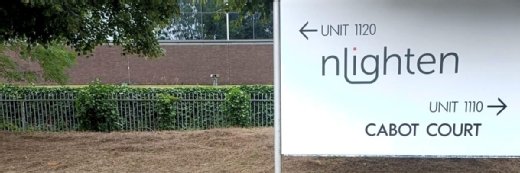
My Uber arrives, and Ai Jun from Diu in Gujarat drives me through morning traffic to nLighten’s BRS1 datacentre at Aztec West.
We pass warehousing, building sites, cranes, the fortress-like walls of former dockside buildings, and the ubiquitous galvanised three-pronged pressed steel spiked fencing. Traffic pinches between rusty railway bridges and small 1960s industrial units, before escaping onto the M32.
Graffitied red-brick factories give way to terraced housing, suburban semis, an Ikea, a shopping mall, then countryside – fields, wooded hillsides – as the road loops out of the city past Bristol Parkway, via the M4, and off via the A38 to Aztec West Business Park.
I muse over whether it was named for the famously bloodthirsty people of Central America or the 1970s chocolate bar. Modern offices in glass and aluminium sit well-spaced and connected by manicured pavements. It looks like the US, except there are people walking. Also, some geese cross the road.
The great and the good
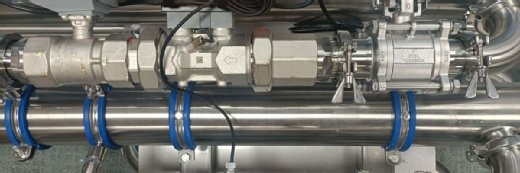
The datacentre entrance is a rolling steel gate and concrete wall. A security guard checks names against a list as cars pass in. I am the only arrival on foot. Inside, more than 100 people fill the reception – consultants, commercial agents, press, council representatives, the local great and good. A handful wear nLighten gilets. Two stalls offer swag – chocolate bars; water bottles – while a well-engineered example of datacentre cooling pipework (pictured) sits on display. The scrum for croissants and coffee is ferocious, but I can’t eat a thing. The B&B proprietor convinced me to go full-English against my better judgement.
Our opening host gathers the crowd with PR tones. “We’ve spent a lot of time and a lot of effort upgrading this fabulous datacentre that you’re in today,” he tells the room.
He frames nLighten’s pitch in the language of the moment: sovereignty; sustainability; legacy reuse. “We are in the vanguard because we are taking legacy datacentres, we are refurbishing them, we are upgrading them, we’re improving their capability.”
An engineering type gives us the technical introduction, and the history of the building emerges. “This site was built in around 1995 for Royal Sun Alliance, so it’s been here quite a while,” he explains.
The insurer ran it for roughly five years before “a French IT consultancy” took over – then Proximity, and now nLighten.
“We’ve given this building a lot of life,” he continues. “We spent somewhere in the region of £15m today on this facility. We literally stripped the roof off the building and rebuilt it. There’s a 25-year warranty on that roof now, so that gives you some idea of the intent and the lifecycle of this building going forward.”
Chillers, UPS units and generators have all been replaced with datacentre capacity moving from 750kW to 1.2MW, with a 5MVA grid connection, and design work underway for further expansion. “An existing site is the greener site,” our engineer notes. “It means that embodied carbon is within that facility. We’re not investing more in carbon. We’re developing a site that exists and we’re doing it in an efficient way.” The target power usage effectiveness (PUE) across the estate is 1.3.
Equipment hums, tour guide burrs
Tours are assigned by lanyard number. Richard is nLighten’s regional datacentre manager, and guides our group with a West Country burr. He has been on this site since 2020, and speaks about the building with the quiet ownership of someone who has watched it transform.
We descend to the lower ground floor – an engineering space the same size as the white space above. Everything that powers and cools the data hall sits here, hidden from customers who will never need to see it. UPS units, cooling panels, switchboards – the underbelly of the operation, accessible without ever entering the data hall itself.
Richard stops in front of one of the UPS units – a 1.2MW modular system, lithium-battery-based, and at this moment almost silent. Load-dependent; it waits for the equipment upstairs to call on it. An identical unit sits on the other side of the building. The modular design means individual modules can be swapped out for maintenance without losing the whole UPS. “For us, it’s all about efficiency,” says Richard. “It’s all about keeping PUE down.”
He gestures towards a capability not yet in use, but built into every UPS nLighten purchase: grid stabilisation. “If the grid is struggling, we could feed back a bit,” says Richard.
The cooling system is entirely new. When the roof came off, the old coolers went with it. In their place, chillers equipped with turbo-core refrigeration compressors now sit at the rear of the building, fed from a closed-loop chilled water system through new pipework beneath the engineering floor.
“We don’t use any water,” says Richard. “The water inside stays inside.” An engineer who serviced the chillers recently reported they have run in free-cooling mode for 80% of their operating hours, including during the full-load test. Even on a day touching 20 degrees, the compressors are idle. “The old building’s water bill has just stopped and gone away,” says Richard. “The only water we use now is on you guys making tea and coffee today.”
Build it and they will come
We climb to the upper ground floor and enter the data hall. “We’ve recently installed 42 new racks ready for quick deployment,” says Richard. The racks – 800mm by 1200mm, 47U – stand in two cold-aisle containment rows. Cool air pushes up through a raised floor, directed through the racks and into the hot aisle where we stand. Structured cabling runs overhead to two “meet-me” rooms positioned in opposite corners of the hall, providing diverse routing through separate carriers.
The current IT load sits at about 180KW – “quite low at the moment”, Richard acknowledges – but the hall is built to scale towards 1.2 megawatts. The cold aisle registers 24 degrees. Pressure sensors monitor airflow; if a rack blanking plate was out of place, it would register immediately.
For now, the racks are mostly empty, waiting. But the plumbing tells a different story. Tap boxes for direct-to-chip liquid cooling are already installed, ready to serve anything from half-rack deployments to high-density compute.
“You could have a megawatt sat in this aisle,” notes Richard, gesturing along the row. The chilled water infrastructure has enough tap-off points to feed every aisle when demand materialises. The real constraint, he observes, is not the white space, but the mechanical plant – chillers and generators cannot shrink the way rack densities can grow.
Outside, in front of the chiller units, the control panel tells us the only energy being consumed is by the fans, pulling air across the coils to reject heat from the returning water loop. The mechanical compressors sit idle.
Heatwave on the way
When temperatures climb into the 30s, the system can run in hybrid mode – part free-cooling, part mechanical (refrigeration) – and switch to full mechanical if required. It is rated to cope up to 40 degrees. For an operator who spent years managing a building designed when UK summers rarely broke 22 degrees, this is the difference between a restless night and a quiet one. “My phone’s never off,” says Richard. “If it rings at 2am, I tend to jump out of bed a bit quick.”
Resilience is layered throughout. N+1 redundancy applies to power and cooling: two chillers, each capable of carrying the full 1.2MW load independently. Two UPS units. Two generators that can get power to busbar in 18 seconds. Some 72 hours of fuel storage sits on site, with a refuelling guarantee within four hours.
Richard’s team of four engineers trains weekly and runs quarterly mains-fail transfer tests. “There are two reasons for doing that,” he explains. “One, to make sure it works. That’s always a good thing. And two, for my engineers, it’s good to keep them up to speed. If they go a few months and they haven’t done it and it does happen, it’s good that it’s fresh in their mind.”
The building, as Richard puts it, was “built like a battleship”. The difference is what now sits inside it. “To see it where it was to where it is now is a phenomenal change,” he says. “You just take an older building and bring it back to life, really.”
An insurance company’s disaster-recovery bunker from the mid-1990s has been retooled for edge computing, sovereign data and HPC-ready density – without a single tree felled or cubic metre of concrete poured for new foundations.
The story here for nLighten is, in an industry gripped by headlines about gigawatt-scale hyperscale campuses, what can be done with what already stands.
The tour is over. Inside, the chillers hum quietly. The empty racks wait. The geese are still on the road. Muhammad (who came from Malaysia when he was five) Ubers me to Temple Meads, and we chat about politics and food.
Read more about datacentres
- Datacentre dive: From rust belt to megawatt AI factory: We visited Terawulf’s Lake Ontario 750MW datacentre development. Photos and recordings weren’t allowed, so we took notes and wrote them up in more traditional ways.
- Data dive: Dodgy data derails datacentre water debate: The Government Digital Sustainability Alliance reports that we are on track for a massive water supply shortfall. The dataset it used suggests not. We look at the datacentre water use debate.
Read more on Datacentre backup power and power distribution
-
![]()
Datacentre dive: Through the looking glass at Telehouse South
By: Antony Adshead
-
![]()
Modern datacentre infrastructure management (DCIM) is crucial
-
![]()
Telehouse completes fossil fuel-free datacentre retrofit as £251m West 2 build begins
By: Antony Adshead
-
![]()
nLighten CEO Dawn Childs on edge datacentres and sovereignty
By: Antony Adshead