Cisco shapes up for delivery of critical infrastructure in the AI era
Annual European expo reveals what IT and networking behemoth claims will be a leap forward in AI adoption, with new products encompassing switches, optics, agentic operations and SASE
Attempting to address the growingly complex and pressing needs of businesses for whom artificial intelligence (AI) innovation is moving faster than ever before, Cisco has unveiled a range of products and services that it assured will provide the infrastructure its customers need to move fast and adopt AI safely and securely, raising ambitions for secure and trusted agentic AI.
Launched at the Cisco Live 2026 Conference in Amsterdam, the new systems are said to reinforce the IT and networking behemoth’s ability to deliver networking, security, observability and sovereignty through a unified technology platform.
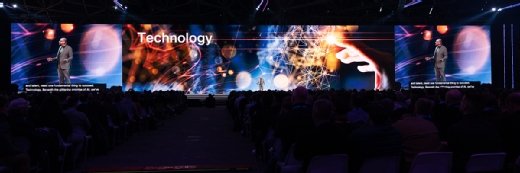
Yet, as stressed by Gordon Thomson, president of Cisco’s Europe, Middle East and Africa (EMEA) region, in a world defined by AI, companies run the risk of being left behind if they are not leading with AI in their operations, and that to take maximum advantage of AI, Cisco had to think differently in four different key areas, specifically time, trust, talent and technology.
Time is slipping away
“Time is one of our most precious assets. IDC estimates that by 2030, AI investments could generate $22.3tn in economic benefit. But beware: time is already slipping away, and it’s asking hard questions of us all. Are you moving fast enough? Are you still operating as you did one, two or even three years ago? If you are, then the risk is real,” said Thomson.
“We asked enterprise technology leaders about the shift they anticipated with agentic AI, and 78% of leaders said that agentic AI will significantly reshape how their industry operates over the next few years. So all industries are going to feel this tectonic shift. Few will be exempt. And 80% of leaders said agentic will be essential for survival in 2027. That is just next year,” he added.
The speed we’re moving at today is just not fast enough. The promise of AI surrounds us, but our readiness really must catch up, and it must catch up quickly
Gordon Thomson, Cisco
“We all need to redefine not just our mindsets, but our organisational DNAs, because the speed we’re moving at today is just not fast enough. The promise of AI surrounds us, but our readiness really must catch up, and it must catch up quickly. The clock is ticking. Preparedness can no longer be a long-term goal. It’s an immediate imperative. None of us can operate the same way as we did last year.”
The executive revealed further findings from the Cisco AI Readiness Index, which showed that only 11% of organisations in EMEA said they were fully prepared for AI. These companies, noted Thomson, “are already watching their competitors in the rearview mirror”, and are five times more likely to turn pilots into production and 60% more likely to see measurable value from investments in AI products and services than anyone else.
A foundation of trust
Regarding trust, Thomson said this quality wasn’t just a value but a foundation – “the currency that enables progress and accelerates change”. Trust, he said, has a number of layers and levels. For example, security trust, as it was not possible to have an AI-driven economy that Cisco could not protect. AI, he emphasised, should start with safety and security.
Secondly, he pointed to innovation trust, which matters more than ever. “You can trust our innovation not just to create the next big thing, but also to ensure our ecosystem remains open. We’re backwards-compatible, and we’re ready for what comes next. We also deliver innovation that’s built with your trust requirements.”
Thirdly, there was execution trust, and then sovereign trust. The latter, which is about finding the right balance between flexibility and control, was recognised by Cisco as also being more crucial now than ever before.
Ecosystem of talent
As he continued with his address, Thomson warned that an AI-powered economy that only a few could participate in was not a resilient one. He said a key task for Cisco was to make sure that every organisation, every community and every individual could not only participate in AI, but could benefit from what it can promise.
Agentic AI doesn’t replace human potential. It unlocks human potential. Therefore, we need to build a different skillset across our talent ecosystem, because that talent will increasingly work with and alongside AI agents
Gordon Thomson, Cisco
“Only this ecosystem of talent will fuel sustainable growth, competitiveness and shared prosperity, but our workforce is changing, and we need to keep up. Agentic AI is moving from concept to capability. It can reason, it can plan, it can act alongside people. But most importantly, agentic AI doesn’t replace human potential. It unlocks human potential. Therefore, we need to build a different skillset across our talent ecosystem, because that talent will increasingly work with and alongside AI agents.”
AI-ready infrastructure
Finally, addressing technology, Thomson said that with AI, the tech industry has reached a key point as regards infrastructure, compute, networks, security and monitoring, noting that the infrastructure that firms have relied on to date wasn’t built for the scale and the velocity of future workloads. The Cisco research highlighted how 62% of IT leaders expect workloads to rise by over 30% in the next two to three years, 65% said they were struggling to centralise data, and over a third were currently unable to prevent or detect AI threats.
Future tech would be different, said Thomson. “The solution isn’t about stacking tiny new products on top of each other – that just creates complexity and will slow you down. [Success] requires a platform that uses data to be more efficient, more secure and more scalable. The result is that we’re delivering AI-ready datacentres, future-proofed workplaces and digital resilience, all built in a foundation of secure global connectivity.
“Delivering these capabilities at pace is what you need to thrive. ... It’s no longer just about deploying product features; it’s about delivering real business outcomes. You do that with platforms, not with products. We are working at speed because AI isn’t waiting. That convergence of time, technology, talent and trust isn’t a coincidence. These things are defining. We can turn AI into a reality. Not tomorrow, but today.”
Unified AI platform
Key platform and service launches at Cisco Live encompassed three key areas delivered as part of a unified platform, namely the Cisco Silicon One G300 switch; AgenticOps across networking, security and observability to “transform” how IT teams reduce complexity and operate efficiently at scale; and updates to the AI Defense security solution alongside advances to its secure access service edge (SASE) offering.
The G300 switch is designed to power gigawatt-scale AI clusters for training, inference and real-time agentic workloads, and is claimed to be able to maximise graphics processing unit (GPU) utilisation with a 28% improvement in job completion time, allowing users to scale out their buildout of AI clusters. The G300 offers Intelligent Collective Networking, and is said to deliver a 33% increase in network utilisation and a 28% improvement in job completion time versus non-optimised traffic. G300-powered systems are being designed for AI network builders – hyperscalers, neoclouds, sovereign private deployments, service providers, and now enterprises.
To address the diverse requirements of AI environments, Cisco has updated its Nexus One platform with a unified management plane to bring together silicon, systems, optics, software and programmable intelligence as a single integrated solution.
The Unified Fabric of Nexus One is said to allow customers to deploy fast and adapt their networks as demands shift, even across multiple sites. The Cisco N9000 systems serve as the common hardware for a diverse set of fabrics, including Nexus Hyperfabric, with a unified management plane to centralise operations. Application programming interface (API)-driven automation and customisation are built-in.
The AgenticOps innovations will span the Cisco portfolio and are designed to help automate, scale and simplify AI-era IT operations. The system draws on cross‑domain telemetry across Cisco Networking, Security Cloud Control, Cisco Nexus One and Splunk, among other applications. These capabilities include tools, skills and platform enhancements across networking, security and observability.
With native Splunk platform integration coming in March, customers will be able to analyse network telemetry directly where data resides, without having to move it to external platforms. This is an essential capability for sovereign cloud deployments and compliance-sensitive environments where data locality is paramount.
In the security domain, the AI Defense enhancements are the biggest-ever updates to the product, bringing AI supply chain governance and runtime protections to agentic tool use. This is claimed to reduce the risk of compromise or manipulation. AI-driven SASE advancements to include intent-aware inspection of agentic AI interactions and tool requests, evaluating the “why” and “how” of agentic traffic to ward off novel threats.
Read more about AI in networking
AO implements Mist AI-native wireless network: Retailer’s wireless network looks to enable smarter, faster customer service and business operations to maintain competitive agility in a dynamic market.
How to stop AI from straining networks: Europe’s networking infrastructure is critical for the region’s economy and digital resilience, but it is built for speed and struggling to handle soaring artificial intelligence workloads. Can Europe’s networks handle the AI boom sustainably?
Enterprises believe networking will make or break AI adoption: Research reveals more than 40% of enterprises in advanced stages of GenAI adoption plan to integrate artificial intelligence into 20-30 applications, further raising the stakes for modernised networks.